Yes. A white or reflective roof stays dramatically cooler than a dark one in the Arizona sun, and a cooler roof deck means less heat driven down into your attic and living space. The U.S. Department of Energy states that under the same conditions a reflective roof can stay more than 50°F cooler than a conventional roof. How much of that shows up on your power bill depends on your roof type, your attic insulation, and where your ductwork runs.
If you're looking for a simple, energy-efficient way to beat the heat, a white roof could be the solution. At Eco Roofing Solutions, we specialize in reflective roofing systems designed to keep your home cooler while helping you save on energy costs. But how exactly does a white roof work, and is it right for your home?
How Does a White Roof Actually Keep a Home Cooler?
White roofs are engineered with high reflectivity, meaning they reflect more sunlight than darker roofing materials. In hot climates, this makes a noticeable difference. Instead of absorbing the sun's rays and transferring that heat into your attic and living spaces, a white roof bounces it away, keeping your home cooler and more comfortable, even during peak summer months.
The Cool Roof Rating Council measures two properties to decide whether a roof qualifies as cool, and both are scored from 0 to 1:
- Solar reflectance is how much of the sun's energy the surface bounces back instead of absorbing.
- Thermal emittance is how efficiently the surface sheds the heat it does absorb rather than holding it.
Those two numbers feed the Solar Reflectance Index, calculated under ASTM E1980. The CRRC anchors that scale with a reference black roof at 0 and a reference white roof at 100. A good cool roof needs both properties working together. High reflectance with poor emittance still traps heat in the assembly.
White Is Not the Only Cool Color
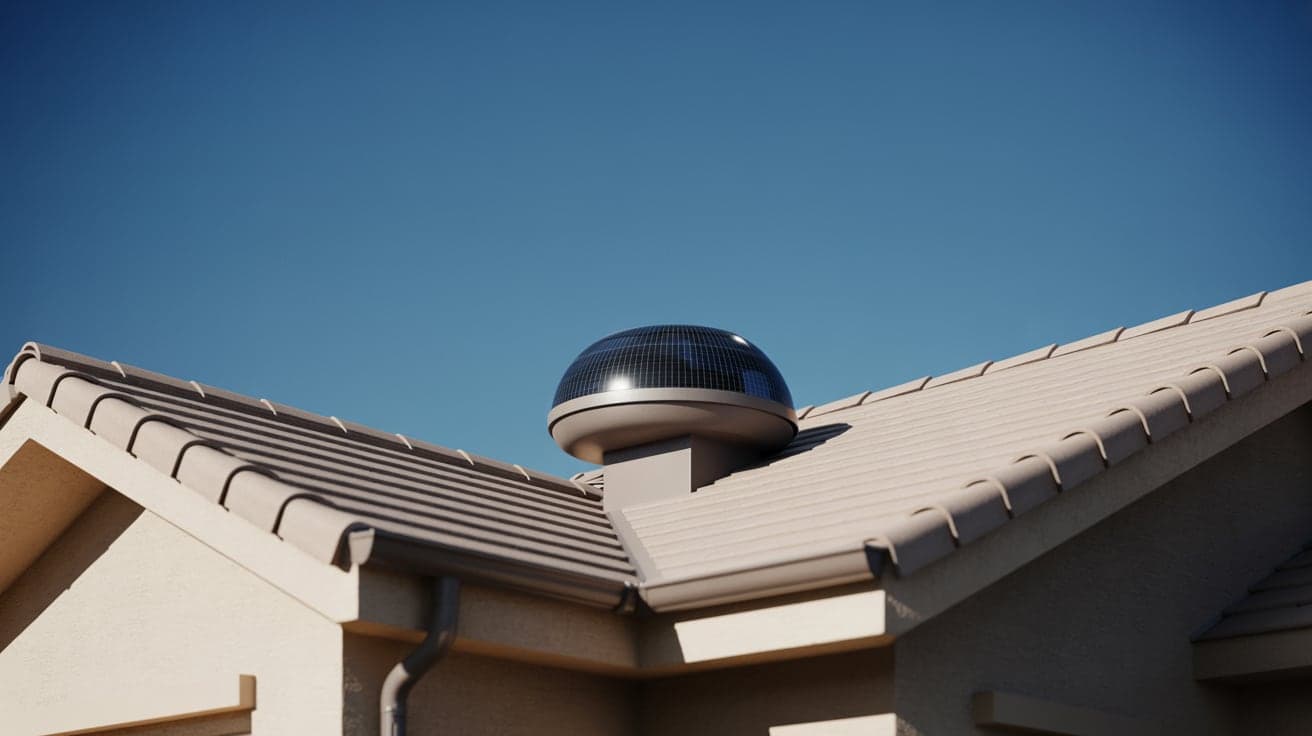
The CRRC is clear that a cool roof does not have to be white. Cool-colored pigments reflect the near-infrared portion of sunlight, which is invisible to the eye but carries a large share of the sun's heat. That is how a charcoal or desert-tan tile can outperform a conventional tile of the exact same shade.
How Much Cooler Does a Reflective Roof Get in Arizona?
The numbers from the national labs are large enough to matter here. Lawrence Berkeley National Laboratory's Heat Island Group reports that a clean white roof reflecting 80 percent of sunlight stays roughly 55°F cooler than a gray roof reflecting only 20 percent, and that a cool-colored roof reflecting about 35 percent still runs about 22°F cooler than a traditional dark roof. In one of their field measurements, a black roof came in 54°F hotter than the white roof beside it on a summer afternoon.
Context matters for how much that is worth. The National Weather Service confirmed 2024 as Phoenix's hottest year on record, with 70 days at or above 110°F against a normal of about 21. Every one of those days, a dark roof deck in Gilbert is soaking up solar energy from sunup to sundown and radiating it into an attic that your air conditioner then has to fight.
Will a White Roof Lower My Energy Bill?
Because your home doesn't heat up as quickly or as intensely, your air conditioning system doesn't have to work as hard. This translates into less energy usage overall. Over time, those savings can add up, especially during long, hot seasons.
Lower energy consumption means lower utility bills. The EPA reports that cool roofs can reduce peak cooling demand in air-conditioned residential buildings by 11 to 27 percent, and that in buildings without air conditioning they lower indoor temperatures by roughly 2.2 to 5.9°F. Your own result lands somewhere in that spread depending on three things we look at on every estimate:
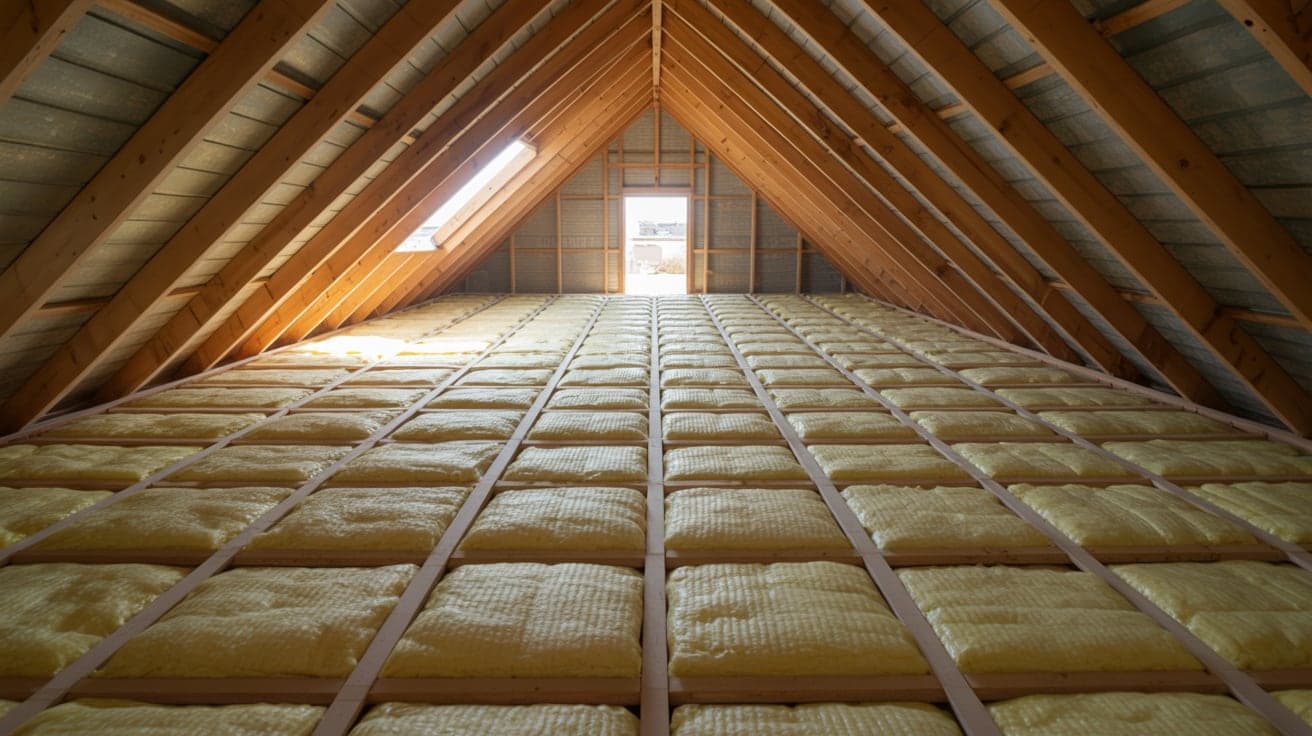
- Attic insulation depth. A reflective surface over a thin attic gives back less than a reflective surface over a well-insulated one.
- Duct location. Most Valley homes run supply ducts through the attic. A cooler attic means less heat gain in the duct run before the air reaches your registers.
- Roof assembly. Tile has an air gap and thermal mass working for it already. A direct-nailed shingle roof transfers heat to the deck much faster.
Which Reflective Roofing Options Work Best on Valley Homes?
There is no single "white roof" product. What you install depends on whether the roof is pitched or low-slope, and on the building itself. Below are the systems we work with most, using commonly cited industry service-life ranges.
| System | Where it fits | Reflective option | Typical service life range |
|---|---|---|---|
| Architectural asphalt shingle | Pitched | Cool-colored granules; ENERGY STAR steep-slope products start at 0.25 solar reflectance | 15–30 years, shorter under heavy UV |
| Concrete or clay tile | Pitched | Light colors and cool pigments; industry reporting shows tile SRIs from the 20s into the 50s | 40–50+ years for the tile; underlayment usually 25–35 |
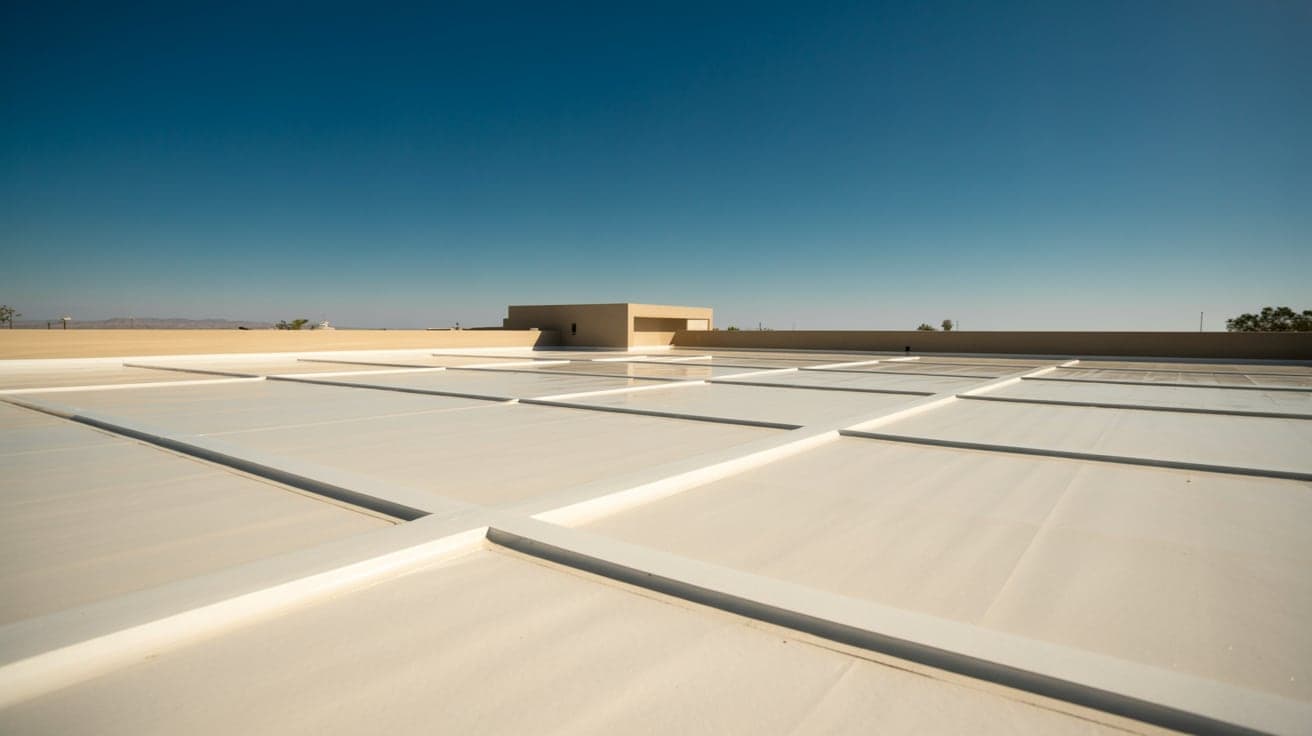
| Spray polyurethane foam with elastomeric or silicone coating | Low-slope | Bright white reflective topcoat over the foam | Long-lived with recoating, commonly every 5–10 years |
| TPO or PVC single-ply membrane | Low-slope, mostly commercial | White membrane; ENERGY STAR low-slope products start at 0.65 solar reflectance | TPO roughly 15–25 years, PVC roughly 20–30 |
| EPDM | Low-slope | Available in white as well as the standard black | Roughly 25–40 years |
For most Gilbert, Mesa, and Chandler houses, the practical answer is either a cool-colored tile or shingle on the pitched sections and a white coated foam system over the patio, addition, or flat portion. We walk through both on a residential roofing estimate. On offices, warehouses, and retail buildings the conversation is usually a white single-ply membrane or a coating restoration, which falls under commercial roofing.
Does the Attic Have to Be Right for a White Roof to Pay Off?
A reflective roof is one layer of the system, not the whole thing. The Department of Energy places the Phoenix metro in climate zone 2 and recommends attic insulation in the R-38 to R-60 range for this climate. If your attic is sitting at the R-19 or R-30 an older home was built with, insulation is often the cheaper first move.
Ventilation matters just as much. The International Residential Code calls for net free ventilating area of 1 square foot per 150 square feet of vented attic space, with a reduction to 1:300 allowed when 40 to 50 percent of the required venting sits in the upper portion of the attic, within 3 feet of the ridge, and the balance comes from eave or soffit vents. Blocked soffit vents are one of the most common problems we find in the Valley, and they undo a good part of what a reflective roof is trying to do. That inspection is part of our residential roof repair and maintenance work.
What Are the Real Downsides of a White Roof Out Here?
Three honest ones.
Dust. Arizona's monsoon runs June 15 through September 30 according to the National Weather Service, and haboobs and microburst outflows lay a film of desert dust across every roof in the Valley. Soiling reduces solar reflectance, which is exactly why the CRRC rates products both when new and again after three years of outdoor exposure, and why ENERGY STAR sets weathered minimums of 0.50 solar reflectance for low-slope and 0.15 for steep-slope products after three years. A rinse and an inspection after monsoon season keeps performance closer to the rated numbers.
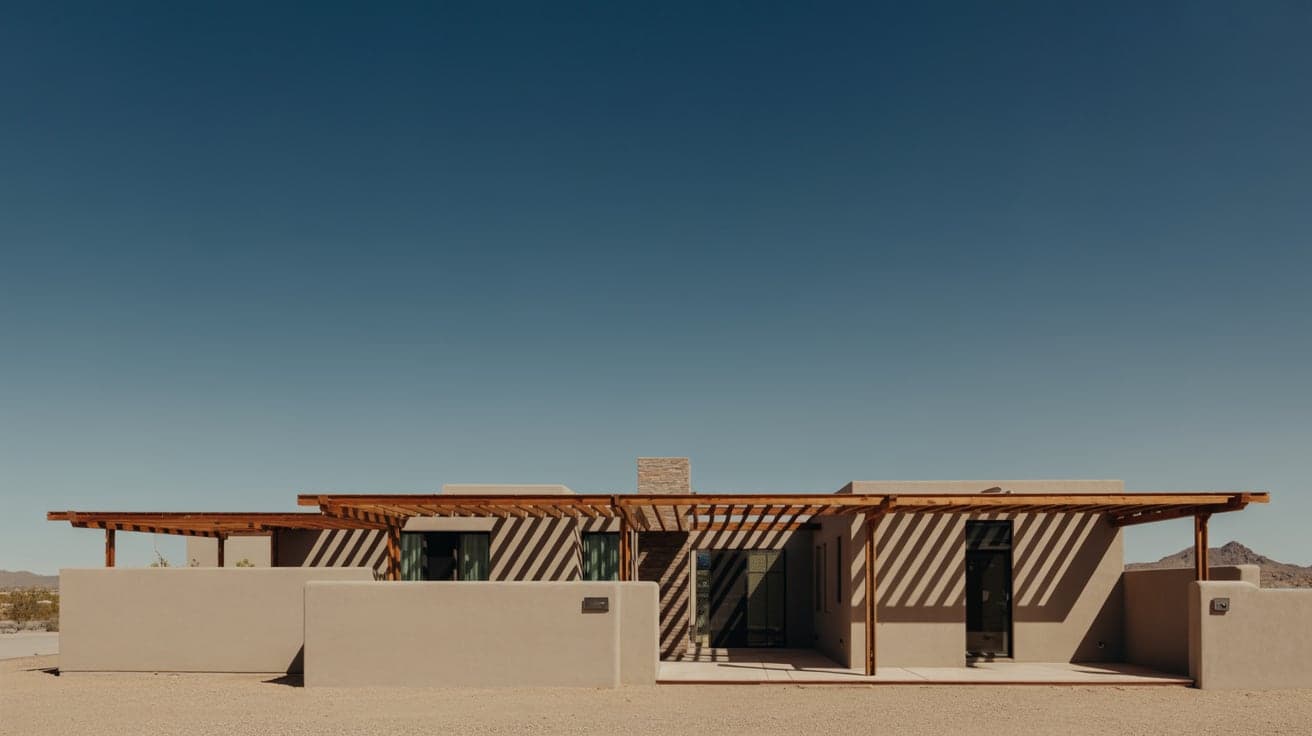
Appearance and HOA rules. Plenty of Gilbert and Chandler communities have approved color palettes. Cool-colored tile and granules exist precisely so you can gain reflectivity without fighting an architectural committee.
A coating is not a repair. White elastomeric over cracked tile, failed underlayment, or a saturated deck buys you nothing but a delay. We will tell you when a coating is the right call and when it is not.
Does a Reflective Roof Do Anything Beyond Comfort?
White roofing contributes to a healthier planet by reducing energy demand and lowering greenhouse gas emissions. By choosing a reflective roof, you're also helping combat the urban heat island effect, where cities become significantly warmer due to widespread heat-absorbing surfaces.
That effect is not abstract in Phoenix. Overnight lows have been climbing faster than daytime highs, and the EPA cites modeling showing that citywide cool roof adoption could offset 18 percent of heat-related mortality. One house will not change a city's climate, but a neighborhood of reflective roofs measurably changes the air above it.
Is a White Roof the Right Move for Your Home?
If your roof is nearing replacement anyway, reflectivity is close to free to add. If your roof has years left, a coating on the low-slope sections plus attic insulation and ventilation work usually delivers more comfort per dollar than a full tear-off. The answer depends on what you actually have up there, which is why we look before we recommend.
Eco Roofing Solutions is a family-owned contractor working across the Phoenix metro from our office at 75 W Baseline Rd Suite 19 in Gilbert. Owner and President Eric Perry is a third-generation roofer with over 25 years of hands-on experience. We hold Arizona ROC license 330901 (CR-42), we're members of the Arizona Roofing Contractors Association for both residential and commercial work, and we serve homeowners from Mesa to Glendale.
Ready to explore whether a white roof is right for your home? Contact us at Eco Roofing Solutions to talk through your reflective roofing options and schedule a consultation. We're here to help you stay cool, save money, and go green.