Your roof controls more of your summer cooling load than any other single part of the house. Four things do the work: how much sunlight the roof surface reflects, how well the space beneath it is insulated, how well that space is ventilated, and how the material itself handles heat across the day. Get those four right and the air conditioner runs less. Get them wrong and no amount of extra AC capacity fully makes up for it.
If you live in Mesa, Arizona, you know your home faces the sun every day. We all enjoy the 300 days of sunshine, but the heat can really drive up your utility bills. Staying cool isn't just about getting a bigger AC; it's also about having an energy-efficient roof design.
Which Parts of Roof Design Actually Control Energy Use?
The surface
The Cool Roof Rating Council measures two radiative properties: solar reflectance, which is how much sunlight the surface bounces back, and thermal emittance, which is how well the material sheds the heat it does absorb. Both are scored from 0 to 1. A surface can be reflective and still run hot if it holds onto absorbed heat, which is why the CRRC rates both rather than one.
The assembly
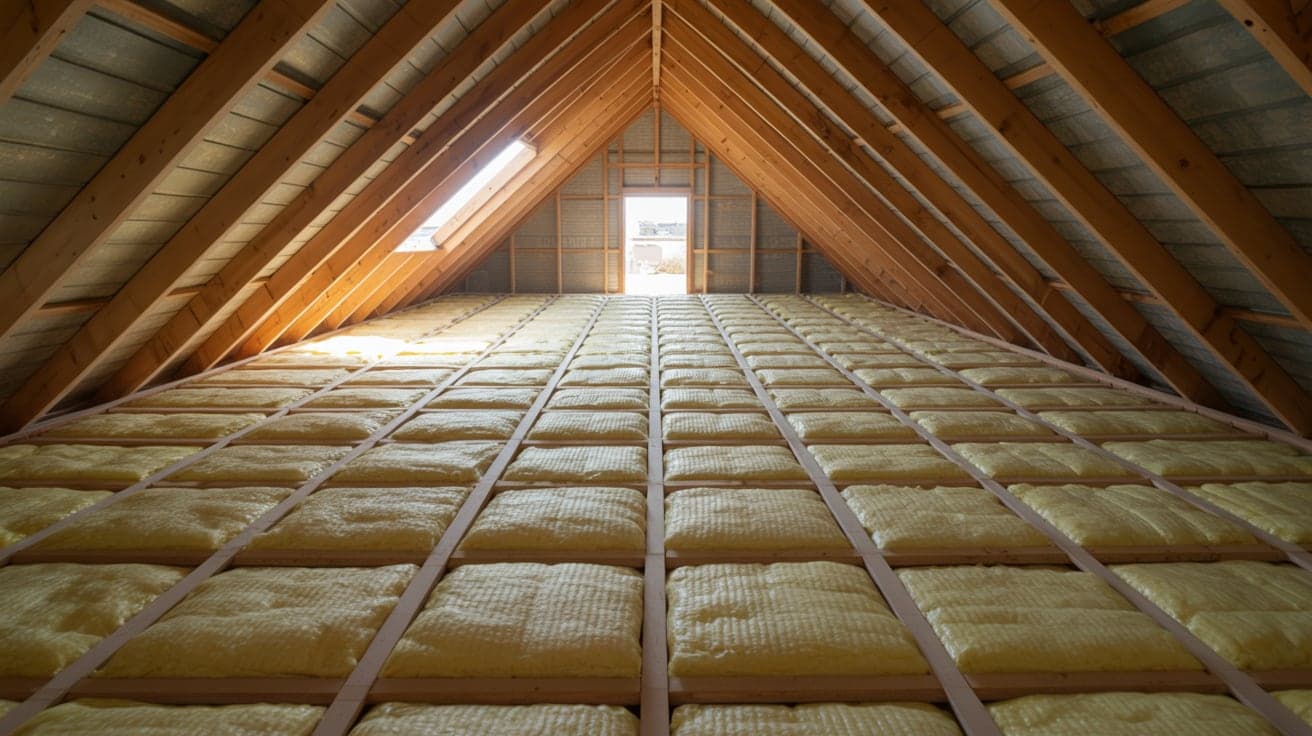
Reflectance handles the heat that never gets in. Insulation handles the rest. The Phoenix metro is IECC climate zone 2B, hot and dry, and for zone 2 ENERGY STAR recommends R-49 in an uninsulated attic, or R-38 where three to four inches are already in place. A reflective roof over a poorly insulated attic is a partial fix at best.
The airflow
Insulation slows heat transfer. Ventilation removes the heat that has already collected. The International Residential Code sets minimum net free vent area at 1/150 of the vented space, with a 1/300 allowance when 40 to 50 percent of that area sits in the upper portion of the attic and the balance comes from eave or cornice vents.
The material's behavior over a day
Some materials resist heat gain. Others delay it. On a desert roof, delay is worth real money, because pushing peak heat transfer to the evening moves load off the hottest part of the utility day.
How Do Cool Roofs Reduce Heat Islands?
Your roof does more than just cover your head; it impacts your entire neighborhood. Traditional dark roofs absorb massive amounts of heat, contributing to the "Urban Heat Island" effect, where cities stay hotter than surrounding areas. By switching to a cool roof design, using highly reflective materials, you reflect far more sunlight away from your home. This simple change helps lower ambient temperatures for everyone while keeping your own attic significantly cooler.
The EPA's heat island work gives you the scale of it: on a typical summer afternoon, a clean white roof reflecting 80 percent of sunlight stays roughly 50°F cooler than a gray roof reflecting only 20 percent. The EPA also notes that cool roofs can run up to 50 to 60°F cooler than conventional materials during peak summer weather. In a metro area with as much roof and pavement as ours, that adds up beyond the property line.
What Do Cool Roofs Actually Save?
A smart roof design can make a big difference in your energy bills. The honest answer on the size of that difference is that it depends on your specific house, and anyone who quotes you a single percentage without looking at your attic is guessing.
Here is what is measurable. The Department of Energy states that conventional roofs can reach 150°F or more on a sunny summer afternoon, while a reflective roof under the same conditions can stay more than 50°F cooler. That temperature difference is the source of the savings, because it is the difference driving heat down through your ceiling. For a related retrofit with a published figure, the Department of Energy estimates a radiant barrier can save 5 to 10 percent on cooling costs in the southern half of the United States.
Two things shape how much of that reaches your bill: how much insulation sits between the roof and your living space, and whether your ductwork runs through the attic. If your ducts are up there, attic temperature is affecting your cooling twice, once through the ceiling and again through the duct walls.
Why Does Energy-Efficient Roofing Matter More in Arizona?
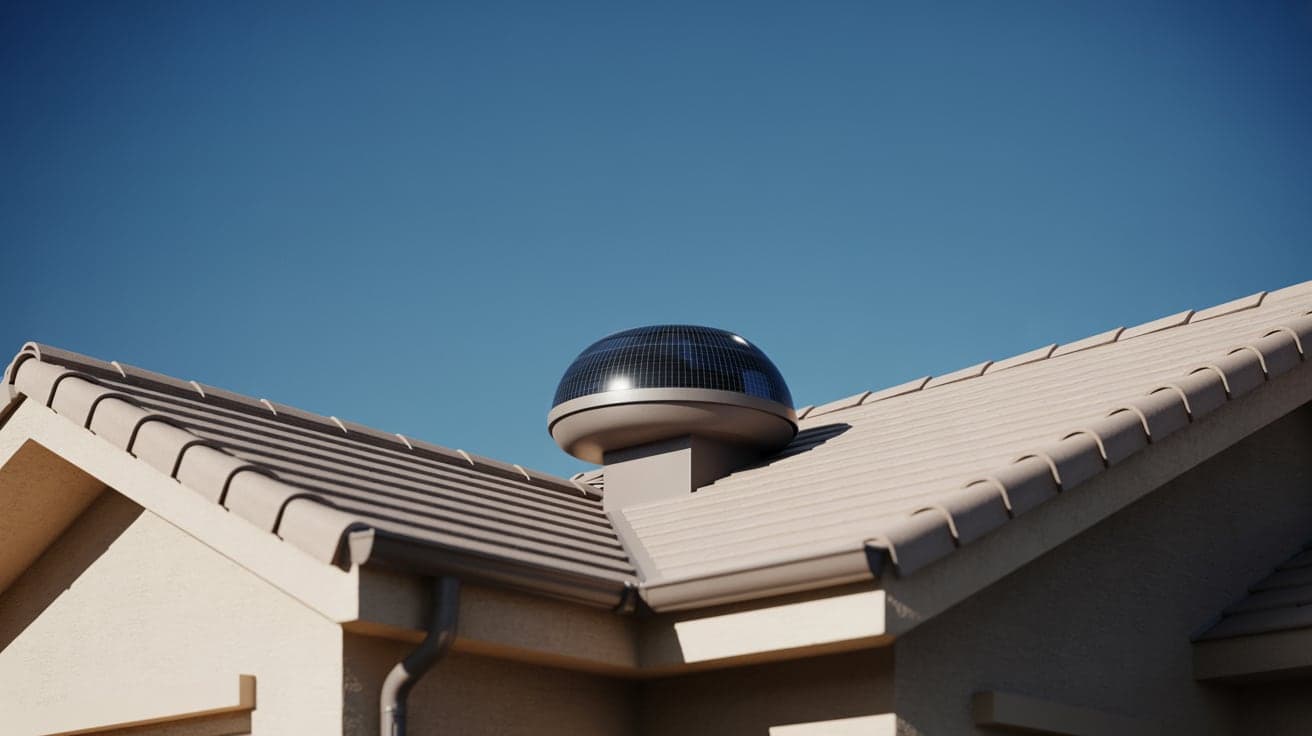
In our desert climate, good roof ventilation is essential. A well-designed roof not only blocks heat but also allows air to flow. This airflow pushes hot air out of your attic, so it doesn't heat up your living space. As a result, your air conditioner works less, lasts longer, and your home feels more comfortable.
Climate zone 2B is cooling-dominated. Homes here run air conditioning for a large share of the year, and the winter heating penalty that makes reflective roofs a trade-off in northern states barely registers here. That is the reason roof design decisions that are debatable in Denver are straightforward in Mesa.
Which Roofing Materials Work Best on Arizona Homes?
Not all roofs work the same way. Here's a quick look at some energy-efficient roof shapes and materials:
- Clay and concrete tiles have great thermal mass, so they slowly absorb heat and delay its transfer until the evening, when it's cooler.
- Metal roofing is highly reflective and cools down quickly at sunset, making it a great option for eco-friendly roof design.
- Spray foam is a popular choice for flat roofs because it provides excellent insulation and seals the roof well.
| Material | How it handles desert heat | Typical service life | Worth knowing |
|---|---|---|---|
| Concrete or clay tile | Thermal mass plus a ventilated air gap beneath the tile delays heat transfer to evening | Tile bodies commonly 50 years or more | The underlayment is the real clock. It is typically replaced on a much shorter cycle than the tile |
| Asphalt shingle | Depends entirely on the product. Cool-rated shingles with reflective granules are available | Shorter than tile in this climate | Check for a CRRC rating rather than judging by color alone |
| Metal | High reflectance, and it sheds absorbed heat quickly once the sun is off it | Long, with coating quality driving the range | Fastener and panel movement details matter under monsoon wind loads |
| Spray polyurethane foam | Insulation and waterproofing in one layer, applied seamlessly | Long-lived when the coating cycle is kept up | The topcoat is a maintenance item, not a set-and-forget layer |
| Single-ply membrane (TPO, PVC) | Reflective surface on flat and low-slope sections | Commonly measured in decades | Drainage design matters as much as the membrane itself |
Does Roof Color Alone Do the Job?
No, and this is where a lot of money gets spent for less return than expected. A reflective surface over an under-insulated, under-ventilated attic still leaves you with a hot ceiling. The order of operations that actually pays off in the Valley usually looks like this:
- Bring attic insulation up to current recommendations for zone 2.
- Fix ventilation. Clear blocked soffit vents, and get intake and exhaust balanced instead of just adding more exhaust.
- Seal the ceiling plane, including can lights, top plates and attic hatches.
- Then look at the roof surface itself, ideally when the roof is due for replacement anyway.
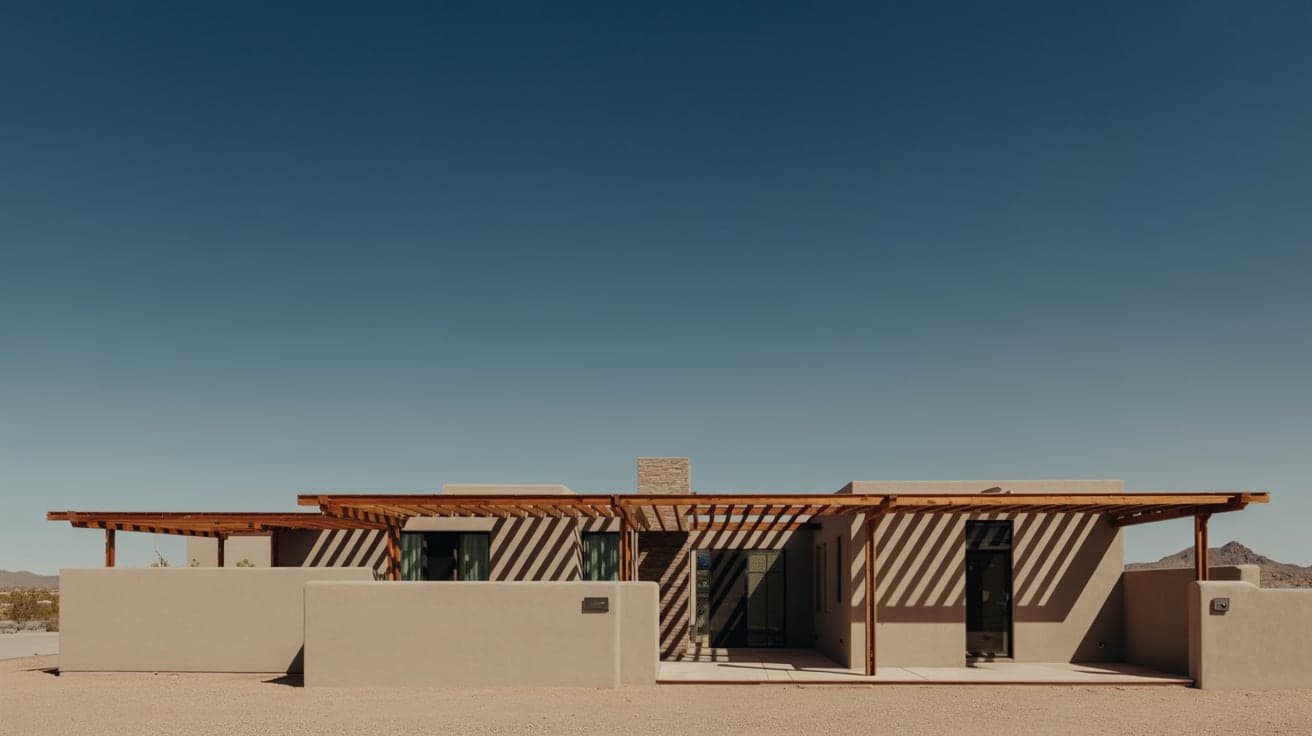
Roof geometry helps too. Wider eaves shade walls and windows during the highest sun angles, and a radiant barrier on the underside of the roof deck cuts the radiant load into the attic before it ever reaches your insulation.
How Do You Tell If Your Roof Is Working Against You?
- Upstairs or west-facing rooms that never catch up, no matter what the thermostat says
- An air conditioner that runs nearly continuously through the afternoon
- An attic that is still brutally hot hours after sunset, which points at ventilation
- Insulation that is thin, compressed, or pushed aside from past attic work
- Soffit vents blocked by insulation, paint or bird screening
- Ductwork running through a superheated attic with damaged or missing insulation
If several of those describe your house, the roof assembly is worth a proper look before you spend anything on the roof surface.
Update Your Roof Today
Want to lower your bills? Whether you need a more energy-efficient roof or better ventilation, now is a great time to make a change. A cooler home could be just one renovation away.
Eco Roofing Solutions is a family-owned contractor licensed under Arizona ROC 330901 (CR-42) and a member of the Arizona Roofing Contractors Association. Owner and president Eric Perry is a third-generation roofer with over 25 years of hands-on experience in this climate. If you want a straight assessment of your residential roof and attic, whether that ends in a full replacement or just repair and maintenance work, reach out and we will walk you through what we find.
Image Credit: Irene Miller/ Shutterstock