Roof insulation is what stands between a superheated attic and your living space, and in the low desert it is doing that job for four to five months a year. Getting it right is not just about adding more material. The three parts that actually determine how much heat reaches your rooms are the insulation level, the attic ventilation moving hot air out, and the reflectance of the roof surface itself. Fix one and ignore the other two and you will not see the result you paid for.
Why roof insulation matters in hot climates
In Arizona, your roof is the first and last line of defense against extreme heat. On a hot day, your roof can reach 150°F, turning your attic into a giant heat collector. Without proper roof insulation, all that heat radiates down into your home. This forces your A/C to work overtime, leading to higher energy bills, uncomfortable hot spots, and extra wear and tear on your HVAC system.
The Environmental Protection Agency's heat island research puts numbers on the same idea from the other direction: conventional roof surfaces can run far above the surrounding air temperature in summer sun, while reflective cool roof surfaces stay roughly 50 to 60 degrees Fahrenheit cooler than conventional materials at peak. That temperature difference is the load your insulation has to absorb.
How much attic insulation does an Arizona home actually need?
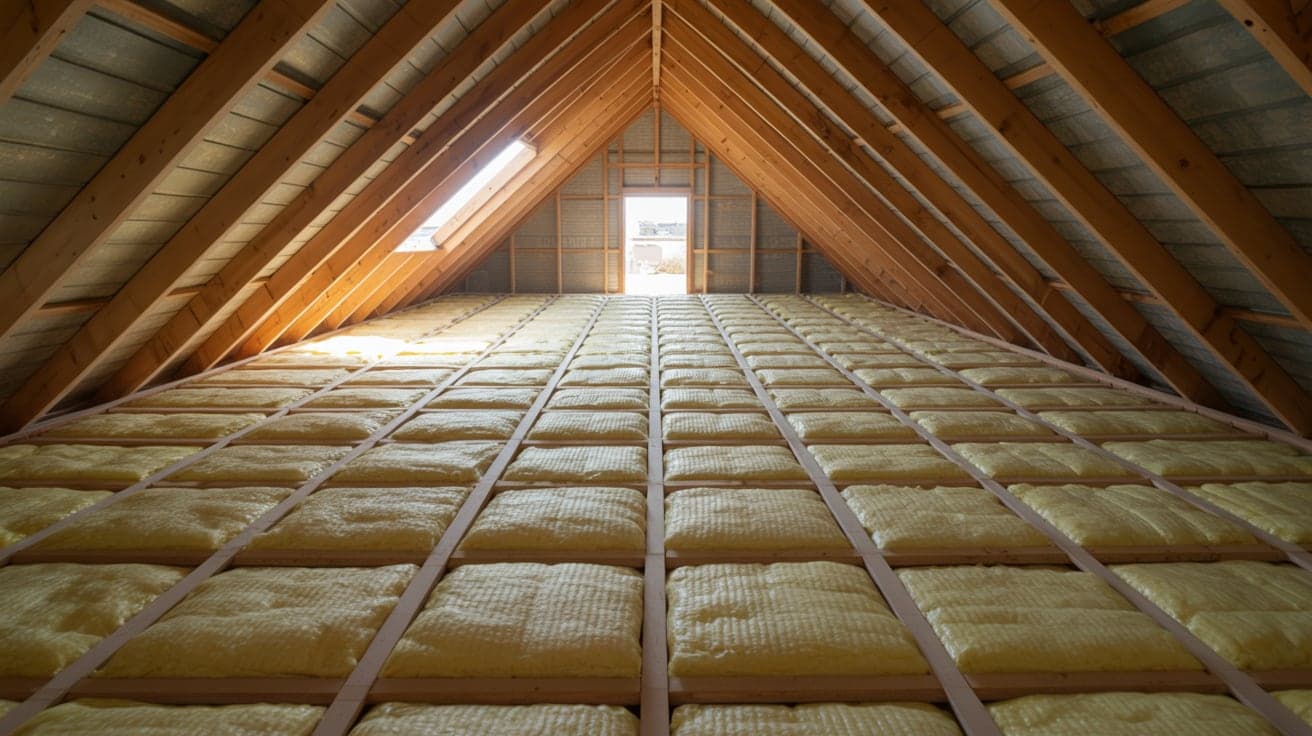
The Phoenix metro falls in climate zone 2 under the federal climate zone map, specifically the hot-dry 2B subzone. ENERGY STAR publishes recommended insulation levels by zone, and for zone 2 the guidance is approximately R-49 for an uninsulated attic, or roughly R-38 added where three to four inches of insulation is already present.
Two things to understand about that number:
- R-value is a total, not a thickness. How many inches you need to reach R-49 depends entirely on the material. Loose-fill fiberglass and cellulose need considerably more depth than closed-cell spray foam does to hit the same number.
- Most older Valley homes are short of it. A house built decades ago and never upgraded frequently has settled, thinned, or displaced insulation, and the depth in the middle of the attic tells you nothing about the depth out at the eaves where installers often run short.
A quick way to gauge your own attic: if the insulation is level with or below the tops of the ceiling joists, you are almost certainly well under current recommendations.
What types of roof insulation work best against desert heat?
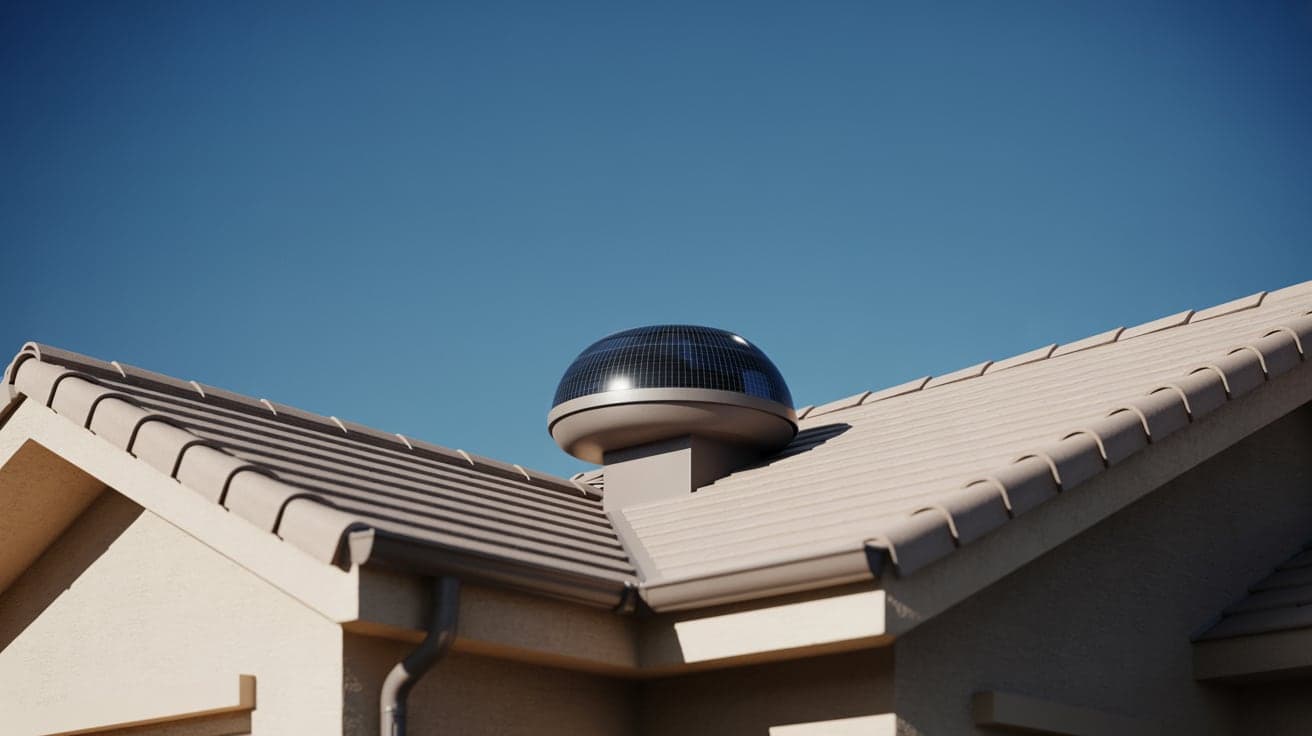
To fight the Arizona sun, you need a smart insulation strategy. Materials like fiberglass and rigid board work by slowing down heat. But for maximum protection, you need to fight all types of heat. Radiant barriers, for example, are ideal for hot climates because they reflect intense solar heat away from your attic. For a powerful, all-in-one solution, spray foam insulation expands to create an air-tight seal, stopping both heat and air leaks in their tracks.
| Material | Approximate R-value per inch | How it is used | Notes for the low desert |
|---|---|---|---|
| Loose-fill fiberglass | Roughly R-2 to R-3 | Blown over the attic floor | Common and economical; settles over time, so depth should be verified |
| Loose-fill cellulose | Roughly R-3 to R-4 | Blown over the attic floor | Denser than fiberglass; good coverage around obstructions |
| Fiberglass batts | Roughly R-3 to R-4 | Between joists or rafters | Performance depends heavily on gap-free installation |
| Rigid foam board | Roughly R-4 to R-6 and up by type | Above deck on low-slope and commercial roofs | Standard approach on flat commercial assemblies |
| Open-cell spray foam | Roughly R-3.5 to R-4 | Applied to the roof deck underside | Air-seals as it insulates; vapor behavior must be designed for |
| Closed-cell spray foam | Roughly R-6 and up | Applied to the roof deck underside | Highest R per inch; also adds structural rigidity and air sealing |
| Radiant barrier | Not rated in R-value | Stapled to rafters or laid over insulation | Reflects radiant heat rather than resisting conduction |
Those per-inch figures are the ranges published in Department of Energy insulation guidance, and manufacturers vary within them. Ask for the specific product data rather than assuming a category number.
Where radiant barriers fit
A radiant barrier is not insulation and does not replace it. It is a highly reflective surface, usually aluminum foil on a substrate, that reflects radiant heat instead of absorbing it. The Department of Energy notes that some studies show radiant barriers reducing cooling costs by 5 to 10 percent in a warm, sunny climate, and that they are more effective when cooling ducts run through the attic. In the Valley, ducts in the attic are the norm rather than the exception, which is why radiant barriers get talked about here more than in most of the country.
Proper installation for optimal performance
The best materials in the world won't work if they are installed incorrectly. An insulation's performance is dependent on proper installation. It must work with your attic's ventilation to help prevent hot air from becoming trapped within your attic space and home. If insulation blocks vents, it can trap moisture and heat that can result in structural damage and high energy bills, which is why professional installation is key to ensuring your roof system works as one.
The code gives a concrete target for that ventilation. The International Residential Code requires a minimum net free ventilating area of 1/150 of the vented attic area, and allows a reduction to 1/300 when the ventilation is properly balanced, meaning not less than 40 percent and not more than 50 percent of the required area is provided by vents in the upper portion of the attic with the balance coming from eave or cornice vents.
In practice, that means three installation details matter as much as the R-value:
- Keep insulation off the soffit vents. Baffles at the eaves preserve the intake air path. Blown insulation pushed into the eaves is one of the most common defects we find.
- Balance intake and exhaust. Adding exhaust vents without matching intake does not increase airflow; it can pull air from the house instead.
- Air-seal before you insulate. Can lights, top plates, duct chases, and attic hatches leak conditioned air. Insulation laid over an unsealed ceiling plane underperforms its rating.
Does the roof surface itself change the equation?
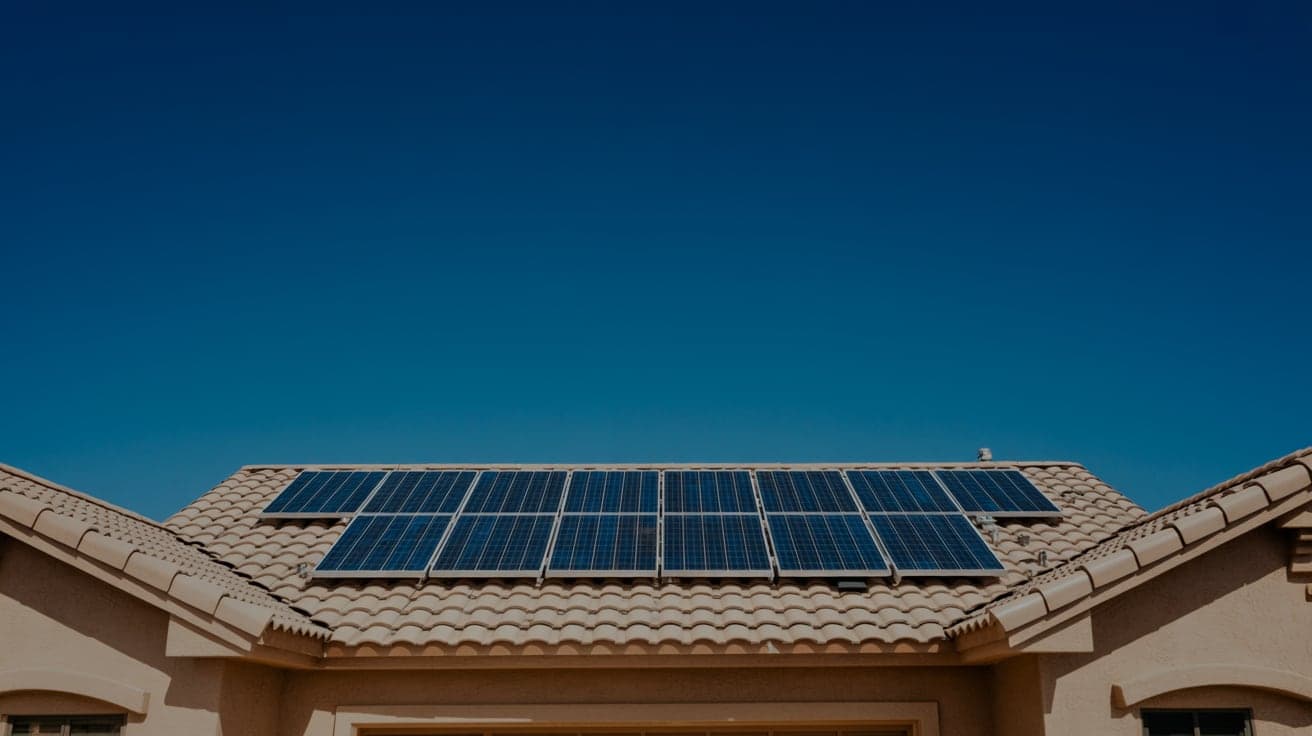
Yes, and it is the cheapest part of the system to influence at replacement time. The Cool Roof Rating Council independently rates roof products for solar reflectance and thermal emittance, the two properties that determine how much solar energy a roof rejects and how well it sheds the heat it does absorb. Those two values feed the Solar Reflectance Index, which is the number specifications usually reference.
The CRRC publishes both initial values and aged values measured after three years of real outdoor exposure, with one of its approved exposure sites in Arizona representing the hot and dry climate. That aged number is the honest one for planning, because dust and weathering reduce reflectance over time. On a reflective roof in the Valley, periodic cleaning is part of keeping the performance you specified.
If you are already replacing the roof, choosing a rated reflective product or coating costs far less than retrofitting one later, and it reduces the heat load your insulation has to handle in the first place. Our residential roofing team can walk through the rated options that suit your roof type.
What about flat and commercial roofs?
Commercial and low-slope assemblies handle insulation differently. Rather than sitting on a ceiling below a vented attic, insulation is typically rigid board installed above the deck and beneath the membrane, often with tapered board to build slope toward drains. That configuration puts the insulation, the vapor control, and the membrane into one continuous assembly, so a wet or compressed section of board is both an energy problem and a leak-related one.
Two things facility managers should watch:
- Moisture in the insulation layer. Wet board loses R-value and does not recover. It is also the reason a small membrane breach can become an expensive tear-off years later.
- Reflectance maintenance. As with residential cool roofs, a soiled membrane does not deliver its rated reflectance. Cleaning belongs in the maintenance schedule.
Our commercial roofing and commercial roofing repair and maintenance services cover both new assemblies and keeping existing ones performing.
Benefits of investing in quality roof insulation
Investing in a quality roof insulation system isn't just about lower energy bills. It's about total home comfort and long-term protection. By reducing the thermal stress on your roofing materials, proper insulation actually helps extend your roof's lifespan.
The benefits stack in a predictable order:
- Comfort first. Hot rooms on the west and south sides usually improve before the utility bill does.
- Less HVAC runtime. A system that cycles instead of running continuously through August experiences less wear.
- Slower material aging. Heat drives the breakdown of asphalt, underlayment, and sealants, so a cooler assembly ages more slowly.
- Fewer moisture surprises. Correct ventilation and air sealing keep humid indoor air out of the attic where it can condense on the deck.
Not sure where to start? Contact Eco Roofing today for a professional insulation assessment. We'll help you find the right solution to keep your home cool and protected for years to come.
Eco Roofing Solutions is family-owned, licensed in Arizona under ROC 330901 (CR-42), and a member of the Arizona Roofing Contractors Association. We work throughout the Phoenix metro from our office in Gilbert, and Google reviewers rate us 4.8 stars across 385. If your upstairs runs hot every summer and you are tired of guessing why, we will get in the attic and tell you what is actually happening up there.
Image credit: // Shutterstock // Budimir Jevtic