The single most effective thing you can do about monsoon season is fix the roof before it starts. Nearly every storm-related leak we respond to between June and September traces back to something that was already wrong in April: a cracked tile, a failed pipe boot, brittle underlayment, loose flashing, or a drain packed with silt. Monsoon storms do not usually create damage out of nothing. They find what was already there and force water through it.
At Eco Roofing Solutions, we know how intense Arizona's monsoon season can be. The combination of high winds, heavy rain, dust storms, and even hail can put serious stress on your roof. That's why it's so important to make sure your home is prepared to handle the extreme weather that arrives each year. We're here to help you protect one of your home's most vital components, your roof.
Understanding Arizona's monsoon season
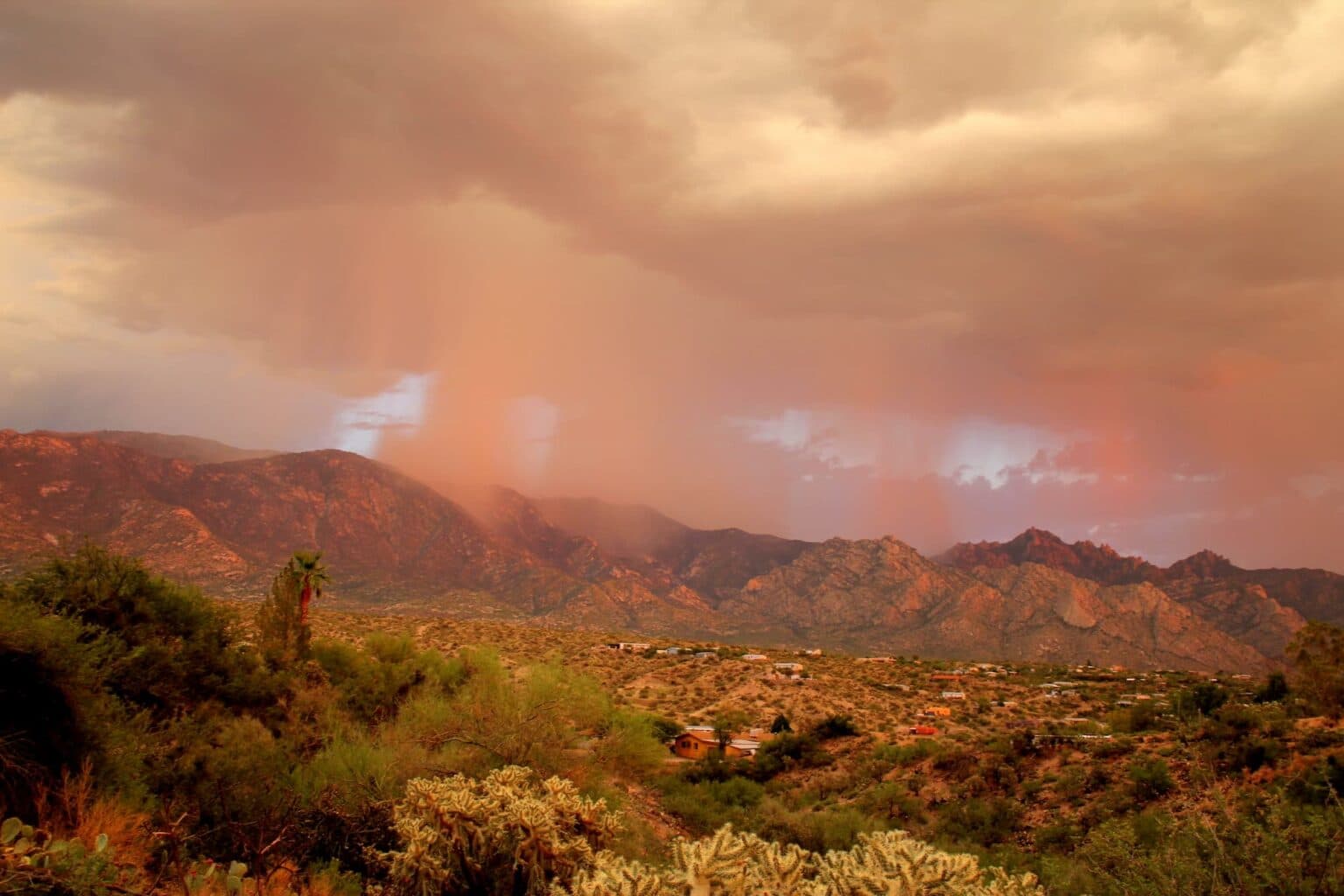
Monsoon season in Arizona typically runs from mid-June through September. During this time, sudden and severe storms can bring strong winds, torrential downpours, and rapid changes in temperature. These weather conditions can lead to water intrusion, shingle damage, and structural wear, especially for roofs that are already aging or in need of repair.
The National Weather Service sets the official season as June 15 through September 30. Three hazards inside that window matter most for roofs:
- Microbursts. NOAA describes a microburst as a small downburst, generally less than about 2.5 miles across, lasting only a few minutes, with maximum winds that can exceed 100 mph. These are the storms that strip shingles and slide tile.
- Haboobs. A collapsing thunderstorm's downdraft spreads outward across the desert floor and lifts a dense wall of dust that abrades roofing surfaces and packs into gutters and drains. We cover this in more detail in our post on dust storms and roof damage.
- Heavy, fast rain. Monsoon rain arrives in short, intense bursts rather than the steady soaking a drainage system handles gracefully. A gutter or roof drain that works fine in a winter rain can overwhelm in ten minutes of monsoon downpour.
Why does roof protection matter so much here?
Your roof is your home's first line of defense during a monsoon. Without proper protection, storm damage can result in leaks, mold growth, or costly structural issues. A well-maintained and properly sealed roof helps prevent water from seeping in and keeps your home safe and dry during even the harshest storms.
There is a desert-specific wrinkle worth understanding. Because the Valley goes long stretches without meaningful rain, roof defects here stay silent for months at a time. A homeowner in a wetter climate gets a warning leak in the first light rain. Here, the first real test of the year often comes with 60 mph wind behind it.
What fails first on a Valley roof during a storm?
| Storm hazard | What it does to the roof | The pre-season fix |
|---|---|---|
| Microburst winds | Lifts unsealed shingle tabs, slides and cracks tile, peels loose membrane edges | Re-secure loose material, replace cracked tile, check edge metal fastening |
| Wind-driven rain | Pushes water sideways under tile, behind flashing, and into wall intersections | Repair flashing at walls, chimneys, and skylights; verify counterflashing |
| Blowing dust | Abrades surfaces and silts up gutters, valleys, scuppers, and drains | Clear all drainage paths and the flat-roof drain baskets |
| Downpour volume | Overwhelms undersized or blocked drainage and backs water up under the roofing | Clean gutters and downspouts, confirm overflow paths are open |
| Debris and branches | Punctures membranes, breaks tile, dams water in valleys | Trim limbs clear of the roof plane before June |
| Ponding after rain | Adds load and shortens membrane and coating life on flat sections | Correct low spots and confirm drains actually drain |
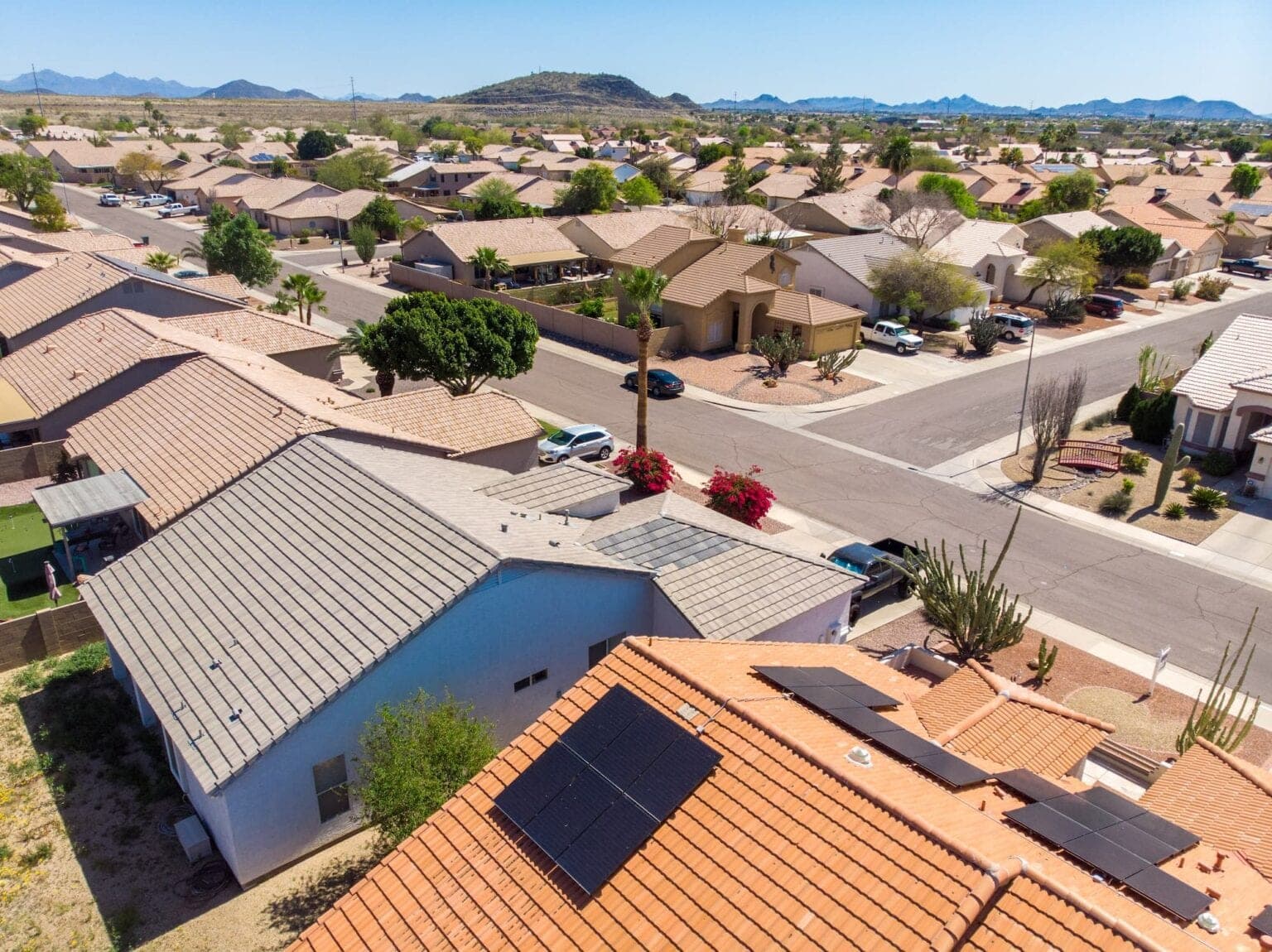
The two failure points we find most often on Valley homes are aging tile underlayment and roof penetrations. On a tile roof, the tile sheds most of the water but the underlayment is the real waterproofing layer, and in this climate that underlayment ages considerably faster than the tile above it. Penetrations, meaning pipe boots, vents, skylight curbs, and equipment flashings, are the other habitual offender because they involve a seam between two materials that expand at different rates through 100-degree temperature swings.
Roof maintenance strategies
At Eco Roofing Solutions, we recommend a proactive approach. Start by scheduling a roof inspection before monsoon season hits. We'll look for cracked tiles, damaged flashing, and signs of wear that could turn into bigger problems. Keeping gutters clean, trimming nearby trees, and addressing small repairs early can all make a big difference when storms roll in.
A practical pre-monsoon sequence, ideally done in April or May:
- Inspect the roof covering. Cracked, slipped, or missing tile. Lifted, curled, or bare shingles. Thin or chalky coating on foam. Open seams on a membrane.
- Inspect every penetration. Pipe boots, vent stacks, skylights, swamp cooler curbs, solar mounts, and satellite anchors.
- Inspect flashing and terminations. Wall intersections, chimneys, parapet caps, and edge metal.
- Clear the drainage. Gutters, downspouts, valleys, scuppers, drain baskets, and overflow outlets.
- Trim vegetation. Anything overhanging or within striking distance in a strong gust.
- Look in the attic. Daylight, dust trails, or staining tell you where wind and water are already finding a path.
- Fix what you found. A cracked tile is a same-day repair in spring and a ceiling replacement in August.
What should you do right after a storm?
Do not climb onto a wet roof, and do not go up at all if the roof has visible structural damage. Almost everything useful can be done from the ground or from inside.
- Walk the perimeter and look for shingle pieces, tile fragments, or granules washed into the gutters and onto the driveway
- Scan the roof planes with binoculars for out-of-line tiles and bare patches
- Check ceilings and the tops of interior walls for fresh staining, and look in the attic with a flashlight
- Photograph anything you find, with dates, before repairs begin
- Have a roofer look at anything you cannot explain, even if there is no active leak
A leak that shows up in one storm and then goes quiet has not fixed itself. It has simply stopped raining. Our residential roofing repair and maintenance team handles this work throughout the Phoenix metro, and homeowners in Mesa and the surrounding East Valley cities see the same handful of failure patterns year after year.
How is monsoon prep different for a commercial building?
Low-slope commercial roofs face a different set of risks than pitched residential roofs. Wind uplift acts hardest at corners, edges, and parapets, so termination details and edge metal fastening deserve specific attention. Drainage is the other priority, because a flat roof holds what it cannot drain, and a blocked drain during a monsoon downpour puts real weight on a deck within minutes.
For a facility manager, three items belong on the calendar before June 15:
- Drain and scupper clearing, including overflow outlets, which are the last defense against ponding load
- A rooftop equipment walk, since HVAC curbs, condensate lines, and equipment flashings are the most frequent commercial leak source
- An edge and seam check, because uplift damage almost always starts at a termination rather than in the field of the roof
We handle both sides of that work through our commercial roofing and commercial roofing repair and maintenance services, and we serve buildings across Phoenix and the wider metro.
Contact us at Eco Roofing Solutions to learn more about protecting your home's roof
Eco Roofing Solutions is family-owned and licensed in Arizona under ROC 330901 (CR-42), and we are members of the Arizona Roofing Contractors Association for both residential and commercial work. Owner and president Eric Perry is a third-generation roofer with over 25 years of hands-on experience in this climate, which is the difference between guessing where a monsoon leak came from and knowing.
Don't wait until a storm causes damage. Contact us at Eco Roofing Solutions today to schedule your inspection and prepare your roof for Arizona's monsoon season. We're here to help you stay protected rain or shine.