
On an Arizona flat roof, the choice between a silicone and an acrylic roof coating comes down to drainage. Silicone holds up under the water that ponds after monsoon storms; acrylic stays cleaner and suits roofs that drain well. The coating already on your roof also limits what can go on next. Eco Roofing Solutions applies and renews roof coatings across the Valley.
Table of contents
- What Does a Roof Coating Do for an Arizona Flat Roof?
- Key Strengths of a Silicone Roof Coating in Arizona
- Understanding the Trade-offs of Acrylic Roof Coatings
- Silicone vs. Acrylic Roof Coating: A Side-by-Side Comparison
- Why Your Existing Coating Dictates the Next Steps
- 5 Signs Your Coated Roof Needs a Professional Inspection
- How Long Does a Silicone Roof Coating Last in Arizona's Climate?
- What Factors Drive the Cost of a Roof Coating Job?
- Frequently asked questions
What Does a Roof Coating Do for an Arizona Flat Roof?
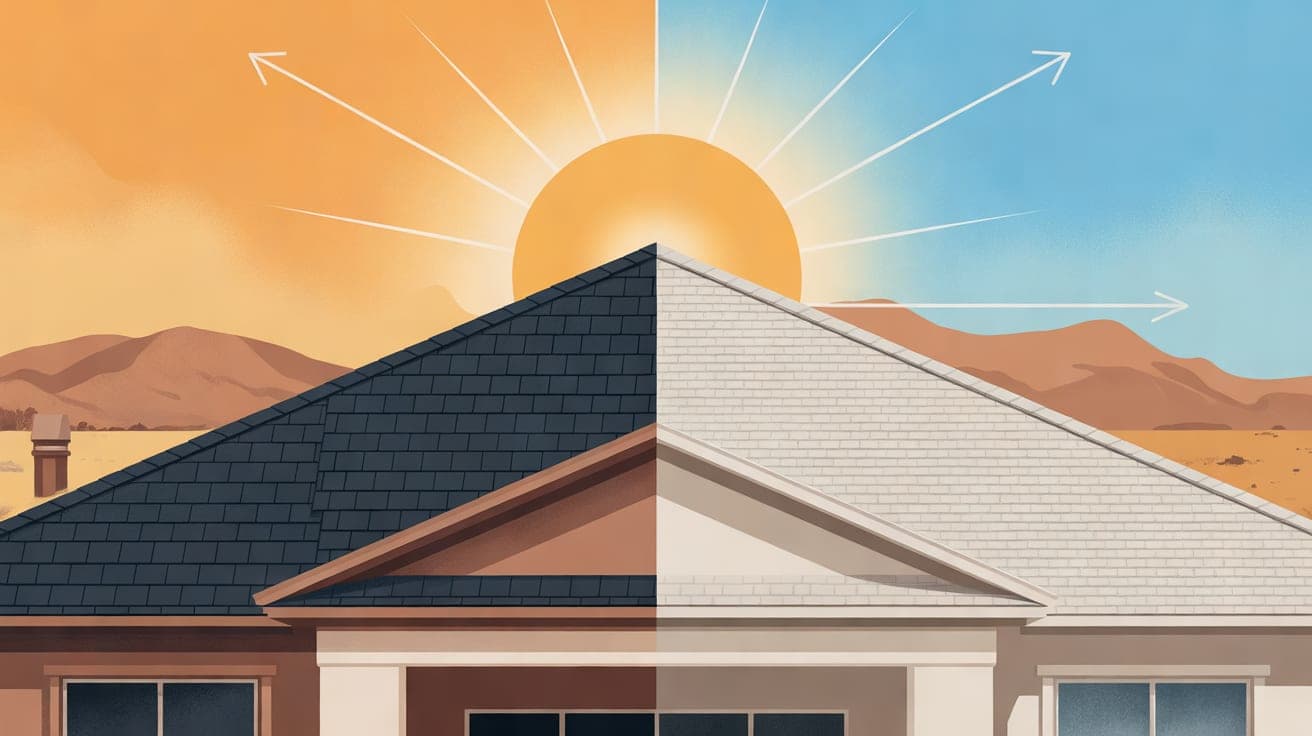
A roof coating is a monolithic, fully adhered, fluid-applied roofing membrane that protects your roof from the elements. In Arizona, its primary jobs are waterproofing and reflecting intense solar heat. A high-quality white coating acts as a shield against ultraviolet (UV) radiation, which degrades roofing materials over time. By reflecting most of the sunlight that hits it, a white coating keeps the roof surface far cooler than a dark one, so less heat soaks down into the building and the air conditioning works less. For a larger building, see how reflective coatings cut cooling load on commercial roofs.
Coatings also create a seamless waterproof layer. For materials like spray polyurethane foam (SPF), the coating is the primary defense against water and sun. On TPO and other single-ply membranes, and on modified bitumen or built-up roofs, a coating can extend the life of the roof underneath by years, sealing small cracks and slowing further wear.
Key Strengths of a Silicone Roof Coating in Arizona
A high-solids silicone roof coating offers exceptional performance against two of Arizona’s biggest roofing challenges: intense sun and monsoon downpours. Because silicone is not water-based, it is completely waterproof and highly resistant to ponding water. While other coatings might soften or lose adhesion when submerged, silicone does not, making it the superior choice for flat roof areas where water collects after a storm. Silicone coatings made for foam roofs have their own industry standard, ASTM D6694.
Silicone also provides excellent UV stability. It resists chalking and degrading under constant sun exposure, maintaining its flexibility and protective qualities for years. Its inorganic chemical structure makes it inherently more resilient to UV breakdown than organic-based acrylic polymers. High-solids silicone coatings are almost entirely solids by volume, so most of what is applied stays on the roof as cured coating. This provides a predictable and consistent dry film thickness (DFT), which is the true measure of the protective barrier you are paying for.
Understanding the Trade-offs of Acrylic Roof Coatings
Acrylic coatings are water-based elastomeric membranes that provide good UV protection and durability for many Arizona roofs. They are a proven technology and often a more budget-conscious choice upfront. They bond well to various surfaces and tend to have higher resistance to abrasion and foot traffic than some silicones. Acrylics also stay cleaner, as their harder surface is less prone to attracting and holding onto blowing dust and dirt.
The primary trade-off is their performance with ponding water. Because they are water-based, acrylics can re-emulsify (soften and lift) if they are submerged in standing water for an extended period. This makes them unsuitable for roofs with poor drainage or low spots where water sits for more than 48 hours after a rainstorm, a common scenario during monsoon season. Their application is also more sensitive to weather; they cannot be applied if rain is imminent, as they need time to cure fully.

Silicone vs. Acrylic Roof Coating: A Side-by-Side Comparison
Choosing the right coating involves weighing these factors against your specific roof and budget. Here is a direct comparison of their performance in key areas.
| Feature | Silicone Roof Coating | Acrylic Roof Coating |
|---|---|---|
| Ponding Water | Excellent. Does not break down or lose adhesion when submerged. | Poor. Can re-emulsify and peel if water stands for 48+ hours. |
| UV Resistance | Excellent. Inorganic backbone resists UV degradation and chalking. | Good. Reflects UV rays but can chalk and lose thickness over time. |
| Dirt Pickup | Tends to attract and hold dirt, which can reduce reflectivity. | Good. Harder surface stays cleaner and maintains reflectivity better. |
| Flexibility | Remains highly flexible in a wide range of temperatures. | Good flexibility, but can become more brittle with age and UV exposure. |
| Application | Less sensitive to temperature and humidity during cure. | Requires specific temperature and humidity; cannot be applied if rain is forecast. |
Why Your Existing Coating Dictates the Next Steps
The cardinal rule of recoating is that like sticks to like. Before any roofer can provide an accurate quote, they must identify the existing coating, as it dictates the entire process.
If you have a silicone coating, you almost always have to recoat with silicone. Other materials, including acrylic, will not form a permanent bond directly to a cured silicone surface because it is too slick and inert. Attempting to apply acrylic over silicone without extensive, specialized preparation and a specific tie-coat primer will lead to widespread failure.
If your roof has an acrylic coating, it can typically be cleaned and recoated with another layer of compatible acrylic. It is sometimes possible to apply silicone over an aged acrylic roof, but this requires thorough cleaning and often a manufacturer-specified primer to ensure proper adhesion. Misidentifying the coating and applying an incompatible product is a costly mistake.
5 Signs Your Coated Roof Needs a Professional Inspection
A properly applied coating should be inspected periodically. If you notice any of the following five signs, it’s time to schedule a professional evaluation for a maintenance recoat or commercial flat roof repair.
- Chalking: A white, powdery residue on the surface, which indicates the coating’s binder is breaking down from UV exposure.
- Thinning: The coating appears visibly thinner, especially on high spots, and the texture of the underlying material may start to show through.
- Cracking or Peeling: You see cracks, blisters, or areas where the coating is flaking or peeling away from the substrate.
- Exposed Foam or Membrane: On SPF roofs, any yellow or orange foam showing through is a critical issue. On membrane roofs, seeing the black or gray substrate means the protective layer is gone.
- Ponding Stains: Dark, discolored areas that remain after water has evaporated can indicate thinning or material breakdown in low spots.
How Long Does a Silicone Roof Coating Last in Arizona's Climate?
The lifespan of any roof coating is directly tied to its applied thickness, known as dry film thickness (DFT) and measured in mils (one-thousandth of an inch). A thicker application provides more robust protection and lasts longer. A well-applied silicone roof coating commonly lasts 10 to 15 years, and longer when it goes on thicker, before it needs a maintenance recoat. The initial quality of the preparation and application is just as important as the material itself.
Acrylic coatings have a slightly shorter lifespan under the intense Arizona sun, typically requiring a recoat sooner than a silicone system of a similar thickness. However, a well-maintained acrylic roof can still provide many years of reliable service.
What Factors Drive the Cost of a Roof Coating Job?
The final price for a roof coating project depends on several key variables, which is why a physical inspection is necessary for an accurate quote. At Eco Roofing Solutions, the inspection and the written estimate are free.
Key cost drivers include:
- Roof Size and Condition: Larger roofs require more material and labor. A roof in poor condition will need significant repairs before any coating can be applied.
- Preparation Work: All roofs must be professionally power washed. Depending on the existing surface, this may also involve scraping, patching, or treating rust on metal components.
- Primer Requirements: Some roof substrates or existing coatings require a special primer to ensure the new coating adheres properly.
- Coating Type and Thickness: The choice between silicone and acrylic affects material cost. The specified thickness (DFT) is one of the biggest factors; a 30-mil application will cost more than a 20-mil application because it uses more material.
- Access and Complexity: A roof that is difficult to access or has many pipes, vents, and HVAC units requires more detailed labor, which influences the cost.
Choosing the right coating is a long-term investment in your property. Whether you manage a large facility needing commercial roofing services or own a home with a flat or low-slope roof, understanding these differences is key. If your roof is showing its age, contact Eco Roofing Solutions for a free, no-obligation inspection. Our family-owned team will look at the roof, check what coating is on it now, and give you a written recommendation and estimate.
Frequently asked questions
Can you put a silicone roof coating over an acrylic coating?
Yes, it is often possible to apply a silicone roof coating over an existing acrylic coating. However, it requires meticulous preparation. The acrylic surface must be thoroughly cleaned to remove all chalking, dirt, and debris, and a manufacturer-approved primer is typically required to ensure a strong, permanent bond between the two different chemistries.
Is silicone roof coating better than acrylic in Arizona?
For flat roofs with poor drainage or areas prone to ponding water after monsoon storms, a silicone roof coating is generally better due to its superior waterproof qualities. For roofs with good slope and drainage, a high-quality acrylic can be a very effective and durable option that stays cleaner over time.
How thick should a roof coating be?
Roof coating thickness is specified in dry film thickness (DFT), measured in mils. For most applications, a DFT between 20 and 30 mils is standard. A 20-mil coating might be suitable for a maintenance coat, while a 30-mil application offers a longer service life. The correct thickness depends on the roof's condition and the desired longevity.
Does a white roof coating really save money on energy bills?
A white, reflective roof coating significantly lowers the surface temperature of your roof, which reduces the amount of heat transferred into your building. This lessens the load on your air conditioning system, leading to lower energy consumption and reduced utility bills, especially during Arizona's long, hot summers.
Can I apply a roof coating myself?
While it may seem straightforward, professional application is critical for a roof coating's success. Proper surface preparation, including power washing and repairs, is essential. Professionals use specialized spray equipment to apply the coating at a consistent, specified thickness, ensuring a seamless, waterproof membrane that will last for years. Incorrect application can lead to premature failure.