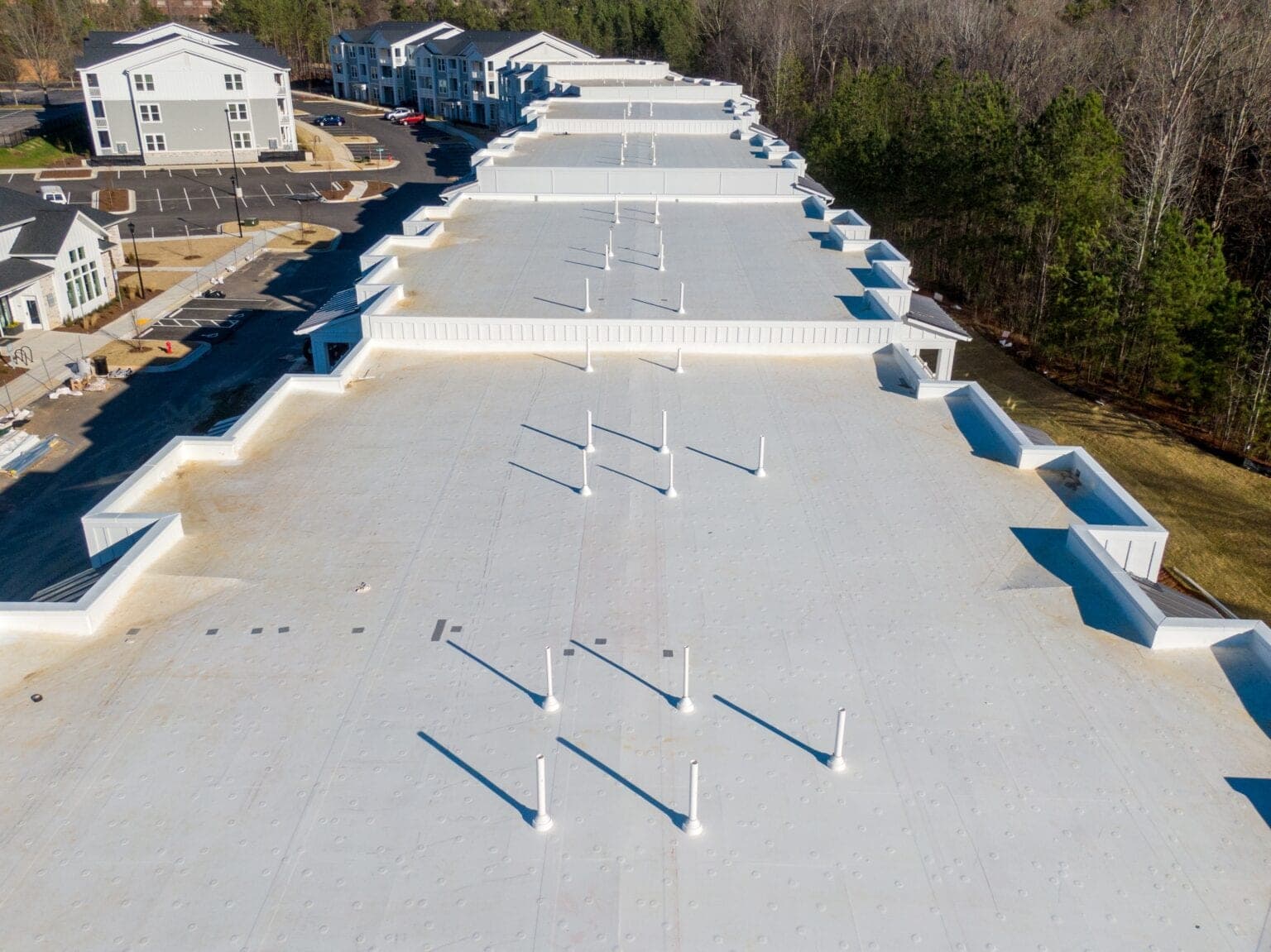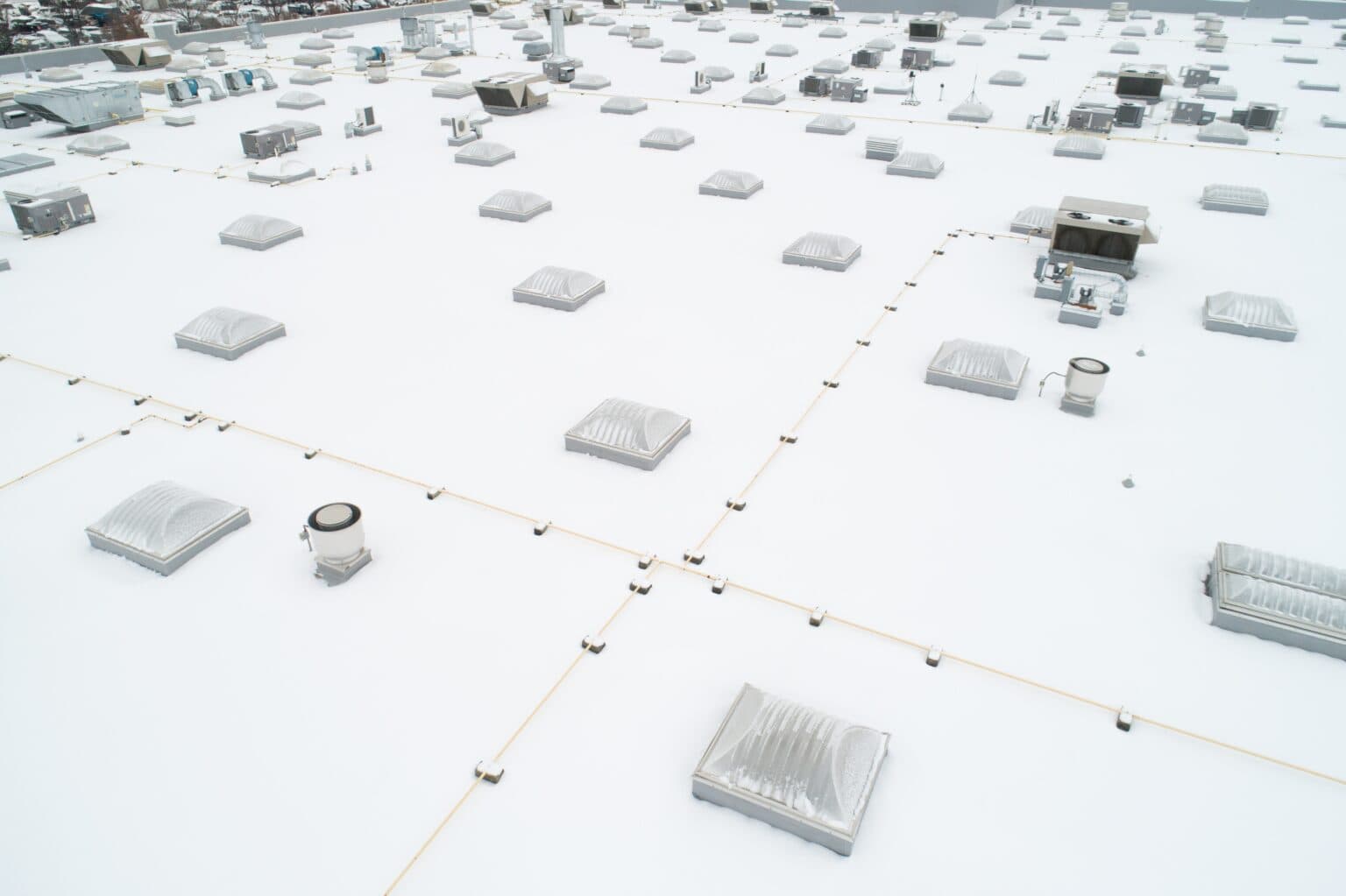
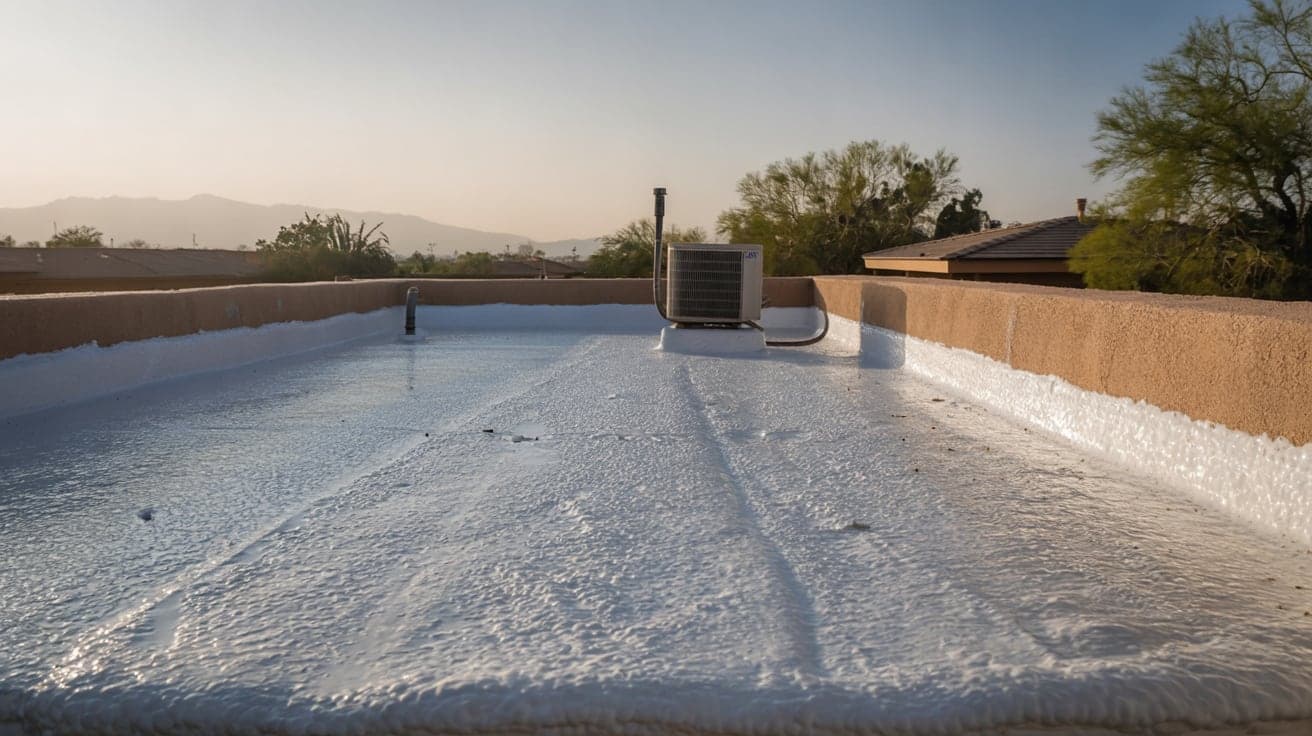
Foam roofing suits the flat and low-slope roofs common on Arizona homes and commercial buildings. It goes on as one seamless, insulating layer, and with a fresh protective coating every 10 to 15 years, the foam underneath can last for decades. Eco Roofing Solutions installs, repairs and recoats foam roofs across the Valley.
Table of contents
- What Exactly Is Foam Roofing and How Is It Installed?
- Why Is Foam Roofing a Smart Choice for Arizona's Climate?
- How Long Does a Foam Roof Last, and What Is Recoating?
- What Are the Signs My Foam Roof Needs Attention?
- How Does Foam Roofing Compare to TPO?
- Should I Choose Foam or Tile for My Home's Flat Roof Sections?
- What Factors Determine the Cost of a Foam Roof?
- Frequently asked questions
What Exactly Is Foam Roofing and How Is It Installed?
Foam roofing is a liquid-applied system that creates a solid, seamless, and waterproof membrane directly on your roof deck. The material is spray polyurethane foam (SPF), the same type of high-performance insulation used in a variety of applications. Unlike traditional roofing materials that arrive in rolls or pieces, a foam roof is custom-built on-site to perfectly fit your building's unique shape, including around vents, pipes, and HVAC curbs.
The installation process is precise and requires experienced technicians:
- Surface Preparation: The existing roof is meticulously cleaned of all dirt, debris, and loose material. The surface must be completely dry to ensure proper adhesion. Any necessary repairs to the underlying structure are made first.
- Foam Application: Two liquid components are pumped through a heated hose to a spray gun, where they are mixed and sprayed onto the roof surface. The liquid mixture hits the roof and immediately undergoes a chemical reaction, expanding to about 30 times its original volume to form a rigid, closed-cell foam layer. The result is one continuous layer with no seams, and none of the gaps between insulation boards that let heat through in other systems.
- Protective Coating: Raw SPF foam has excellent insulation and structural properties but offers little resistance to ultraviolet (UV) light. To protect it from the Arizona sun, the foam gets a thick elastomeric coating, usually silicone or acrylic. Coating thickness is specified in mils (thousandths of an inch), and it matters: a thin coat wears through years sooner than a properly built one.
Why Is Foam Roofing a Smart Choice for Arizona's Climate?
Foam roofing is uniquely suited to Arizona's extreme climate because it directly addresses our two biggest challenges: intense solar heat and powerful monsoon storms. Its seamless, reflective surface and high insulation value are built for desert conditions. The system's ability to expand and contract with our dramatic temperature swings also prevents the cracking and splitting that can plague other roofing materials.
The key advantage is its thermal resistance. Closed-cell roofing foam insulates at roughly R-6 to R-7 per inch, among the highest of any roof insulation. That layer slows the heat moving down into the building, which means less work for your air conditioning through a Phoenix summer.
During monsoon season, the seamless nature of a foam roof is its greatest strength. There are no joints, fasteners, or seams where wind-driven rain can force its way in. It forms a single, continuous barrier, and the closed-cell foam itself takes on very little water.
How Long Does a Foam Roof Last, and What Is Recoating?
A professionally installed and maintained foam roof can last for decades, but its protective topcoat must be reapplied every 10 to 15 years to maintain its integrity and UV protection. It's crucial to understand that the roof itself is two parts: the permanent foam insulation layer and the sacrificial protective coating.
Kept out of the sun, the foam layer itself holds up for a very long time, so the life of the whole system comes down to keeping that coating intact. This elastomeric topcoat is what takes the daily abuse from UV radiation, foot traffic, and weather.
Over time, this coating gradually wears down. A recoat is a routine maintenance procedure, not a roof replacement. It involves cleaning the roof surface and applying a fresh layer of coating. This simple process restores the roof to its original specifications, renewing its UV protection and water resistance for another 10 to 15 years. This recoat cycle is why a well-kept foam roof rarely needs a full tear-off.
What Are the Signs My Foam Roof Needs Attention?
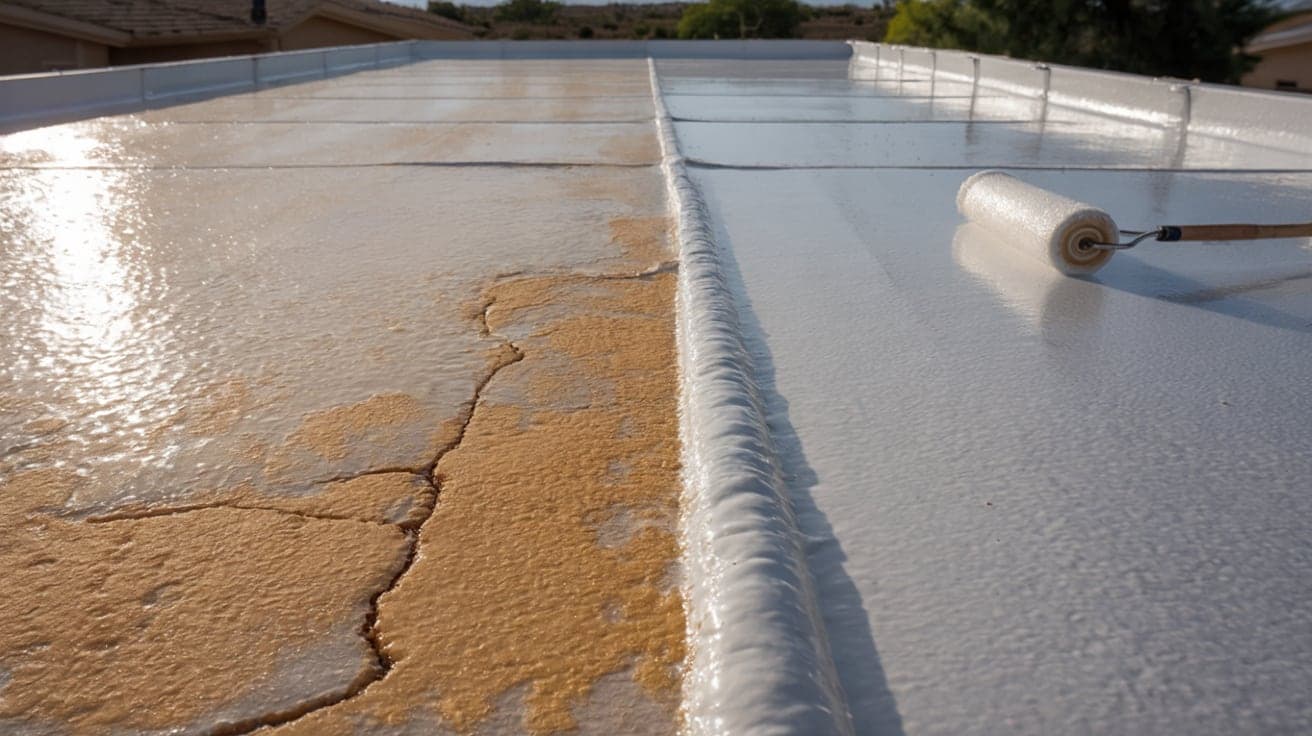
The most common signs your foam roof needs attention are visible changes in the coating, such as peeling, cracking, or the appearance of blisters. You might also notice areas where the yellowish foam underneath is exposed, which requires immediate action to prevent UV degradation. Any significant ponding water that remains for more than 48 hours after a storm should also be inspected.
Here’s what to look for:
- Blisters or Bubbles: These indicate trapped moisture or air between the coating and the foam. While not always an immediate threat, they should be inspected by a professional.
- Cracking or "Alligatoring": A pattern of cracks resembling alligator skin means the coating has aged and lost its flexibility. This is a clear signal that a recoat is due.
- Exposed Foam: If you see the underlying yellow foam, the protective coating has completely worn away in that spot. The foam itself will now begin to break down under UV exposure. This is a priority for commercial flat roof repair.
- Hail Damage: Arizona hailstorms can leave small dents or bruises on a foam roof's surface. Roofing-grade foam is dense and firm, but large hail can still bruise or puncture it. The good news is that repairs are simple: the damaged spot is cut out, filled, and recoated, seamlessly integrating with the rest of the roof.
How Does Foam Roofing Compare to TPO?
Foam roofing offers superior insulation and a truly seamless, waterproof barrier, while TPO is a single-ply membrane installed with heat-welded seams that can be a source of leaks and offers minimal insulation on its own. For many commercial roofing applications, the choice between these two systems comes down to insulation needs and long-term waterproofing priorities.
| Feature | Spray Polyurethane Foam (SPF) Roof | TPO (Thermoplastic Olefin) Roof |
|---|---|---|
| Waterproofing | Monolithic and seamless; no joints to fail. | Seams are heat-welded; these are the most common points of failure. |
| Insulation Value | High R-value (about R-6 to R-7 per inch) built into the system. | Low R-value; requires separate insulation boards installed underneath. |
| Application | Sprayed directly onto the roof deck, conforming to any shape. | Installed in large rolls that are mechanically fastened or adhered. |
| Durability | High compressive strength; can sustain foot traffic. | Susceptible to punctures from sharp objects or dropped tools. |
| Repairs | Simple cut-and-fill repairs that are easily blended. | Requires cleaning, patching, and heat-welding the patch material. |
Should I Choose Foam or Tile for My Home's Flat Roof Sections?
For the flat or low-slope sections of an Arizona home, foam roofing is almost always a better choice than tile because it provides a seamless, waterproof seal and superior insulation that tile cannot offer on a low pitch. Many Arizona homes combine a pitched tile roof with a flat roof over a patio, garage, or addition. While tile is excellent on a slope, it is not designed for flat surfaces.
On a low slope, wind during a monsoon storm can easily drive rain up and under the tiles, leading to persistent leaks. Foam, on the other hand, creates a single, solid surface with no entry points for water. It can also be contoured during application to improve drainage and eliminate areas of ponding water.
From an aesthetic standpoint, the protective coating on a foam roof can be tinted to a tan, brown, or gray color that complements the main tile roof, creating a clean and cohesive look for the entire home.
What Factors Determine the Cost of a Foam Roof?
The cost of a new foam roof is driven by the roof's total square footage, the required thickness of the foam, the type and thickness of the protective coating, the condition of the existing roof, and site accessibility. Because every roof is different, we believe in providing a firm, detailed quote rather than a vague estimate. At Eco Roofing Solutions, we provide every property owner with a real number after a thorough, free inspection.
These are the main variables:
- Roof Size and Complexity: The total area is a primary factor, along with the number of vents, drains, and HVAC units that require detailed spray work.
- Foam Thickness: A standard application might be 1.5 inches, but a thicker layer can be applied to achieve a higher R-value for greater energy savings.
- Coating Selection: Premium silicone coatings offer superior UV resistance and longevity in the Arizona sun compared to acrylics, which influences the project's cost and warranty.
- Preparation Work: If the existing roof is in poor condition and requires significant repairs or a complete tear-off, this will impact the total cost. One of foam’s benefits is that it can often be applied over an existing roof, saving time and money.
- Access: A multi-story building with limited access for equipment may require more labor than a single-story home with an easily accessible roof.
Eco Roofing Solutions is a family-owned Valley roofer that installs, repairs and recoats foam roofs, led by a third-generation roofer with over 25 years of hands-on experience. If you're wondering if foam is the right long-term solution for your home or business, contact us today for a free, no-obligation inspection and written estimate.
Frequently asked questions
Can you walk on a foam roof? Yes, a foam roof is perfectly fine for normal foot traffic for maintenance purposes. Roofing-grade foam is dense and firm. However, you should avoid dropping sharp tools or dragging heavy equipment across the surface to prevent punctures in the protective coating.
Does the color of the foam roof coating matter? Absolutely. In Arizona, a white or light-colored elastomeric coating is highly recommended. Its high reflectivity, or albedo, reflects a significant amount of solar radiation, which keeps the roof surface cooler, reduces the heat transferred into your building, and lowers your air conditioning costs.
Can a foam roof be installed over my existing roof? In many cases, yes. As long as the existing roof structure is sound and dry, spray foam can be applied directly over most roof types, including built-up roofing (BUR), metal, and concrete. This saves on the cost, time, and landfill waste associated with a full tear-off.
How is a foam roof repaired? Foam roof repairs are straightforward and create a seamless patch. A roofer will cut out the small damaged area, ensuring the surface is dry, then fill the void with a caulk-grade foam or sealant. After it cures, the patch is coated to match and blend in with the rest of the roof, restoring its integrity.
Is foam roofing environmentally friendly? Yes, foam roofing is considered an environmentally conscious choice for several reasons. Its exceptional insulation properties significantly reduce a building's energy consumption for decades. Furthermore, the system is sustainable; by recoating the roof instead of replacing it, you drastically reduce the amount of roofing waste sent to landfills.