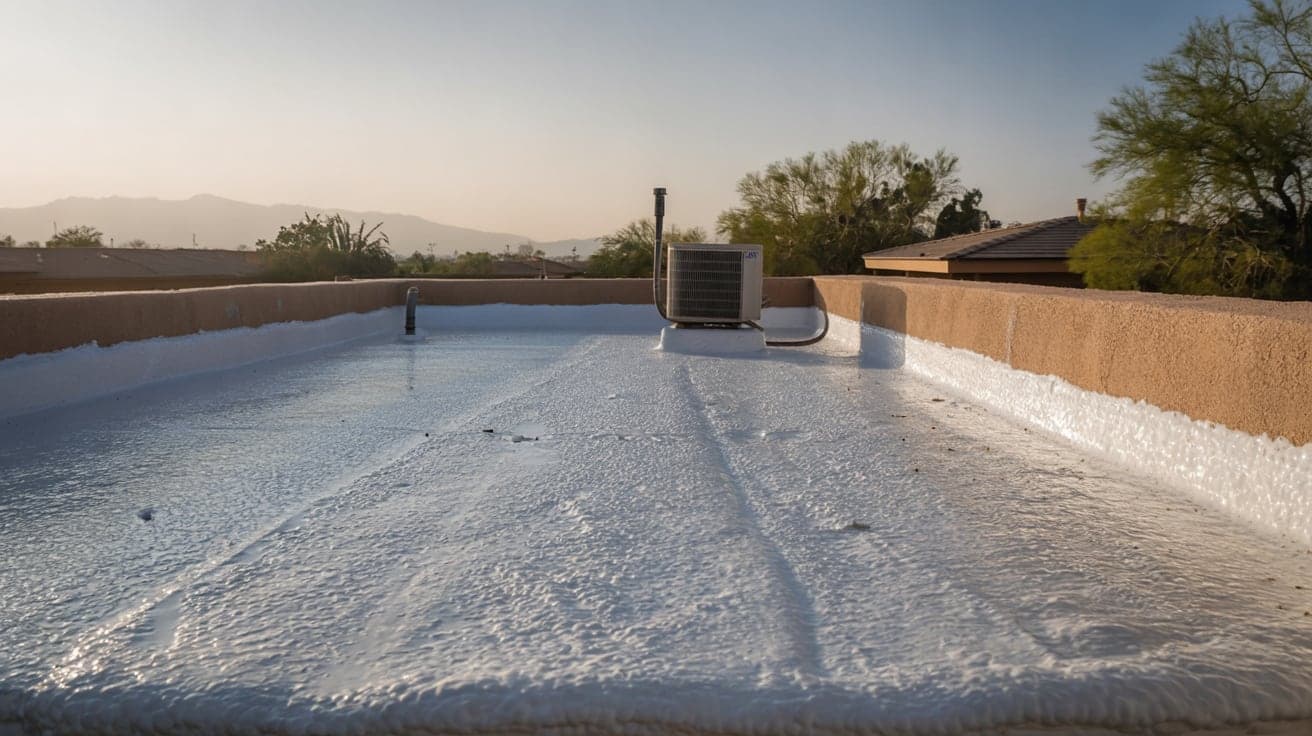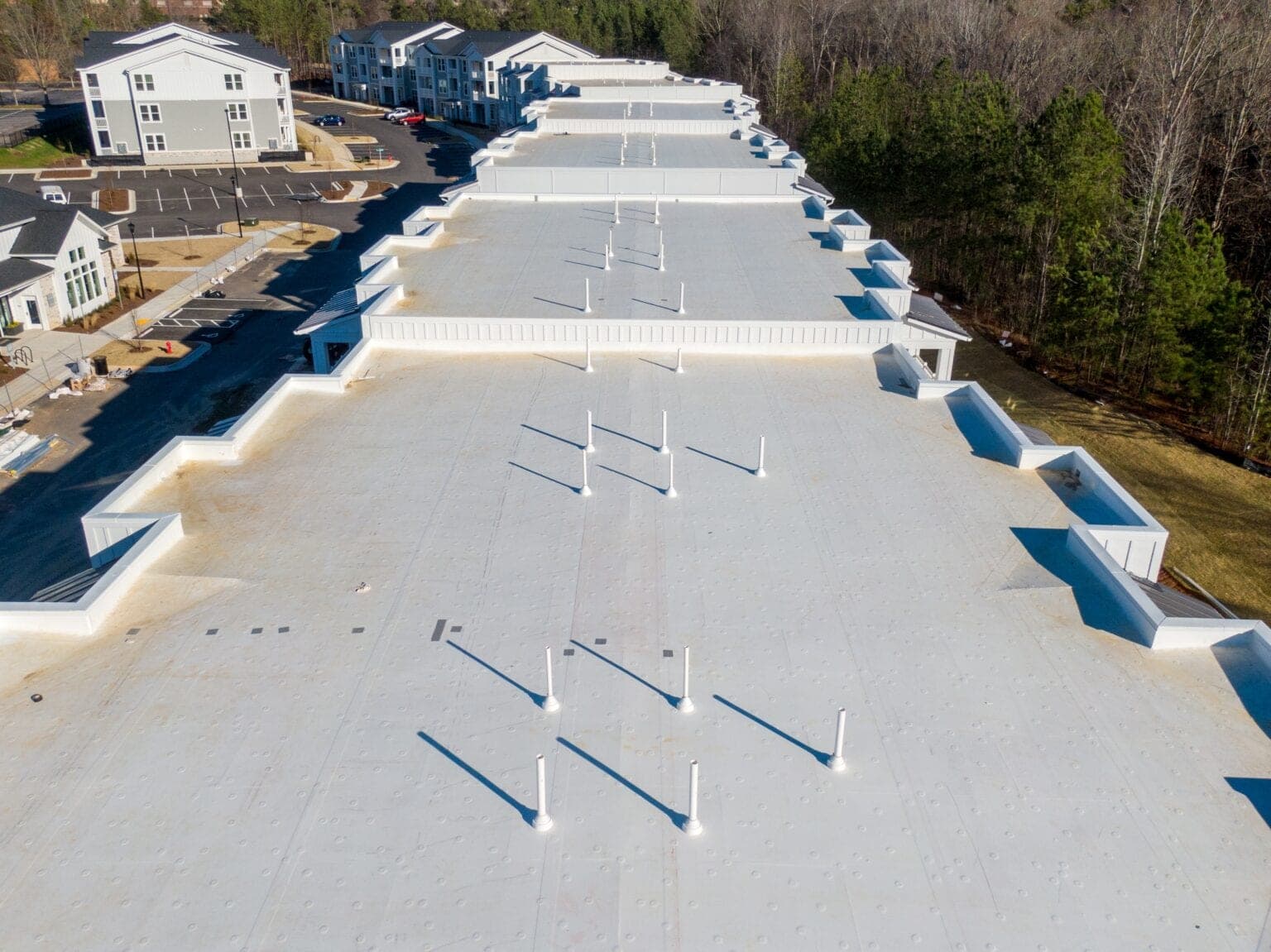
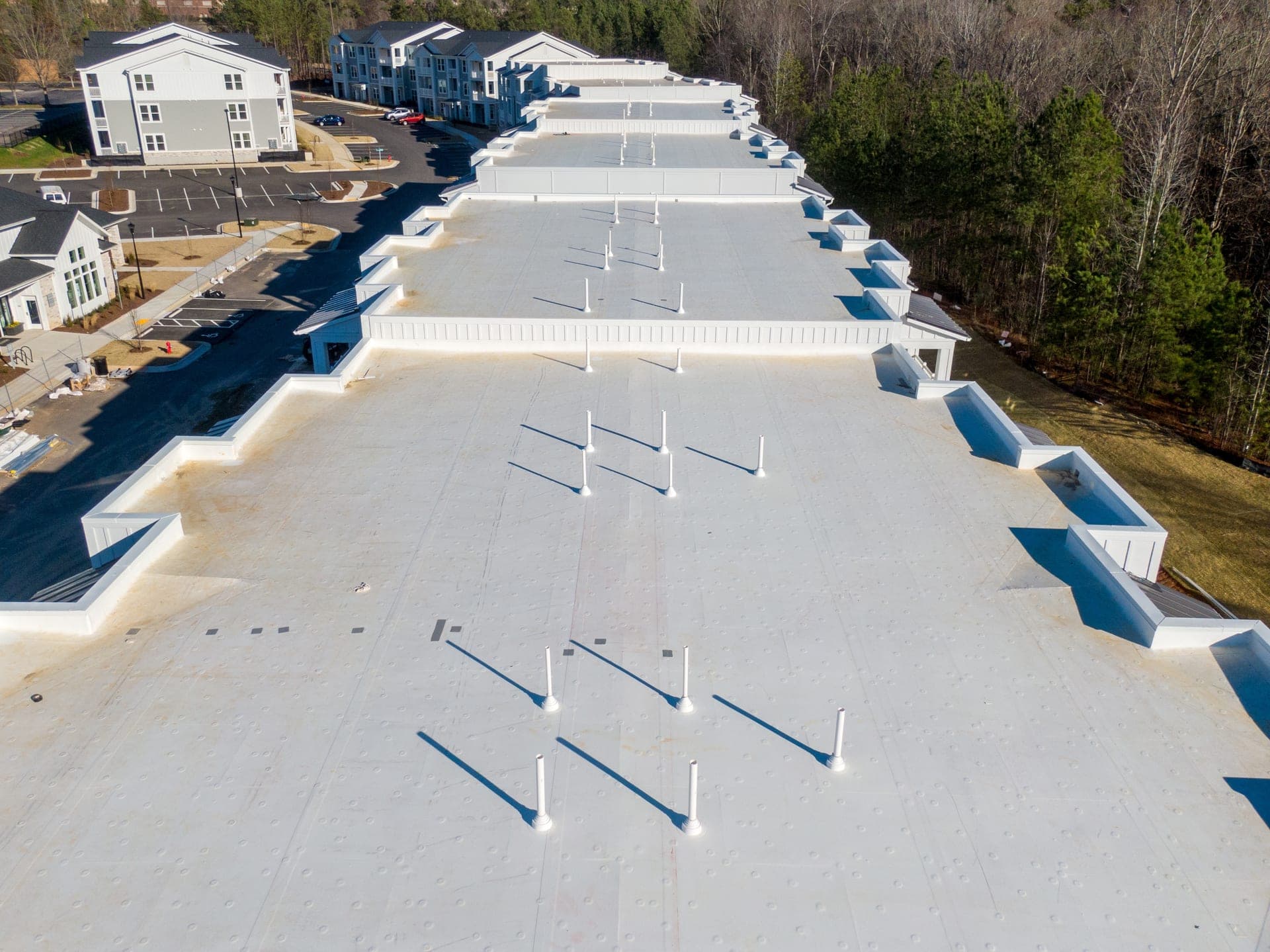
A reflective roof coating is a liquid-applied membrane that goes over your existing low-slope roof and sends solar energy back into the sky instead of letting it soak into the building. On a Phoenix-area commercial roof that does three things at once: it drops the surface temperature of the roof, it takes load off your HVAC equipment through the worst months, and it slows the UV exposure and thermal cycling that age the roof underneath. For most flat-roof buildings in the Valley with a structurally sound deck, it is the least disruptive way to buy years back on the roof you already own.
Living and working in Arizona means dealing with intense heat for a large part of the year. For business owners, that sun does more than just make the parking lot hot. It bakes your building and drives up your cooling costs. This is where Eco Roofing Solutions can help. We apply high-quality reflective roof coatings that act like a shield for your property.
How Do Reflective Coatings Combat the Arizona Sun?
You might hear these products called cool roof coatings or reflective roof paint. The concept is simple but effective. Standard roofing materials often absorb the sun's heat and transfer it right into the building below. Reflective roof coatings do precisely what the name suggests. They reflect UV rays away from the surface. This significantly lowers the roof surface temperature. By using roof coatings for Arizona heat, you stop a large amount of thermal energy from ever entering your workspace.
The Department of Energy puts real numbers on that gap. A conventional roof can reach 150 degrees or more on a sunny summer afternoon, while under the same conditions a reflective roof could stay more than 50 degrees cooler. On a 20,000 square foot warehouse in Gilbert, that difference is not abstract. It is the reason the back office is livable in August.
The two numbers that decide how "cool" a roof really is
The Cool Roof Rating Council, an independent nonprofit that rates the radiative properties of roofing products, measures two things:
- Solar reflectance is how much sunlight the surface bounces away, on a scale of 0 to 1.
- Thermal emittance is how efficiently the surface sheds the heat it does absorb, also on a scale of 0 to 1.
Both matter. A surface can be bright and still run hot if it holds onto absorbed heat instead of radiating it back out. The CRRC combines the two into a Solar Reflectance Index, where a standard black surface sits at 0 and a standard white surface sits at 100, and publishes both initial values and values measured after three years of outdoor exposure in its Rated Products Directory.
Pay attention to that three-year aged number. It is the honest one. Every roof in the Valley collects dust, and dust cuts reflectance.
How Much Can a Coating Lower My Cooling Costs?
When your roof stays cooler, your air conditioning does not have to work as hard. This is one of the biggest benefits of commercial roof coatings. Heavy reliance on HVAC systems during the summer leads to massive electricity bills. Applying energy-saving roof coatings eases the load on your cooling units. You will likely see a noticeable difference in your monthly overhead. Roof coating energy savings are a smart way to keep more money in your business while keeping your employees and customers comfortable.
The EPA reports that solar reflectance from a cool roof can reduce peak cooling demand by 11 to 27 percent in air-conditioned residential buildings. Commercial results vary more widely, and any roofer who quotes you a single guaranteed percentage is guessing. What actually drives your number:
- How much insulation sits under the deck. A lightly insulated single-story warehouse sees a bigger swing than a well-insulated two-story office.
- Roof area relative to conditioned floor area. Big footprint, one story, lots of roof per square foot of space equals more benefit.
- Where your ductwork runs. Ducts in a hot plenum or above the ceiling gain heat from a hot deck all day.
- Equipment age and controls. Cooler roof, less runtime, less peak draw.
Which Coating Chemistry Fits My Building?
Not all coatings are the same product with different labels. The chemistry decides how it handles standing water, dust, and foot traffic, and each type has its own ASTM standard.
| Coating type | ASTM specification | Strengths in the Valley | What to watch |
|---|---|---|---|
| Acrylic | ASTM D6083, liquid-applied acrylic coating used in roofing | Water-based, highly reflective, cost-effective over large fields, easy to recoat | Does not love long-term ponding water; needs a dry substrate and warm cure |
| Silicone | ASTM D6694, liquid-applied silicone coating for SPF roofing systems | Excellent ponding-water and UV resistance, holds up on foam roofs | Holds dust more readily, which drops reflectance without periodic washing |
| Polyurethane | Manufacturer-specific | Tough surface, better for rooftop foot traffic and service paths | Usually a two-coat system, more prep-sensitive |
| Aluminized asphalt | Manufacturer-specific | Traditional option over aged built-up and modified bitumen | Lower reflectance than a bright white system |
For most Gilbert and Mesa buildings we look at, the substrate makes the call before preference does. A spray polyurethane foam roof and an aged modified bitumen roof do not want the same product.
Will Coating Actually Extend the Life of My Roof?
Over time, the sun can damage roofing materials by drying them out and causing cracks. Daily temperature changes also put stress on roof seams. Durable roof coatings protect your roof from sunlight and help prevent leaks, which can extend the life of your roof and delay replacement.
The mechanism is worth understanding, because it explains why coatings work so well here specifically. Arizona roofs live through a large daily temperature swing. The surface heats hard through the afternoon and then dumps that heat after sundown. Every one of those cycles expands and contracts the membrane, and the movement concentrates at the weakest points, which are the seams, the flashings, the curbs, and the penetrations. Knock 50 degrees off the peak surface temperature and you shrink the swing, which slows the fatigue.
A coating also puts a fresh sacrificial layer between UV and the membrane. That is why coated systems are typically maintained on a wash-and-recoat cycle rather than torn off and replaced. Roofs that get that attention through our commercial roofing repair and maintenance program tend to age on a much flatter curve than roofs that get looked at only when something drips.
What Has to Happen Before the Coating Goes On?
This is where most failed coating jobs go wrong. The prep is the job.
- Moisture survey and core cuts. If insulation under the membrane is wet, coating over it traps the water. Wet sections get cut out and replaced first.
- Seam, flashing, and penetration detail work. Splits, open laps, failed pitch pans, and lifted base flashings get repaired and reinforced with fabric before any field coat.
- Drain and scupper check. Ponding is the enemy of most coatings. Low spots and blocked drains get addressed.
- Cleaning. Power washing removes dust, chalking, and contaminants so the coating actually bonds.
- Primer and adhesion testing. Different substrates need different primers, and a test patch confirms adhesion before we commit the whole roof.
Anyone who wants to spray your building without doing this list is selling you a paint job, not a roof system.
How Does Monsoon Season Change the Plan?
The National Weather Service defines Arizona's monsoon season as June 15 through September 30, and NWS Phoenix notes that monsoon thunderstorms bring damaging winds, torrential rainfall, frequent lightning, and dust storms. Downburst winds can hit 50, 60, and 70 mph, and in rare cases exceed 100 mph. Haboobs can drop visibility below a quarter mile.
Two practical consequences for a coated commercial roof:
- Schedule the work outside the window when you can. Coatings need a clean, dry substrate and a stable cure period. Spring is the easiest time to get that.
- Plan on a post-monsoon wash. Dust film is the quiet killer of reflectance. A roof that tested bright when it went down can lose real performance to a summer of blown dust. Washing it back is cheap compared to running your chillers against a dirty roof.
We build both of those into the maintenance schedule for the commercial roofing clients we serve across Phoenix, Gilbert, Mesa, and Tempe.
Does a Cool Roof Coating Help With Code Compliance?
It can, and this is worth knowing before you spec a product. The 2021 International Energy Conservation Code gives low-slope roofs in Climate Zones 0 through 3, which includes the Phoenix metro, a cool roof compliance path in Table C402.3. The option calls for a minimum three-year aged solar reflectance of 0.55 together with a minimum three-year aged thermal emittance of 0.75, or a minimum three-year aged Solar Reflectance Index of 64.
One note on labeling. The EPA sunset its ENERGY STAR roof products program effective June 1, 2022, so no roofing product carries that mark anymore. If a salesperson shows you an ENERGY STAR roofing label today, ask questions. The Cool Roof Rating Council directory is now the third-party reference for these values.
Ready to Look at Your Building?
If you want to protect your investment and reduce energy use, it is time to review your options. Eco Roofing Solutions is a family-owned contractor based at 75 W Baseline Rd Suite 19 in Gilbert, licensed under Arizona ROC 330901 (CR-42) and a member of the Arizona Roofing Contractors Association for both residential and commercial work. Owner and President Eric Perry is a third-generation roofer with more than 25 years of hands-on experience, and that experience is what tells us whether your roof is a good candidate for a coating or whether you would be putting money into a system that has already run its course.
We will walk it, core it if needed, and give you a straight answer either way. Get in touch when you are ready, or take a look at our full list of services first.
Image Credit: Charlotte Evelyn/Shutterstock