Maximizing cool roof performance in an arid climate depends on two factors: selecting materials with high solar reflectivity and ensuring expert installation. This combination reflects intense sun, radiates absorbed heat, and ultimately lowers your cooling costs while extending the life of your roof in the harsh Arizona environment.
Table of contents
- What Exactly Is a "Cool Roof" and How Does It Work?
- Why is Arizona's Climate Uniquely Suited for Cool Roofs?
- Which Cool Roof Materials Maximize Performance in an Arid Climate?
- How Does Proper Installation Impact Cool Roof Performance in an Arid Climate?
- What Are the Real Energy Savings and Longevity Benefits?
- Frequently asked questions
What Exactly Is a "Cool Roof" and How Does It Work?
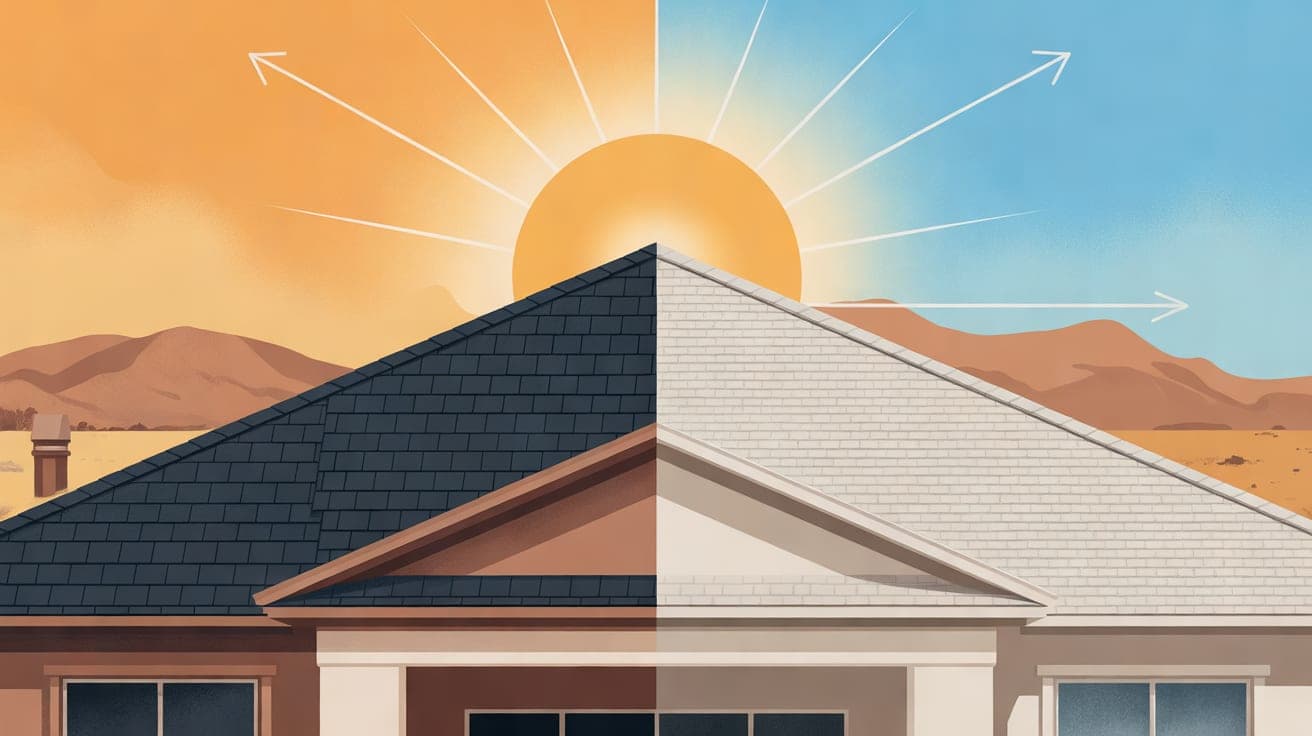
A cool roof is a roofing system designed to reflect more sunlight and absorb less heat than a standard roof. This isn't just about color; it's a function of two specific, measurable properties: solar reflectance and thermal emittance. These two properties are the key to understanding why cool roofs are so effective in Arizona.
- Solar Reflectance (or Albedo): This is a measure of a surface's ability to reflect sunlight. It is expressed as a value between 0 and 1. A roof with a solar reflectance of 0.80 reflects 80% of the solar energy that hits it, absorbing only 20%. A dark, conventional roof might have a reflectance of 0.10, absorbing 90% of the sun's energy.
- Thermal Emittance (or Emissivity): This measures a roof's ability to radiate absorbed heat back into the atmosphere. Also expressed from 0 to 1, a high emittance value (e.g., 0.85) means the roof efficiently sheds the heat it has absorbed. In an arid climate with clear nights, high emissivity allows a roof to cool down significantly after sunset.
A true cool roof excels at both. It acts as a shield during the day (high reflectance) and efficiently cools itself at night (high emittance), dramatically lowering the roof's surface temperature and reducing the amount of heat transferred into your building.
Why is Arizona's Climate Uniquely Suited for Cool Roofs?
Arizona's relentless sun and dry air create the perfect scenario for cool roof technology to deliver its maximum benefits. Unlike humid or overcast regions, every element of our climate works in your favor. The intense, near-constant solar radiation means a high-reflectance surface provides a significant, measurable reduction in heat gain day after day.
Furthermore, the low humidity and clear desert nights allow a high-emittance roof to radiate heat away effectively, a process known as radiational cooling. This nightly cooling cycle prevents cumulative heat buildup in the building's structure. In dense urban areas like Phoenix or Tempe, cool roofs also help mitigate the "urban heat island effect," where masses of dark, heat-absorbing surfaces elevate ambient temperatures.
Best Cool Roof Materials for Peak Performance in Arizona
Choosing the right material is the most critical decision you'll make for achieving optimal cool roof performance in our arid climate. The best choice depends on your building type (commercial or residential), roof slope, and budget. At Eco Roofing Solutions, we help property owners navigate these trade-offs, focusing on solutions that provide the best long-term value. Here is a comparison of leading options for the Arizona market:
| Material Option | Solar Reflectance (Initial) | Thermal Emittance | Longevity in AZ Sun | Best For | Key Trade-off |
|---|---|---|---|---|---|
| TPO (Thermoplastic Olefin) | 0.70 - 0.85 | > 0.85 | Excellent | Commercial & Residential Flat Roofs | Seam integrity is critical; requires expert heat-welding installation. |
| PVC (Polyvinyl Chloride) | 0.70 - 0.85 | > 0.85 | Excellent | Commercial & Residential Flat Roofs | Typically a higher initial cost than TPO, but offers superior chemical resistance. |
| Silicone/Acrylic Coatings | 0.80 - 0.90 | > 0.85 | Good to Excellent | Restoring existing metal or modified bitumen flat roofs. | Adhesion is paramount; surface preparation must be meticulous for long-term success. |
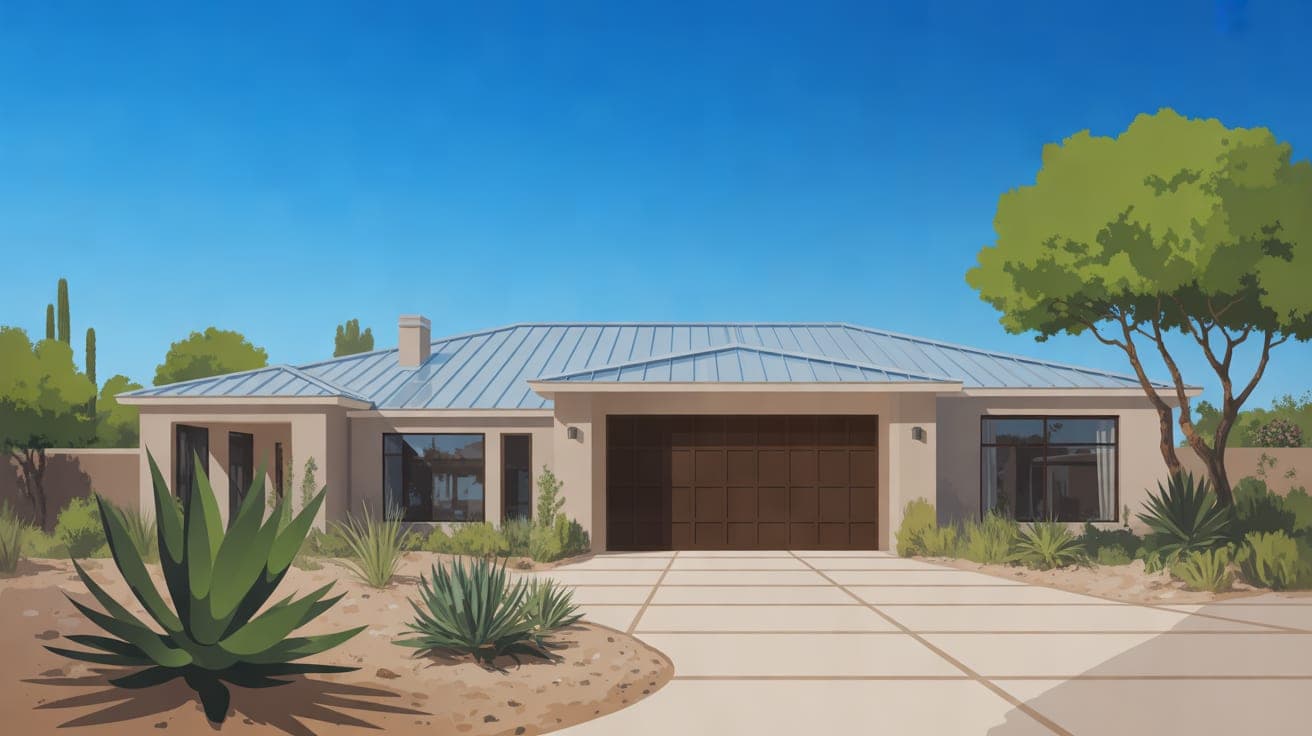
| Coated Metal Roofing | 0.60 - 0.75 | > 0.80 | Superior | Residential Pitched Roofs | Higher upfront investment and requires specialized installation techniques. |
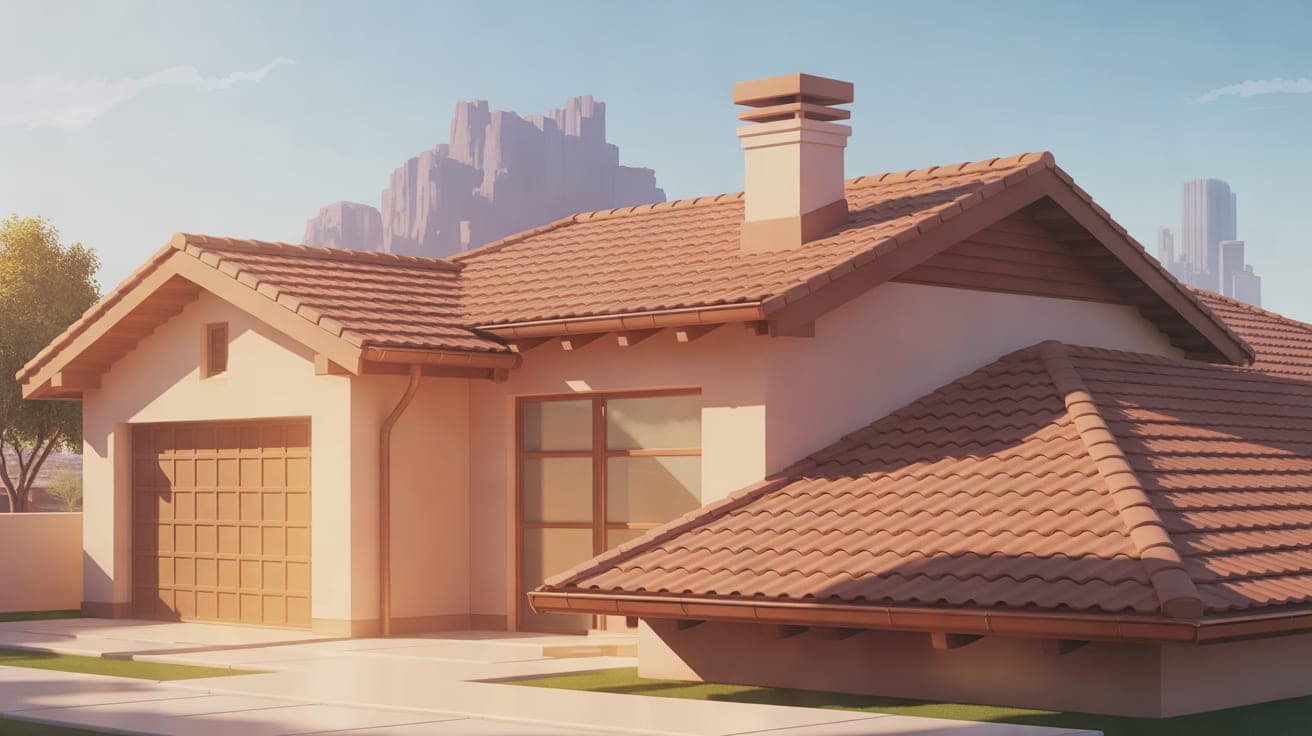
| Light-Colored Concrete/Clay Tile | 0.50 - 0.70 | > 0.85 | Superior | Residential Pitched Roofs | Heavier than other options; structure must support the weight. Reflectivity can degrade without maintenance. |
For many of our clients with commercial properties, single-ply membranes like TPO and PVC are the standard for excellence. These systems, common for flat roof designs, provide a seamless, highly reflective surface that performs exceptionally well under constant sun exposure.
Why Expert Installation is Crucial for Cool Roof Performance
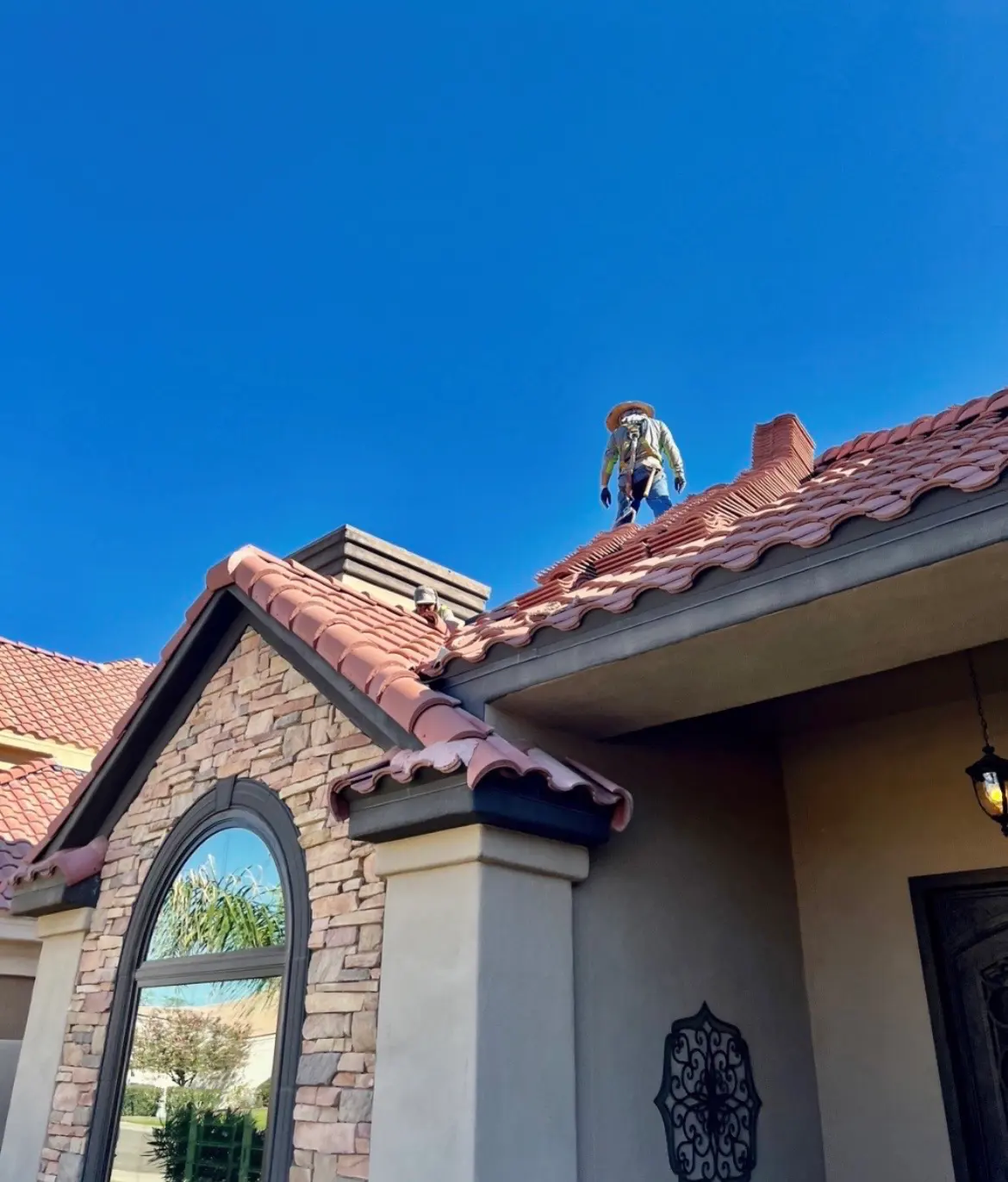
Even the best cool roof material will fail if not installed correctly. Proper installation is just as important as material selection for achieving peak cool roof performance. Heat always finds the path of least resistance; professional installation is about eliminating those paths entirely.
First, the substrate and insulation beneath the cool roof membrane are critical. Without adequate, continuous insulation, heat can still transfer into the building through a phenomenon called thermal bridging. Our crews ensure the insulation layer is robust and properly installed to create a complete thermal barrier.
Second, for membrane systems like TPO and PVC, the integrity of the seams is non-negotiable. We use state-of-the-art heat-welding techniques to fuse seams together, creating a monolithic, waterproof, and airtight surface. This prevents air leakage and moisture intrusion, which can degrade insulation and compromise the entire system.
Finally, details around penetrations—like HVAC curbs, vents, and drains—must be expertly flashed and sealed. These are the most common points of failure on any roof. Our meticulous approach to these details is a core part of our commercial roofing services, ensuring the cool roof system performs as designed for its entire lifespan.
What Are the Real Energy Savings and Longevity Benefits?
The benefits of a cool roof go far beyond a lower utility bill. A properly specified and installed cool roof creates a cascade of positive effects for your property.
Direct Energy Savings: The most immediate benefit is a reduced load on your air conditioning system. By lowering your roof's surface temperature by 50°F or more on a blistering summer day, far less heat penetrates your building. This means your HVAC unit runs less often and for shorter cycles, directly cutting electricity consumption during peak hours.
Increased HVAC Lifespan: Because your AC system isn't working as hard to combat heat gain from the roof, it experiences less wear and tear. This can extend the operational life of expensive HVAC equipment and reduce the frequency of repairs.
Enhanced Roof Longevity: Extreme heat and UV radiation are primary drivers of roof material degradation. A cool roof surface endures significantly less thermal stress. The constant expansion and contraction that cracks and weakens conventional roofing materials is drastically reduced. This extends the life of the roofing membrane itself, meaning your investment lasts longer. Keeping the roof in prime condition with regular commercial flat roof repair and maintenance ensures these benefits continue year after year.
Improved Occupant Comfort: For both commercial and residential buildings, a cooler roof structure leads to more stable and comfortable interior temperatures, particularly on upper floors or in single-story buildings with vaulted ceilings.
As a family-owned company with over 25 years of experience, we've built our reputation on providing solutions that deliver measurable, long-term value. A cool roof is one of the smartest investments an Arizona property owner can make.
If you're ready to see how a high-performance cool roof can lower your energy bills and protect your property, our team is here to help. Contact our team today for a comprehensive consultation and a no-obligation estimate tailored to your building.
Frequently asked questions
Do cool roofs work in the winter?
Yes, though the heating penalty is minimal in Arizona's mild winters compared to the significant summer cooling benefits. A cool roof reflects solar energy year-round, which can slightly increase heating demand. However, the energy savings from reduced air conditioning in our long, intense summers far outweigh any minor winter heating penalty.
Is a white roof the only type of cool roof?
No. While white is the most reflective color, advances in pigment technology allow for "cool colors" in a range of earth tones that can still reflect a significant amount of infrared light. These are great options for sloped residential roofs where aesthetics are a primary concern, though bright white typically offers the highest performance for commercial flat roofs.
How long does a cool roof's reflectivity last?
Initial solar reflectance can decrease over time due to dust and environmental buildup, a process called soiling. High-quality materials are formulated to be self-cleaning or easily cleaned. With periodic maintenance and cleaning, especially after monsoon season, a cool roof can maintain over 85-90% of its initial reflectance for decades.
Can my existing roof be turned into a cool roof?
In many cases, yes. If your existing roof structure is sound, applying a reflective coating system (like silicone or acrylic) is a cost-effective way to transform it into a cool roof. This is a common and highly effective solution for existing metal, modified bitumen, or EPDM roofs, extending their life and dramatically improving their performance.
Does a cool roof cost more than a traditional roof?
Initially, a high-performance cool roof material like TPO, PVC, or coated metal may have a slightly higher material cost than a conventional dark-colored roof (like asphalt shingles or standard BUR). However, this initial investment is typically recouped over time through significant energy savings and a longer roof lifespan, resulting in a lower total cost of ownership.
How does a cool roof help the environment?
Cool roofs provide environmental benefits on two levels. At the building level, they reduce energy consumption, which lowers greenhouse gas emissions from power plants. At the community level, widespread adoption of cool roofs helps mitigate the urban heat island effect, lowering ambient air temperatures and reducing smog formation.