After an Arizona storm, work in this order: stay off the roof, document what you can see from the ground, notify your insurance carrier, and get a licensed local roofing contractor out for a real inspection. The damage that causes the most expensive problems is usually not the damage you can see from the driveway, and it rarely leaks during the storm that caused it. It leaks during the next one.
Arizona’s monsoon season, while bringing much-needed rain, can also bring strong winds, hail, and other severe weather that can wreak havoc on your roof. Discovering roof damage after a storm can be stressful, but knowing what steps to take can help minimize further issues and ensure a smooth repair process. EcoRoof AZ is here to guide you through it.
What should I do immediately after a storm?
- Prioritize Safety: Your safety is paramount. Do not attempt to climb onto your roof if it appears unsafe or unstable. Observe the roof from the ground.
- Document the Damage: If possible, take photos and videos of any visible damage from the ground. This documentation will be helpful when filing an insurance claim and for your repair assessment. Pay attention to missing shingles, dents, cracks, leaks, and any debris.
- Contact Your Insurance Company: Notify your insurance provider as soon as possible to report the damage and begin the claims process. They will likely ask for your documentation.
- Call a Trusted Roofing Professional: This is where EcoRoof AZ comes in. We have extensive experience in assessing and repairing storm-damaged roofs in the Phoenix metropolitan area.
A few details that make those steps work better
- Photograph the whole elevation of the house before you zoom in on the damage. Wide shots establish context for an adjuster; close-ups establish detail.
- Get date-stamped photos of the interior too, including ceiling stains, wet insulation, and any belongings that were affected.
- Note the date and approximate time of the storm. National Weather Service event summaries can corroborate what moved through your area.
- Keep receipts for anything you buy to limit further damage, such as tarps, buckets, or containment plastic.
- Do not throw away damaged material until it has been documented.
What kind of damage does an Arizona monsoon actually cause?
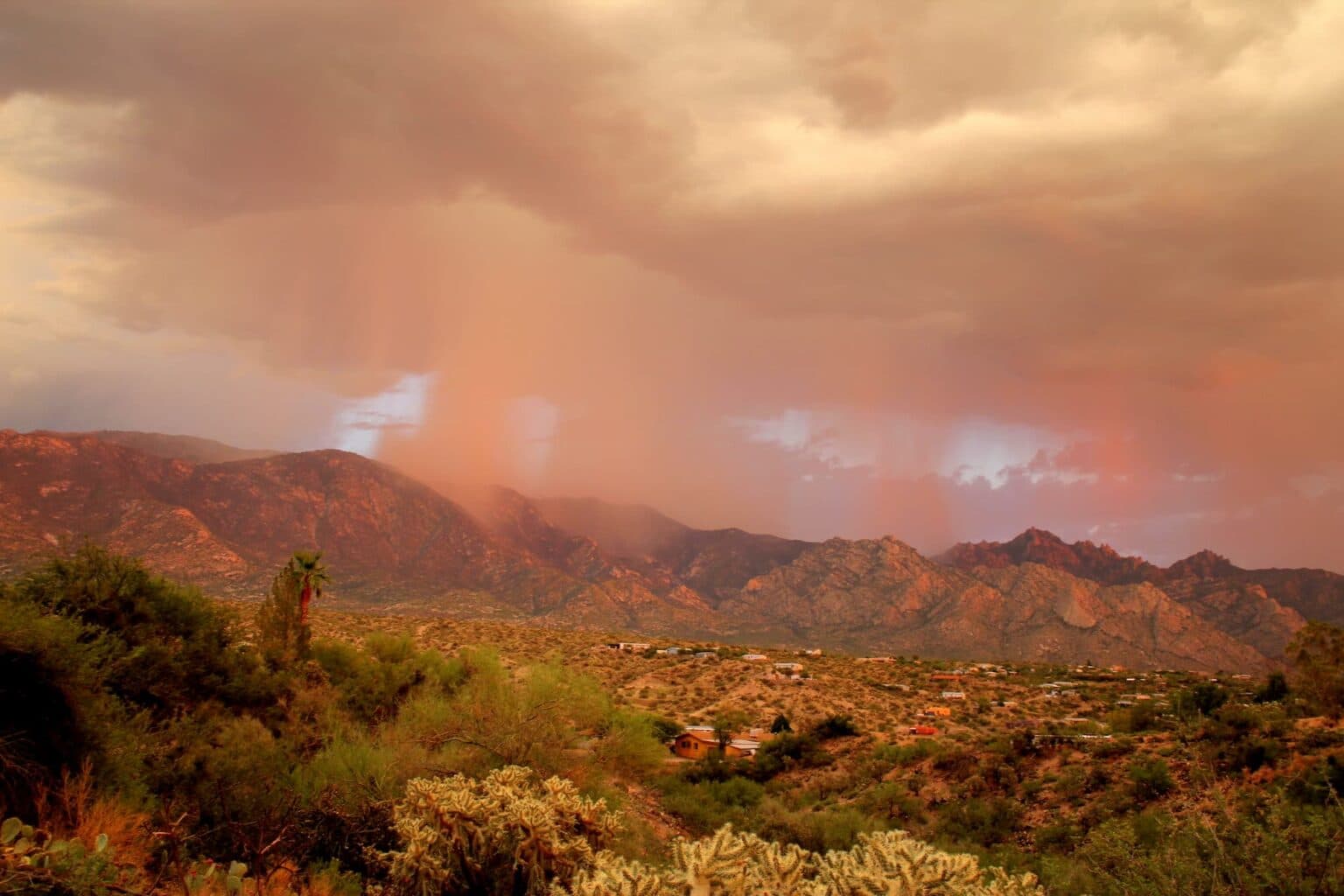
The National Weather Service defines Arizona's monsoon season as June 15 through September 30. During that window, most of the severe weather in the Phoenix metro comes from microbursts, which the agency describes as strong, localized downdraft winds that commonly reach 50, 60, and 70 miles per hour and in rare cases exceed 100. NWS Phoenix measured a 64 mile per hour gust at Sky Harbor during an August 2024 storm, and radar-estimated 70 to 80 mile per hour winds during a July 2024 microburst that removed much of the roof from a warehouse near 47th Avenue and Van Buren. The Valley also typically sees one to three dust storms each summer.
That combination produces a predictable set of problems.
| Roof type | What storms usually do | Where it shows up |
|---|---|---|
| Tile | Slides, lifts, or cracks individual tiles; breaks hip and ridge mortar | Hips, rakes, ridges, and valleys |
| Asphalt shingle | Lifts tabs, breaks seal strips, tears at edges | Perimeter courses and ridge caps |
| Flat and low-slope | Lifts or punctures membrane, clogs drains and scuppers with debris | Seams, edge metal, penetrations |
| Any roof | Damages flashing, pipe boots, vents, and A/C curbs | Every penetration through the roof |
Two patterns catch homeowners off guard. First, wind damage on tile roofs is usually displacement rather than loss. The tile is still on the roof, just moved, and moved tile lets wind-driven rain reach an underlayment that may already be near the end of its life. Second, debris impact from a haboob or microburst often dents or tears flashings that look fine from the ground but no longer shed water.
When is storm damage an emergency?
Call for emergency service, not a scheduled appointment, if you see any of the following:
- Active water entering the living space during or right after rain
- A visibly sagging ceiling or a bulge holding water
- Any structural sagging in the roof plane itself
- Exposed decking where a section of the roof covering is gone
- Water anywhere near an electrical panel, a light fixture, or ductwork
It can wait for a normal appointment if you see displaced or broken tile with no interior leak, a few missing shingles, debris on the roof, or bent gutters and fascia. It still needs to be looked at, just not tonight.
How does the insurance side work in Arizona?
Notify your carrier promptly and let the documentation do the arguing. The Arizona Department of Insurance and Financial Institutions publishes consumer guidance on storms and disasters, and a few points from it are worth knowing before you call.
- Homeowners policies generally cover the portion of a roof damaged by wind, rain, or falling objects. They do not cover deterioration from age, sun exposure, or lack of maintenance. That distinction is why an adjuster's report often reads differently from what a homeowner expected.
- Your claims history is reviewed periodically by your carrier and can affect your premium or renewal, so it is worth weighing a small claim against your deductible before filing.
- If you have a question or a complaint about how an agent or carrier is handling your claim, DIFI is the state agency that handles insurance consumer issues.
A licensed roofing contractor can document conditions, provide a written scope of the damage, and meet the adjuster on site. What a roofing contractor cannot do in Arizona is act as your public adjuster or negotiate your claim on your behalf. That is a separately licensed activity, and any contractor offering to "handle the whole claim" for you is a warning sign, not a convenience.
How EcoRoof AZ can help
- Prompt Damage Assessment: Our experienced team will conduct a thorough inspection of your roof to identify all areas of damage, both visible and potential.
- Detailed Repair Plan: We’ll provide you with a clear and comprehensive repair plan, outlining the necessary steps and costs involved. We believe in transparent communication and will answer all your questions.
- Quality Repairs: We use high-quality materials and employ skilled professionals to ensure your roof is repaired to the highest standards, restoring its integrity and protecting your property.
- Insurance Claim Assistance: We can work directly with your insurance company to help streamline the claims process, providing them with the necessary documentation and ensuring a smoother experience for you.
- Emergency Services: For urgent situations, we offer prompt response to mitigate further damage and secure your property.
We are family-owned, hold Arizona ROC license 330901 (CR-42), active, and are members of the Arizona Roofing Contractors Association for both residential and commercial work. Owner and president Eric Perry is a third-generation roofer with over 25 years of hands-on experience. We handle both residential and commercial storm repair across Mesa, Phoenix, and the wider metro.
How do I avoid storm-chaser contractors?
After a significant monsoon storm, crews that follow severe weather from state to state show up in affected neighborhoods, often within a day or two, offering free inspections door to door. Some are legitimate. Many are not, and the ones that are not tend to leave the market before anyone discovers the work was defective.
Protect yourself with four checks:
- Verify the license. Search the company at roc.az.gov before anyone gets on a ladder. An Arizona license means the contractor met the state's bonding, insurance, and trade requirements.
- Protect your recourse. The Registrar of Contractors administers a Residential Contractors' Recovery Fund that can pay eligible homeowners up to $30,000 per residence, but only when the contractor was licensed at the time of the contract. Hiring unlicensed forfeits that entirely.
- Know your window. For repair work, complaints against a licensed contractor generally must be filed with the ROC within two years of the date work was last performed. Keep your paperwork that long.
- Watch the deposit. Large up-front payments, pressure to sign today, and a refusal to put the scope in writing are the three most common patterns in roofing complaints.
How do I get ahead of the next storm?
The best time to deal with monsoon damage is in the spring, before the season starts. A pre-monsoon inspection is the single most useful thing a Valley homeowner or facility manager can schedule, and the National Roofing Contractors Association recommends inspecting roof systems at least twice a year, in spring and fall, plus after any major weather event.
Before June 15, it is worth having someone check:
- Penetrations and flashings. Pipe boots, vents, skylight curbs, and A/C stands are where most storm leaks begin.
- Tile and shingle condition. Loose, cracked, or previously displaced pieces are the first to move in high wind.
- Drainage. Clogged scuppers, drains, and gutters turn a heavy monsoon cell into standing water fast.
- Trees. Limbs over the roof become projectiles and abrasion sources in a microburst.
- Sealants and edge metal. Ultraviolet exposure through an Arizona summer is what sets up next season's failures.
For homes, that work falls under our residential roofing services; for warehouses, retail, and multi-tenant buildings, our commercial roofing team runs the same seasonal checks on flat and low-slope systems.
Get an honest assessment
Don’t let storm damage compromise the safety and security of your home or business. If you suspect your roof has been affected by a recent storm, contact EcoRoof AZ for a reliable assessment and expert repair services. We’re here to help you get back to normal quickly and efficiently, and if the damage turns out to be minor, we will tell you that too.