
If a storm damaged your roof, do four things in order: stay off the roof, document everything from safe ground, take reasonable temporary steps to stop further water intrusion, and get a licensed contractor and your insurance company involved at the same time. Rushing the last step before you have done the first three is what costs homeowners money.
When a severe storm sweeps through, the damage it leaves behind can feel overwhelming, especially if your roof is affected. At Eco Roofing Solutions, we know how stressful this moment can be. That's why we've created a step-by-step guide to help you stay safe, handle insurance claims, and secure reliable, lasting repairs with confidence.
What kind of storm damage should you expect in Arizona?
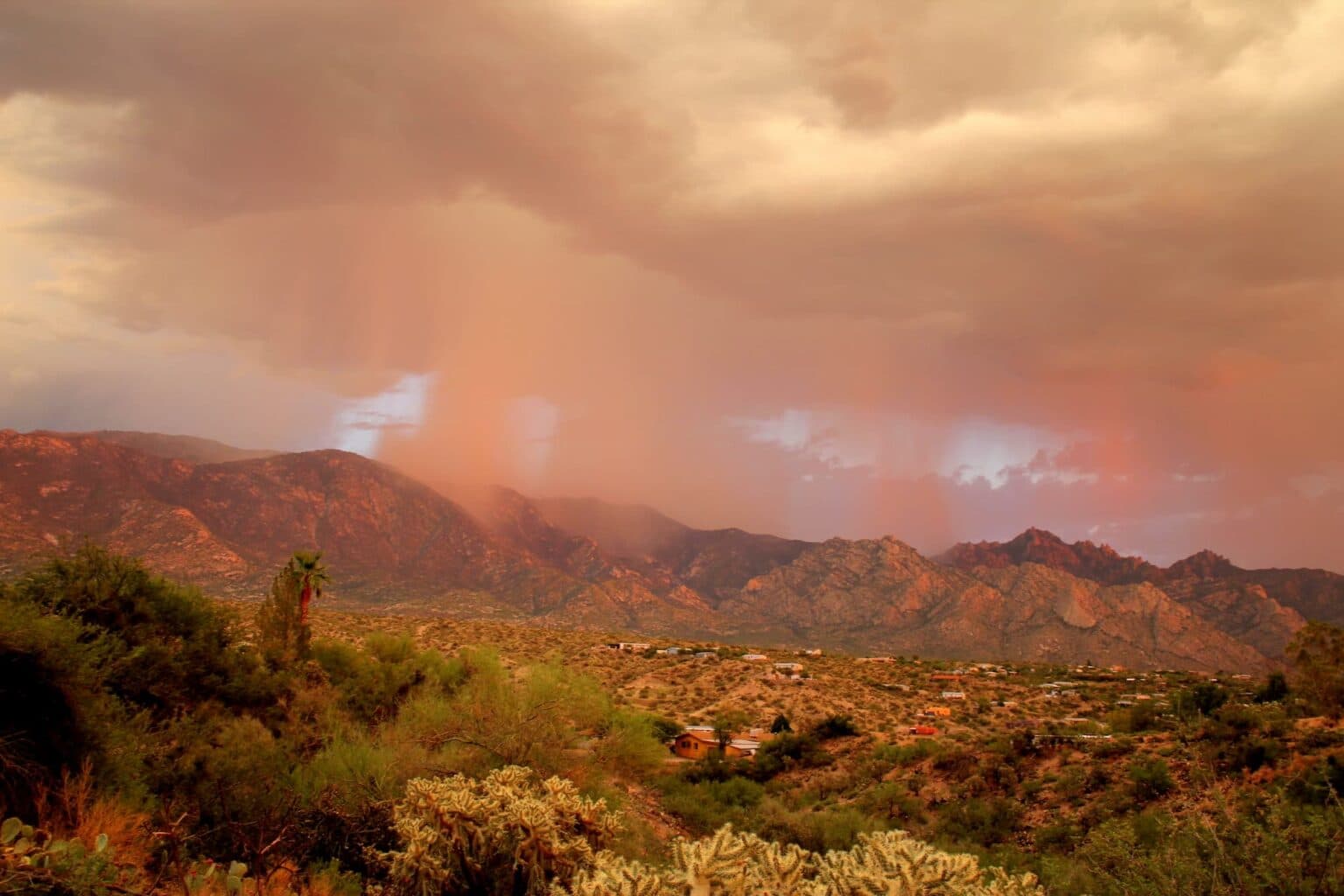
Knowing the mechanism helps you know where to look. Arizona's monsoon season officially runs June 15 through September 30, a window Arizona weather agencies and researchers standardized in 2008. The damage in that window rarely looks like the hail-and-hurricane damage you see in national roofing content.
The bigger threat here is the microburst. Arizona State University's description of desert meteorology puts a typical microburst at less than 2.5 miles across, lasting only three to five minutes, with winds that can easily reach 100 miles per hour before subsiding. A short, violent, highly localized downdraft is exactly the kind of event that damages one street and leaves the next one untouched.
| Storm mechanism | What it does to a roof | Where to look |
|---|---|---|
| Microburst downdraft winds | Lifts shingle tabs, slides and cracks tile, peels flashing and drip edge | Roof edges, ridges, rakes, corners |
| Wind-driven rain | Pushes water uphill under laps and into unsealed penetrations | Ceilings below valleys, walls at roof-to-wall transitions |
| Haboob dust and grit | Abrades granules and coatings, clogs drains, scuppers, and gutters | Gutters, downspout outflow, low-slope drains |
| Debris impact | Punctures membrane, breaks tile, dents metal and vent caps | Around trees, mechanical curbs, skylights |
| Hail, less common but real | Bruises shingles, cracks tile, dents soft metals | Vents, flashing, gutter faces as an indicator |
Dust storms deserve their own mention because the damage is cumulative rather than dramatic. Grit sandblasts protective granules and coatings and packs into drains, and the roof that ponds water after the next storm is often the one that took a haboob two weeks earlier.
First Assessment: What to Look For (Safely!)
A preliminary assessment from a safe location can provide valuable information for your insurance company and roofing contractor.
Exterior Inspection from the Ground
From the ground, look for missing, cracked, or bruised asphalt shingles. Check for damaged flashing around chimneys and vents, dented gutters, or significant granule loss in your downspouts, which can indicate hail damage.
A pair of binoculars is worth more here than a ladder. Walk the full perimeter and check the roof edges and ridge line, where wind uplift starts, along with any slipped or displaced tile.
Interior Inspection: Signs of Water Intrusion
Inside, check your attic and ceilings for signs of water intrusion. Look for damp insulation, dark water stains, or active water leaks. These indicate that the roof damage has compromised the underlying structure.
Go into the attic during daylight with the lights off if you can do so safely. Pinholes of daylight through the deck are unmistakable. Also press on any discolored drywall gently. Soft or spongy material means water is still sitting there.
Photos and Videos: The More, The Better
Take extensive photos and videos of all visible roof damage and any resulting interior issues. Capture both close-up shots and wider angles to provide context.
Shoot wide first so the adjuster can see where each close-up sits on the house. Include a shot with something for scale, and let your phone record location and timestamp data.
Create a Detailed Log
Note the date and time of the storm and when you discovered the damage. Keep a record of all communications with your insurance agent and any contractors.
Write down names, badge or claim numbers, and what was said. If a claim gets complicated later, contemporaneous notes carry real weight.
Gather Important Documents
Locate your homeowners insurance policy to understand your coverage limits and deductible. Having this information ready will streamline the insurance claim process.
Look specifically for two sections: the duties-after-loss language, which tells you what the policy requires you to do and how fast, and any wind or hail deductible that differs from your standard one.
Mitigating Further Damage: Essential Temporary Fixes
Your policy requires you to take reasonable steps to prevent further damage.
When to Attempt Temporary Repairs (and When to Wait for a Pro)
Minor tasks like moving buckets under leaks are fine, but complex roof repairs, especially on a wet surface, should be left to professionals.
Reasonable homeowner steps include catching water, moving furniture and electronics out of the way, pulling wet insulation away from drywall, and photographing everything before you move it. Anything that requires climbing, cutting, or fastening is contractor work.
Tarping Your Roof: A Step-by-Step Guide
If a large area is exposed and you can do so safely, covering it with a tarp can prevent significant water intrusion. Secure it firmly with wood strips and nails to avoid it blowing off.
Two cautions from experience. Run the tarp over the ridge where possible so water cannot run under the upper edge, and understand that fastening a tarp puts holes in the roof. That is an acceptable trade when the alternative is water in the ceiling, but it is another reason to have it done properly. If you are not confident, call and let us handle the temporary dry-in as part of the repair work.
How does the insurance claim actually work?
The sequence that goes smoothest looks like this:
- Notify your insurer promptly. Do this even if you are unsure whether you will pursue the claim.
- Get an independent contractor assessment. A licensed roofer walking the roof will find things that are invisible from the ground, and their documentation gives you something concrete to discuss.
- Be present for the adjuster's inspection. Ask your contractor to be there too. Two sets of eyes on the same roof at the same time prevents most disputes.
- Compare the scope, not just the check. If the adjuster's scope omits work your contractor documented, that is a supplement conversation, not a reason to cut corners on the repair.
- Keep your deductible where it belongs. It is your obligation. Any contractor offering to absorb it is signaling how they treat the rest of the paperwork.
Commercial property owners have an extra layer to think about: business interruption, tenant notification, and interior inventory. Documenting a damaged low-slope roof and the affected interior on the same day matters more when there are leases involved. That is the first thing we sort out on commercial repair calls.
How do you avoid getting taken after a storm?
Every microburst is followed by door-knockers. The tell is urgency, and the fix is verification. Before anyone touches your roof:
- Get the Arizona ROC license number and check the status and classification yourself
- Ask for a certificate of insurance sent directly by the agent
- Confirm there is a local office you could drive to
- Refuse large cash deposits and any contract that expires today
- Never sign anything that assigns your insurance benefits over to a contractor without reading it carefully
Eco Roofing Solutions is family-owned, holds active Arizona ROC license 330901 (CR-42), and belongs to the Arizona Roofing Contractors Association. We work throughout the Valley, including Mesa, Gilbert, Chandler, Tempe, and Phoenix.
When is it a repair versus a replacement?
Storm damage is often localized, and a well-executed repair on an otherwise sound roof is a legitimate outcome. Replacement becomes the honest answer when the damage is widespread, when the underlayment or deck is compromised across multiple planes, or when the roof was already near the end of its service life and the storm simply finished it. A contractor should be able to show you why, with photos, rather than asserting it.
Either way, get the roof inspected after any major weather event. The National Roofing Contractors Association recommends inspections at least twice a year plus after significant storms, and in the Phoenix metro that means a post-monsoon look in October is just good practice, damage or not. Our residential roofing crews do a lot of those every fall.
Protect your home and simplify the storm recovery process with Eco Roofing Solutions. Our team guides you through repairs and insurance claims with quality materials and careful workmanship. Schedule your inspection or call (480) 695-7736, Monday through Saturday, 8AM to 5PM.
Image credit: // Shutterstock // Bilanol