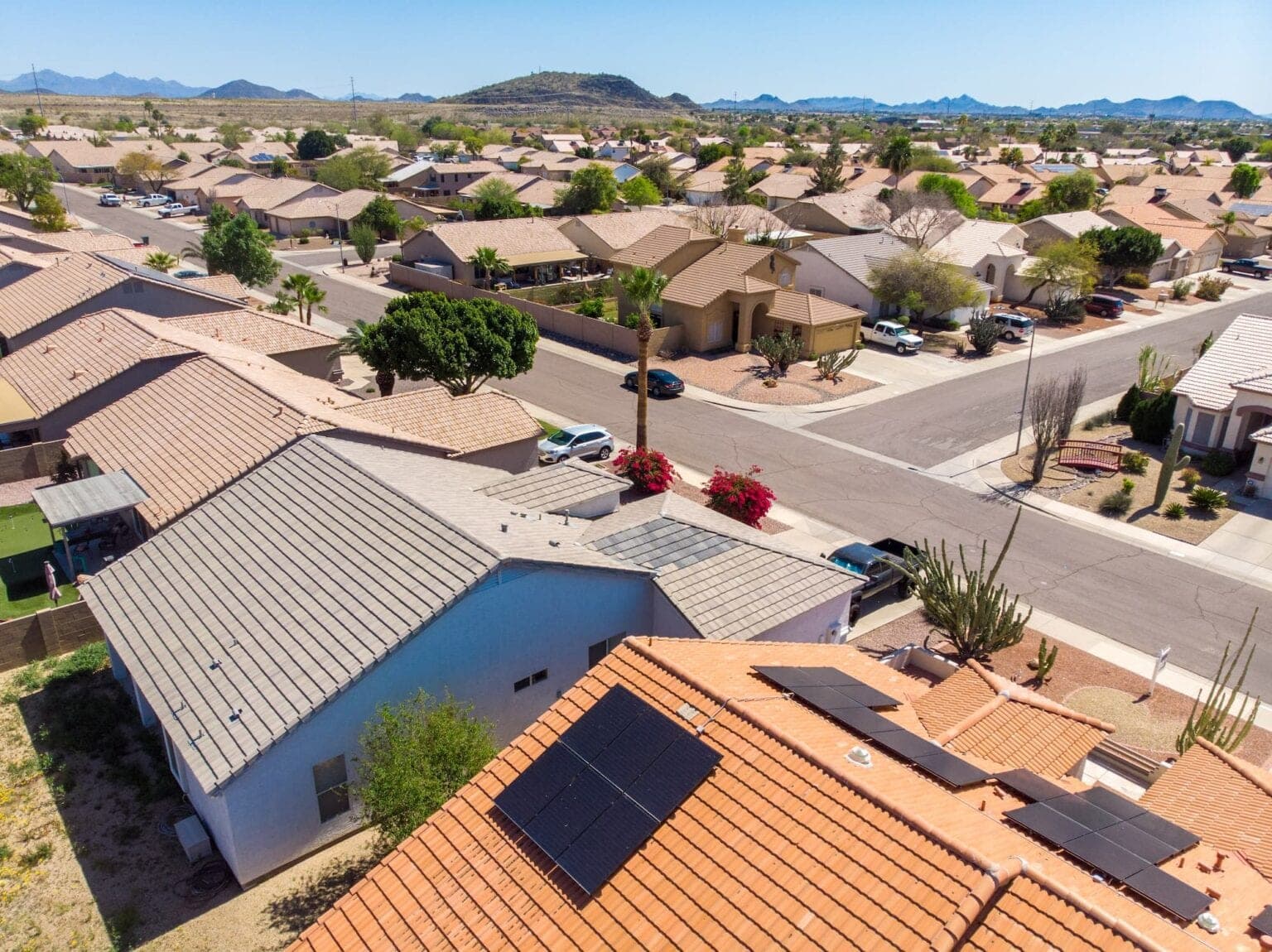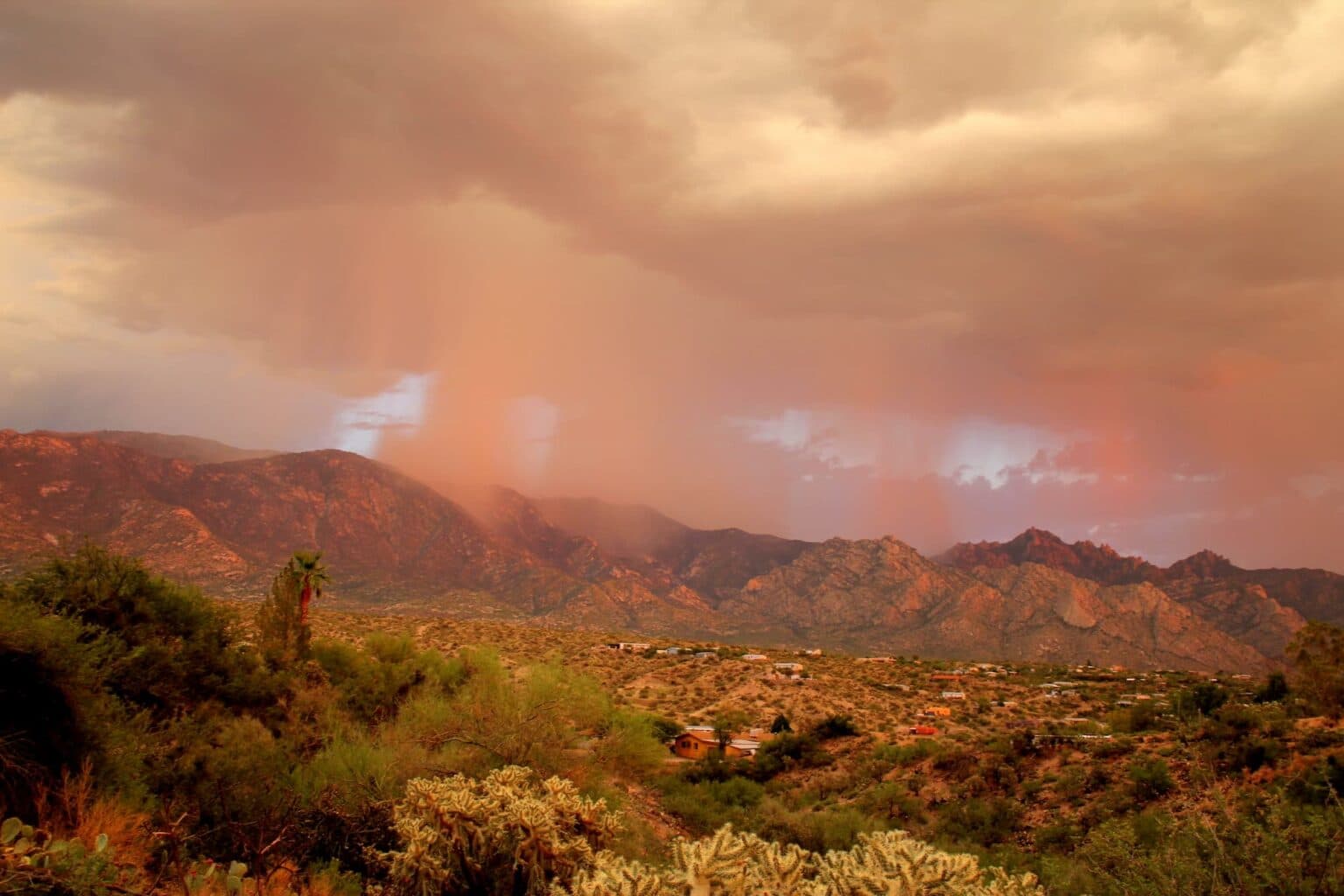

The Arizona monsoon officially runs June 15 through September 30, so the work that protects a Mesa roof has to happen before it starts. Get a professional inspection, clear the gutters and the roof surface, cut back overhanging limbs, and repair anything loose, cracked, or lifted. A roof that is sound in May usually rides out the season; a roof with one open seam in May usually does not.
The Arizona monsoon season is a dramatic time of year, bringing powerful dust storms, heavy rain, strong winds, and even hail to the Mesa area. While it's a welcome cool-down, it can also cause damage to your roof. Don't wait until the first drop of rain to realize your roof isn't ready. Proactive preparation is key to protecting your home and avoiding costly storm damage.
At Eco Roofing Solutions, we've seen firsthand the impact monsoons can have on Mesa roofs. That's why we emphasize the importance of preparing your roof before the storms arrive.
What Actually Hits a Mesa Roof During Monsoon Season?
The National Weather Service set the monsoon window at June 15 through September 30 back in 2008, replacing an older definition based on three consecutive days of 55-degree dew points. The fixed dates make the season easier to plan around, and the most active stretch typically falls between mid-July and mid-August.
Three forces do most of the damage, and they arrive together:
- Microburst winds. A collapsing thunderstorm sends a column of air straight down and out. The National Weather Service Phoenix office documented several microbursts across the Valley on July 24, 2024, with one confirmed 59 mph ground measurement and localized winds estimated by radar at 70 to 80 mph in the areas with the worst damage. That is enough to lift shingle tabs, slide tile, and peel back loose flashing.
- Blowing dust. Haboobs pack fine grit into every valley, gutter, scupper, and soffit screen on the roof. What was a functioning drainage path in the morning can be a dam by evening.
- Rain volume in a short window. Monsoon cells drop a lot of water fast. A partially blocked drain that would keep up with a gentle winter rain backs up in minutes and forces water sideways, under tile and behind flashing.
Why Prepare Your Roof for Monsoon Season Now?
Ignoring your roof before the monsoon season can lead to:
- Leaks and Water Damage: Even small cracks or displaced tiles can allow water to enter, leading to ceiling damage, mold growth, and structural issues.
- Costly Repairs: Minor issues can escalate into major, expensive problems during a storm if not addressed beforehand.
- Safety Hazards: Compromised roofs can become a danger to your family and property during high winds.
There is also a scheduling reality. Once the first big cell rolls through the East Valley, every reputable roofer's phone starts ringing at once. Work done in April and May gets done on your timeline. Work requested in August gets done on the weather's timeline.
What Are the Essential Steps to Prepare Your Mesa Roof?
Get a professional roof inspection
This is the most crucial step. A qualified roofer can identify existing weaknesses, such as cracked tiles, loose shingles, compromised flashing, or deteriorated sealants, that may not be visible from the ground. This is especially vital for all types of residential roofing and commercial roofing structures.
On a tile roof this matters more than most homeowners realize. The tile is a shell that sheds most of the water and takes the UV beating. The underlayment beneath it is the actual waterproofing layer, and it is invisible from the driveway. The National Roofing Contractors Association is clear that real-world roof service life depends on local climate, installation quality, and maintenance rather than on the material alone, and in the low desert the underlayment is almost always the limiting component under a tile roof.
Clean your gutters, downspouts, and roof drains
Clogged gutters prevent water from draining properly, causing it to pool on your roof or overflow and damage fascia, siding, and foundations. On a flat or low-slope commercial roof the same problem shows up at scuppers and internal drains, where a single plastic bag or a season's worth of dust can hold several inches of standing water over a seam. That is the most common preventable cause of the commercial roof repairs we get called out for in July.
Trim overhanging trees
Branches rubbing against your roof can wear down materials, and strong winds can snap limbs, sending them crashing onto your roof. Mesquite and palo verde in particular tend to shed heavy limbs in microburst winds.
Clear debris
Remove any leaves, branches, or other debris that has accumulated on your roof, as this can trap moisture and accelerate deterioration. Pay attention to valleys and the low side of parapet walls, where wind-driven dust settles first.
Address existing damage immediately
If your inspection reveals minor issues, get them repaired immediately. A small crack or loose shingle can quickly become a major leak during a monsoon downpour. Most of the residential roof repairs we handle before the season are small: a cracked pipe boot, a lifted piece of counterflashing, a few broken tiles from a satellite installer walking the roof wrong.
Which Parts of a Roof Fail First in a Monsoon?
Different systems fail in different places. Here is where to concentrate attention by roof type:
| Roof system | Where monsoons attack it | What to check before mid-June |
|---|---|---|
| Concrete or clay tile | Slipped and broken tile, aged underlayment, mortar at hips and ridges | Cracked or shifted tile, exposed underlayment, condition of valley metal |
| Asphalt shingle | Wind-lifted tabs, missing shingles, exposed fasteners | Loose edges along rakes and eaves, granule loss, nail pops |
| Spray polyurethane foam | Thin or worn topcoat, blisters, pinholes at parapets and curbs | Coating thickness at edges, any exposed yellow foam, ponding areas |
| Single-ply TPO, PVC, or EPDM | Open or lifted seams, loose termination bar, clogged scuppers | Seam integrity, flashing at curbs and pipes, drain and scupper flow |
| Every roof | Flashing and penetrations | Chimney and skylight flashing, plumbing vent boots, HVAC curbs, sealant condition |
If you only have time for one thing, walk the penetrations. Pipe boots, vent flashing, and equipment curbs are the leak sources we find most often after the first storm of the season.
How Does Attic Ventilation Fit Into Monsoon Prep?
Monsoon storms do not just push water at a roof, they push humidity into it. If the attic cannot breathe, moisture that gets in stays in.
The International Residential Code sets minimum attic ventilation at 1/150 of the vented area in net free ventilating area, with a 1/300 allowance available when the vents are properly distributed, meaning not less than 40 percent and not more than 50 percent of the required area sits in the upper portion of the attic within three feet of the ridge and the balance sits at the eaves. Blowing dust is the enemy of that balance. Soffit screens in the Valley silt up, the low intake dies, and the upper vents end up pulling conditioned air out of the house instead of moving air through the attic.
While you are up there, check insulation depth. The Department of Energy places Phoenix metro in climate zone 2 and recommends attic insulation in the R-30 to R-60 range. Good ventilation and adequate insulation work together, and a monsoon-season attic that runs cooler and drier is a roof deck that lasts longer.
What Should You Do Right After a Storm Passes?
- Look at the roof from the ground first, with binoculars if you have them. Do not climb a wet roof, and do not climb a tile roof at all unless you know where to step.
- Check ceilings, closets, and the attic for fresh stains. A monsoon leak often shows up as a ring several feet from where the water actually entered.
- Photograph any displaced tile, blown shingles, or debris before anyone cleans up.
- Get a tarp or a temporary repair on an active leak, then schedule the real repair.
- Call a licensed contractor. Arizona requires an ROC license for roofing work valued at $1,000 or more, and door-to-door storm crews are a recurring problem in the Valley every August.
How Do You Choose a Roofer in Mesa Before Storm Season?
Verify the license number, not just the claim. Eco Roofing Solutions holds active Arizona ROC license 330901 (CR-42) and is a member of the Arizona Roofing Contractors Association for both residential and commercial work. We are family-owned and based at 75 W Baseline Rd Suite 19 in Gilbert, which puts our crews minutes from most of Mesa. Eric Perry, our Owner and President, is a third-generation roofer with more than 25 years of hands-on experience on desert roofs.
Homeowners have rated us 4.8 stars across 385, and you can read more of them on our reviews page. If you want the specifics of what we do on Mesa homes, our Mesa residential roofing page covers it.
Taking these steps now can save you significant headaches, money, and stress when the monsoon storms inevitably arrive. If you would like a set of eyes on your roof before the first cell builds over the Superstitions, get in touch and we will schedule an inspection. Our office is open Monday through Saturday, 8AM to 5PM, at (480) 695-7736.