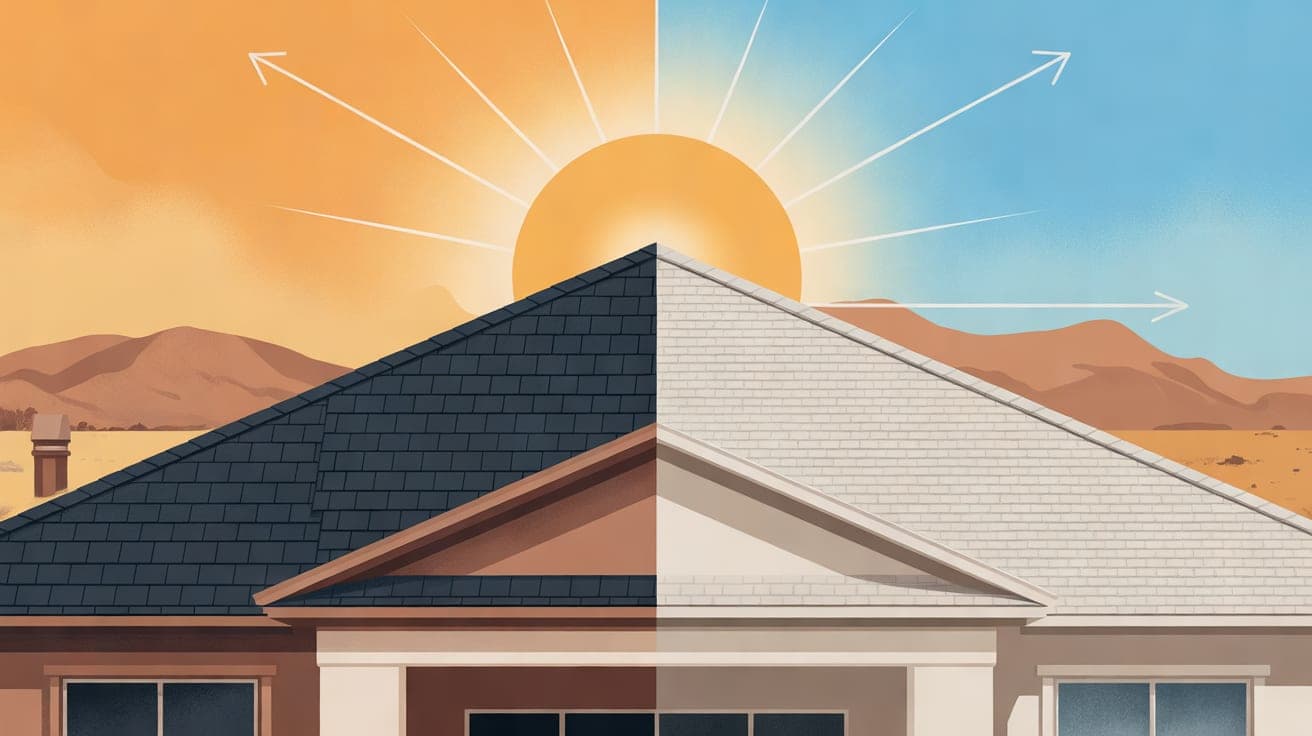
If you want a roof that handles Arizona heat, you are really choosing three things at once: a surface that reflects or sheds solar energy, an assembly that lets heat escape instead of trapping it against the deck, and an underlayment tough enough to survive the temperature swing underneath. Concrete and clay tile, reflective metal, and light-colored flat-roof membranes all do the first two jobs well. The material that fails here is almost never the one that got installed over a properly ventilated, properly insulated attic.
Arizona's extreme heat and intense sun make choosing the right roofing material essential for comfort, durability, and energy efficiency. At Eco Roofing Solutions, we help homeowners make smart choices to beat the heat and reduce energy costs. Here are the best heat-resistant roofing materials for Arizona homes.
Which Roofing Materials Hold Up Best in Arizona Heat?
Tile Roofing (Clay or Concrete)
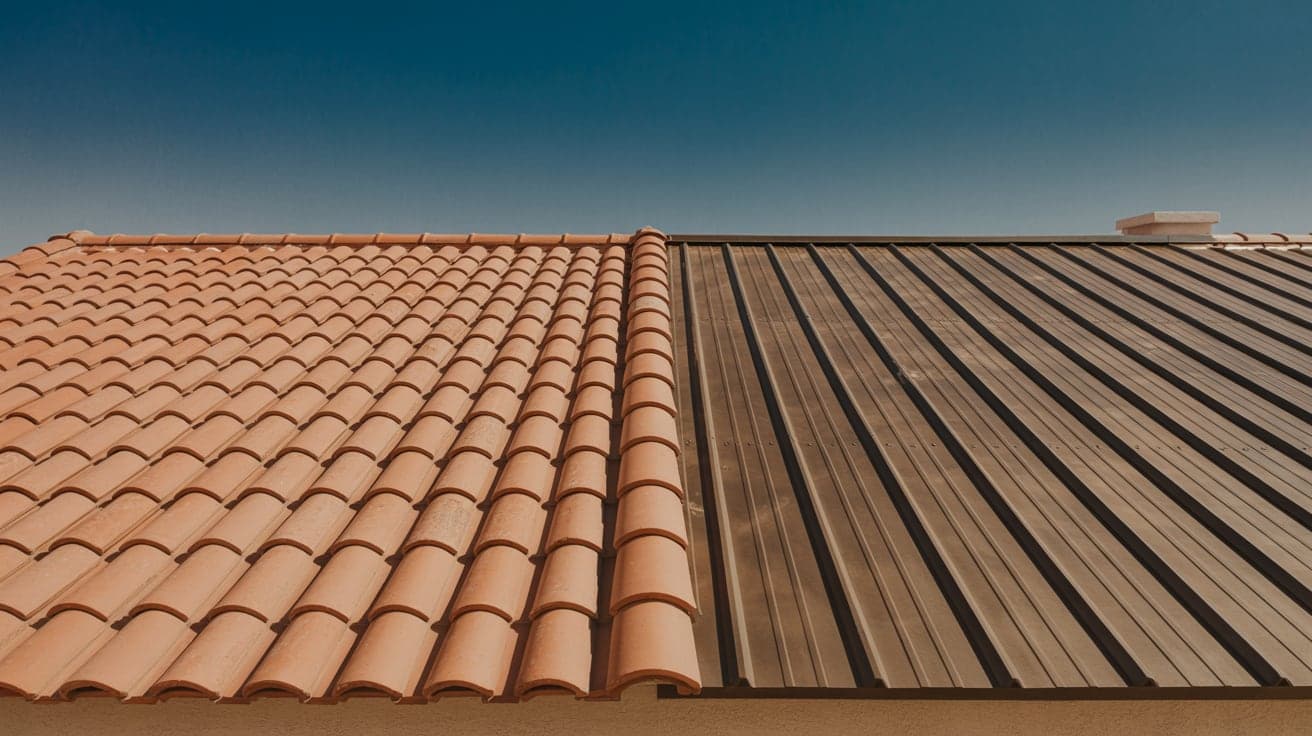
Tile roofs are a popular choice in Arizona for good reason. Clay and concrete tiles are naturally heat-resistant and allow airflow between the tiles and the roof deck, reducing heat transfer into the home. They're durable, fire-resistant, and long-lasting, with clay tiles boasting a lifespan that can extend up to a century or more.
That airflow gap is the part homeowners underrate. Tile sits on battens or on the raised profile of the tile itself, which creates a ventilated space above the sheathing. Heat that would otherwise conduct straight into the deck gets carried off by moving air instead. It is the same principle as parking in the shade rather than in the sun.
Metal Tile Roofing
Modern metal roofing is designed with reflective coatings that bounce sunlight away from your home, with style varieties that include shingles. It cools down quickly at night and holds up well against extreme heat and UV exposure. Metal roofs are also lightweight, energy-efficient, and can last 40+ years with minimal maintenance.
Metal is also the easiest material to verify before you buy. Most manufacturers list their finishes in the Cool Roof Rating Council directory with measured solar reflectance and thermal emittance, so you can compare two colors side by side instead of guessing.
Heat-Resistant Materials for Flat Roofs
For homes with flat or low-slope roofs, materials like TPO (Thermoplastic Polyolefin) and modified bitumen are excellent options. TPO is a white, reflective membrane that resists UV rays and significantly reduces rooftop temperatures. Modified bitumen offers durability and weather resistance, and when paired with light-colored coatings, can help reflect heat and prolong roof life. These materials are ideal for Arizona's harsh sun and can help reduce your cooling load.
Spray polyurethane foam belongs in this conversation too. Closed-cell foam is listed by the Department of Energy at about R-6.5 per inch, which is the highest insulating value of anything commonly applied to a roof, and it goes down seamless over the whole deck. It gets a reflective topcoat that is renewed on a cycle rather than torn off.
Rolled Roofing
Often used on low-slope roofs or outbuildings, rolled roofing is a budget-friendly option made from asphalt-based materials. While it's not as reflective as other choices, using reflective coatings can improve heat resistance and extend their lifespan in Arizona's sun.
Asphalt Shingle Roofing
Traditional asphalt shingles remain a common choice. While not naturally reflective, newer "cool roof" shingles with reflective granules are available and better suited for hot climates. Proper attic ventilation is key to maximizing their performance in Arizona.
How Long Does Each Material Actually Last?
Lifespan claims get thrown around loosely in this trade. The figures below come from InterNACHI's Standard Estimated Life Expectancy Chart, which is the reference home inspectors use. Treat them as national baselines. Arizona sun is harder on organic materials than the national average, and installation quality moves these numbers more than the material choice does.
| Material | Estimated life expectancy | Heat performance | Notes for Arizona homes |
|---|---|---|---|
| Clay or concrete tile | 100+ years | Excellent, thanks to the ventilated air gap | The tile outlasts the underlayment beneath it by decades |
| Metal | 40 to 80 years | Excellent with a reflective finish | Sheds heat fast after sundown; check CRRC-listed values |
| Architectural asphalt shingle | 30 years | Moderate; better with reflective granules | Attic ventilation does the heavy lifting |
| 3-tab asphalt shingle | 20 years | Lowest of the sloped options | Common on older tract homes across the Valley |
| Built-up roofing (BUR) | 30 years | Improves substantially with a reflective coating | Still found on many mid-century flat roofs |
| Modified bitumen | 20 years | Good when coated light | Durable underfoot for rooftop equipment |
| TPO single-ply | 7 to 20 years | Excellent, bright white and highly reflective | Membrane thickness and seam welding quality drive the range |
| EPDM single-ply | 15 to 25 years | Poor in black, better in white-surfaced versions | Rarely the first choice on a hot-dry roof |
What Actually Makes a Roof "Heat-Resistant"?
Marketing uses the phrase loosely. The measurable version comes from the Cool Roof Rating Council, an independent nonprofit that rates roofing products on two properties:
- Solar reflectance, on a 0 to 1 scale, is how much sunlight the surface bounces back.
- Thermal emittance, also 0 to 1, is how efficiently the surface releases the heat it does absorb.
The CRRC combines those into a Solar Reflectance Index, where standard black scores 0 and standard white scores 100, and it publishes both initial values and values measured after three years of outdoor exposure. The aged number is the one worth reading. Every roof in the Valley collects dust, and dust lowers reflectance.
One label to ignore: the EPA sunset its ENERGY STAR roof products program effective June 1, 2022, and the CRRC directory replaced it as the third-party reference.
Beyond the surface, three assembly-level factors matter as much as the material:
- Thermal mass. Heavy tile absorbs heat slowly and releases it slowly, which flattens the peak.
- Above-sheathing ventilation. The air gap under tile or a raised metal panel carries heat away before it reaches the deck.
- Underlayment quality. This is the layer that actually keeps water out, and it lives in the hottest part of the assembly.
Why Does the Underlayment Matter More Than the Tile?
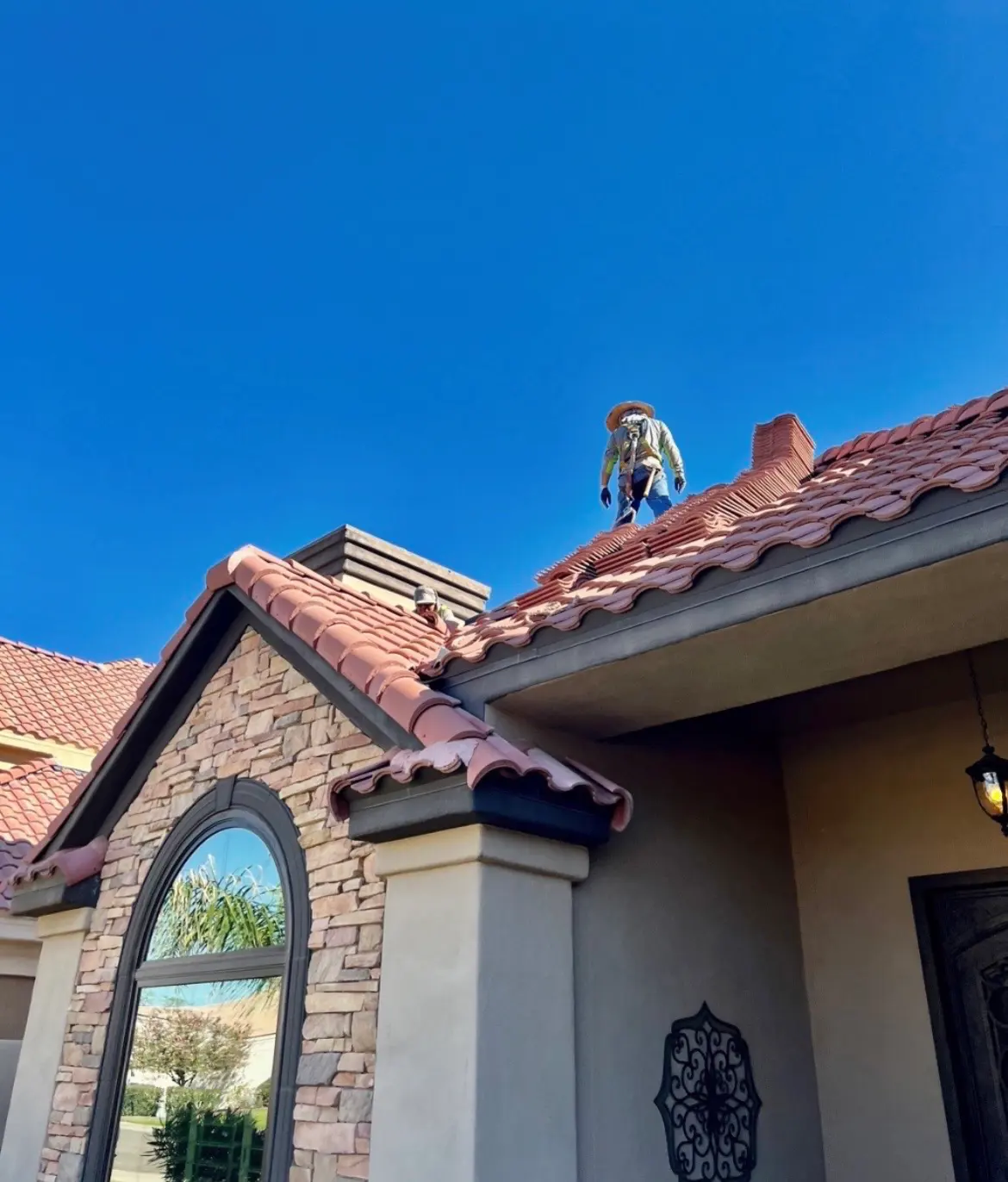
Most tile roof failures in Gilbert, Mesa, and Chandler are not tile failures. The tile is fine. The felt or synthetic underlayment beneath it has spent 20 summers baking at temperatures far above ambient air, gone brittle, and lost its ability to shed water when a monsoon cell drives rain sideways under the tile.
That is why a tile underlayment replacement is one of the most common jobs we do on the residential roofing side. The existing tile is carefully removed and stacked, the old underlayment comes off, the deck gets inspected and repaired, new underlayment goes down, and the sound tile is reset. You keep the tile you paid for and reset the clock on the part that was actually worn out.
If your tile roof is somewhere past the two-decade mark and you have never touched the underlayment, that is the inspection to schedule, not a tile swap.
Will a Great Roof Still Fail Without Ventilation and Insulation?
Yes, and this is the part most material comparisons skip.
Ventilation. The International Residential Code sets a minimum net free ventilating area of 1/150 of the vented attic space. That can be reduced to 1/300 where at least 40 percent and not more than 50 percent of the required ventilating area sits in the upper portion of the attic, no more than three feet below the ridge, with the balance provided by eave or cornice vents. In plain terms: you need balanced intake low and exhaust high, not just a couple of turbines punched in wherever.
Insulation. ENERGY STAR, following the 2021 International Energy Conservation Code, recommends R-49 for an uninsulated attic in Climate Zone 2, which covers the Phoenix metro, and R-38 for an attic that already has three to four inches. A lot of older Valley homes are sitting well under that.
Radiant barriers. The Department of Energy notes radiant barriers are more effective in hot climates than cool ones, especially when cooling ducts run through the attic, and that some studies show they can cut cooling costs 5 to 10 percent in a warm, sunny climate.
Put a beautiful reflective roof over an attic that cannot breathe and you have solved a third of the problem.
What Does Monsoon Season Demand From a Roof?
Heat is only half the test. The National Weather Service defines Arizona's monsoon season as June 15 through September 30, and NWS Phoenix describes monsoon thunderstorms as bringing damaging winds, torrential rainfall, frequent lightning, and dust storms. Downburst winds can reach 50, 60, and 70 mph, and in rare cases exceed 100 mph.
That means a heat-resistant roof also has to be a wind-resistant and water-resistant roof:
- Correct fastening pattern and proper edge metal, because edges and corners take the highest uplift.
- Underlayment lapped and detailed to handle wind-driven rain, not just vertical rain.
- Flashings at walls, valleys, and penetrations that are formed, not caulked.
- Debris and dust cleared from valleys and scuppers before the season starts.
Post-monsoon is when we get the most calls in Mesa and across the East Valley, and the pattern is consistent: the damage shows up at details, not in the middle of the field.
How Do I Choose for My Own House?
Selecting a heat-resistant roofing material doesn't just make your home more comfortable, it can dramatically lower energy bills and extend the life of your roof. The practical sequence looks like this:
- Find out what is actually on your roof now and how old the underlayment is.
- Check your attic ventilation and insulation levels before you spend money on the surface.
- Compare candidate materials on published CRRC values, not on color alone.
- Confirm structural fit. Tile weighs considerably more than shingle, and not every framing package is built for it.
- Decide whether repair, underlayment replacement, or full replacement is the honest answer.
At Eco Roofing Solutions, we specialize in roofing systems built for Arizona's toughest weather. We are family-owned, based at 75 W Baseline Rd Suite 19 in Gilbert, licensed under Arizona ROC 330901 (CR-42), and a member of the Arizona Roofing Contractors Association. Owner and President Eric Perry is a third-generation roofer with more than 25 years of hands-on experience.
If you want a straight assessment of what your roof needs, contact us and we will walk it with you. If it turns out you need less than a full replacement, our residential repair and maintenance team can tell you that too.