A green roofing system pays you back in four measurable ways: lower cooling load, less stormwater runoff, longer life for the waterproofing underneath, and a cooler building envelope in a city that badly needs one. In the Sonoran Desert, though, "green roof" covers two very different approaches — a planted vegetative assembly and a high-reflectance cool roof — and picking the right one depends on your structure, your water budget and what the building is for.
With the growing trend in environmental awareness, homeowners and businesses seek sustainable roofing systems in AZ. Green roofing is a popular choice to keep up with the times. It allows you to combine sustainability with functionality in building design. Let us look at the numerous benefits it offers you and the environment.
What counts as a green roof — vegetation, or just sustainable roofing?
Both, and the distinction matters when you are budgeting.
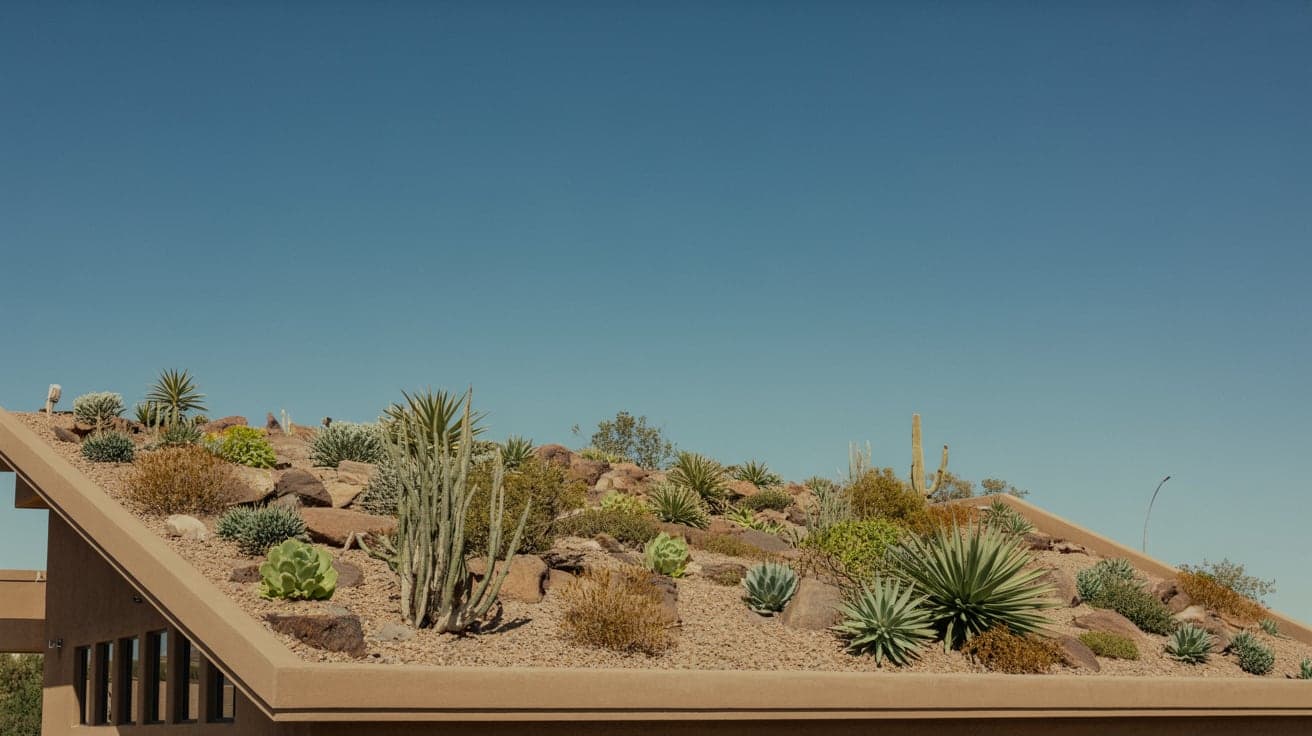
- Vegetative (living) roofs carry an engineered assembly: waterproofing membrane, root barrier, drainage layer, filter fabric, growing media and plants. Extensive systems use shallow media, roughly 3 to 6 inches deep, with low-growing drought-tolerant plants. Intensive systems use deeper media and support larger plantings, at much greater weight.
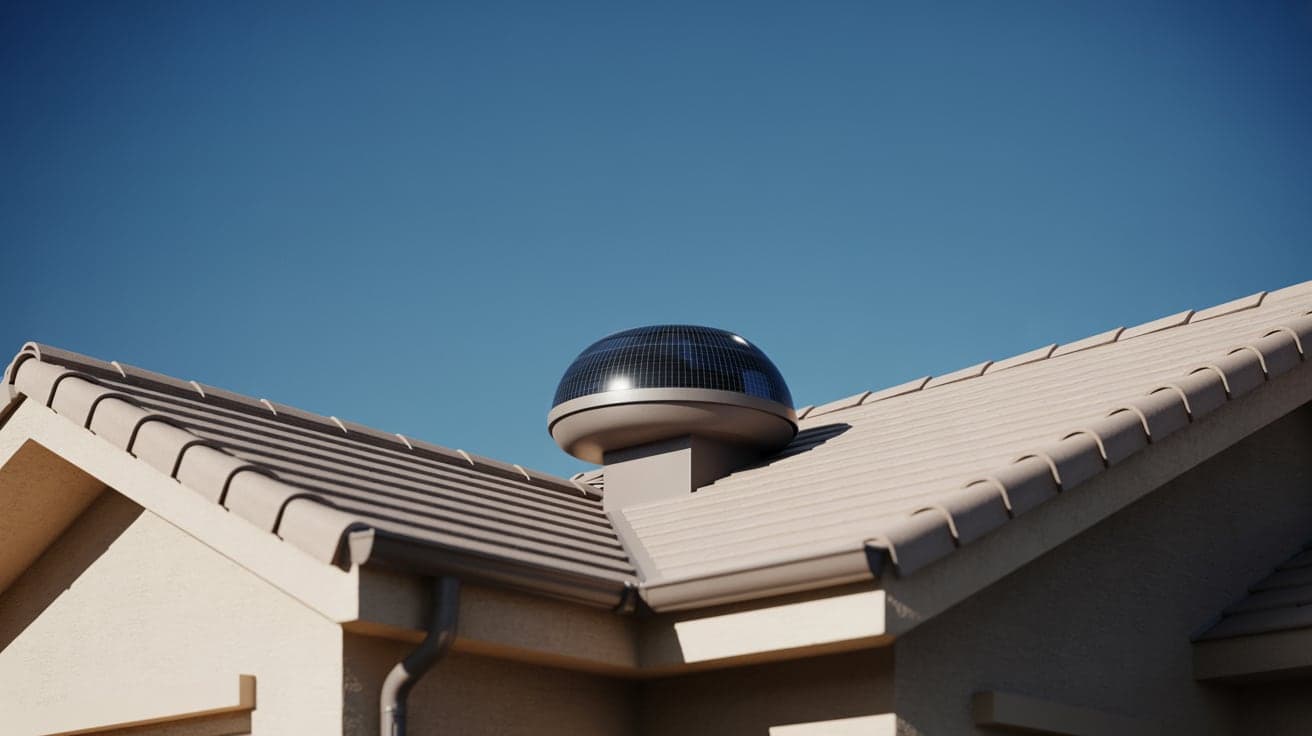
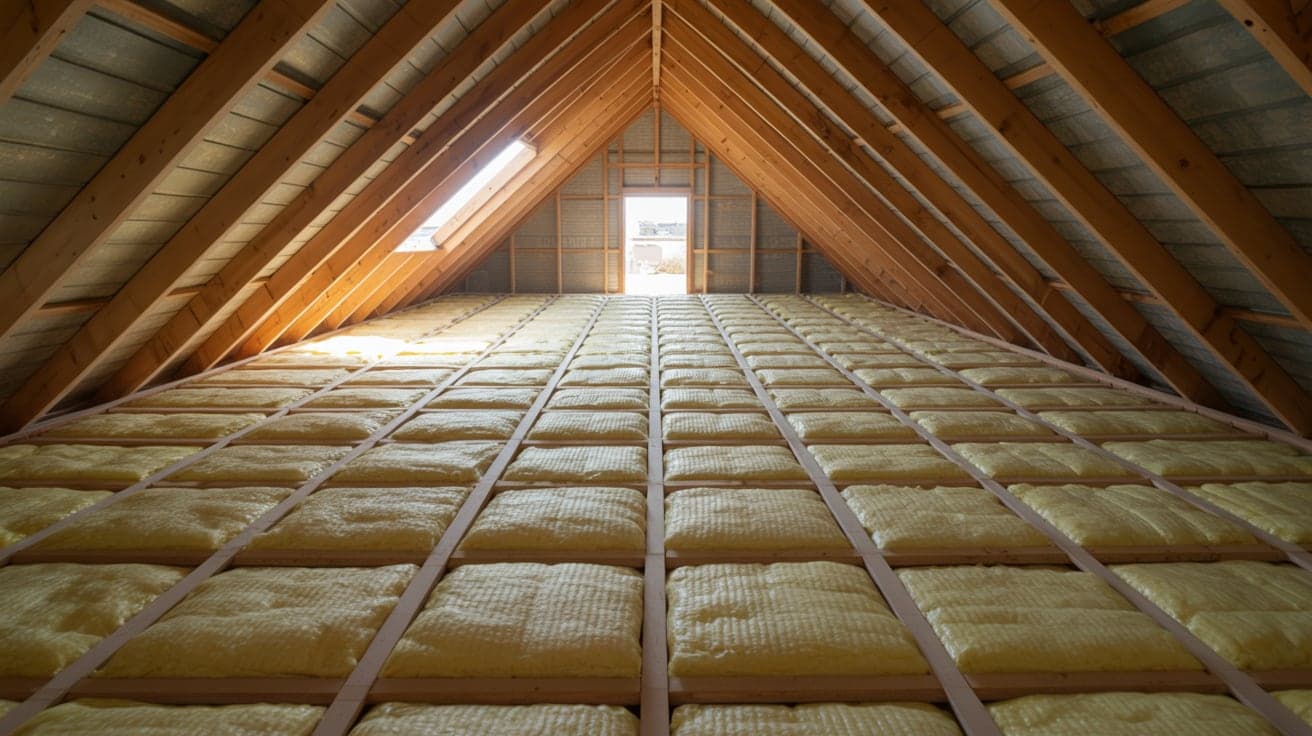
- Cool and reflective roof systems achieve the energy and heat-island benefits through surface properties instead of plants — white single-ply membranes, elastomeric coatings over spray polyurethane foam, and reflective metal or tile finishes.
Most of what follows applies to both. Where it does not, we will say so.
What are the main benefits of a green roofing system?
1. Improved energy efficiency
Green roofing enhances a building's energy efficiency. By including plants and other greenery on your roof, you can keep it cooler or warmer depending on the weather. This benefit reduces your reliance on heating and cooling systems, helping you lower energy costs.
The mechanism is straightforward. Growing media and plant canopy shade the roof deck and cool it further through evapotranspiration, so less heat crosses into the building. A reflective cool roof gets to a similar place by a different route: the Department of Energy notes a conventional roof can reach 150°F or more on a sunny summer afternoon, while a reflective roof under the same conditions can stay more than 50°F cooler. Either way, the roof surface stops acting like a heat source above your ceiling.
2. Stormwater management
Green roofs act as natural buffers for rainwater. By absorbing and storing rainfall, they reduce runoff and alleviate pressure on drainage systems. This, in turn, helps prevent flooding and keeps urban water systems from being overwhelmed during heavy storms.
The EPA puts numbers to it: extensive and intensive green roofs can reduce runoff by roughly 60 to 100 percent respectively, though actual performance depends on rainfall patterns. That last clause is the important one in Arizona, where much of the annual total falls in a few intense monsoon events rather than steadily through the year.
3. Longer roof lifespan
Green roofing systems protect the underlying roofing materials from extreme weather conditions. Sun, rain, and wind can deteriorate traditional roofs over time, but the vegetative layer provides a protective shield. This extends your roof's life and minimizes the need for repairs or replacements.
In the desert this is arguably the biggest benefit of all. UV exposure and the daily expansion-contraction cycle are what age a membrane fastest. Bury that membrane under drainage layers and media and you take both stresses off it almost entirely.
4. Enhanced biodiversity and aesthetics
Green roofs in urban areas dominated by concrete and asphalt create a welcoming space for birds, insects, and other wildlife. The greenery also adds a natural aesthetic, improving the visual appeal of buildings and contributing to a more pleasant environment.
5. Reduced urban heat island effect
Highly urbanized areas experience drastic temperatures due to the prevalence of heat-absorbing surfaces. Green roofing helps counteract this by reflecting sunlight and releasing moisture into the air. This cooling effect can make urban areas more comfortable while reducing the demand for air conditioning.
The EPA lists green roofs among its recommended strategies for reducing urban heat islands, and in a metro area where summer overnight lows stay elevated because pavement and rooftops release stored heat after dark, every reflective or planted surface helps.
Does a vegetative roof make sense in the Sonoran Desert?
Honest answer: sometimes, and it depends on your water plan.
A living roof in Gilbert or Phoenix will need irrigation. There is no version where it does not. The EPA has published design guidance specifically for green infrastructure in the semi-arid West precisely because intermittent, unpredictable rainfall changes the design math. What works here is an extensive system with shallow media, drought-adapted and desert-native species, and efficient drip irrigation on a controller — not a lawn on a roof.
Where vegetative roofs earn their keep locally:
- Occupied rooftop spaces where the amenity value is part of the point
- Institutional, civic and hospitality buildings pursuing sustainability certification
- Buildings where a portion of the roof can be planted and the rest run as a reflective cool roof
Where a cool roof is usually the better answer:
- Warehouses, retail and light industrial where nobody goes on the roof
- Existing structures with no load capacity to spare
- Any owner who does not want a permanent irrigation obligation
What does your building need structurally to carry a green roof?
This is the first question, not the last, and it is answered by a structural engineer before a single tray goes up.
Saturated growing media weighs dramatically more than dry media, and the design load has to assume saturated conditions plus any people and equipment on the roof. ASTM E2397 is the standard practice for determining the dead loads and live loads associated with vegetative roof systems, and ASTM E2399 is the test method for maximum media density used in that dead load analysis. Those two documents are how a green roof stops being a nice idea and becomes a buildable one.
Practical implications:
- Drainage capacity. Drains, scuppers and overflows have to move a monsoon downpour off a saturated assembly.
- Parapet and flashing heights. Media depth eats into flashing height, so the waterproofing has to be carried higher than on a bare membrane roof.
- Access. Somebody has to get up there to maintain it, safely, year after year.
Green roof vs. cool roof vs. coated foam: which fits your building?
| Vegetative (extensive) | Reflective cool roof | Coated spray foam | |
|---|---|---|---|
| Added structural load | Significant; engineer required | Minimal | Very low |
| Water demand | Ongoing irrigation | None | None |
| Stormwater benefit | High (EPA: ~60–100% runoff reduction) | None | None |
| Insulation added | Yes, via media | No | Yes, foam is insulation |
| Membrane protection | Excellent — shields from UV | Membrane is exposed | Topcoat protects foam |
| Maintenance | Seasonal horticultural + roof | Periodic cleaning + inspection | Recoat roughly every 10–15 years |
| Leak diagnosis | Difficult; plan detection up front | Straightforward | Straightforward |
There is no universal winner on that table. There is a right answer for your building, your budget and your appetite for maintenance.
How do you keep a vegetative roof from leaking?
By assuming that someday you will need to find a leak under six inches of wet media, and building for that day.
- Root-resistant waterproofing. The membrane has to be rated to resist root penetration, with a separate root barrier where the assembly calls for one.
- Electronic leak detection. Installing a detection grid or conductive layer during construction is far cheaper than excavating a planted roof later.
- Flood testing before planting. Test the waterproofing while you can still see it.
- Detailed flashings. Penetrations, curbs and parapets are where green roofs leak, not out in the field.
None of that is exotic. It is the same discipline we apply on any commercial roofing project, just with less margin for error because the membrane is buried.
What ongoing maintenance does a green roof need?
ASTM E2400 provides guidance on selecting, installing and maintaining plants for green roof systems, and the maintenance side of it is the part people underestimate.
Expect seasonal visits to weed, replace failed plants, verify emitters and controller programming, and clear drains and filter fabric. Then, separately, expect the roof itself to be inspected — flashings, parapets, drains, edge conditions. The National Roofing Contractors Association recommends inspecting roof systems at least twice a year and after major weather events, which in this state means before and after the monsoon. That is exactly the cadence we build into our commercial roof maintenance work for property managers around Phoenix and the East Valley.
In conclusion, green roofing is a forward-thinking solution offering many practical and environmental benefits. By investing in a green roof, you not only improve energy efficiency and reduce stormwater runoff but also contribute to the overall sustainability of urban environments.
Talk it through before you commit
Eco Roofing Solutions, LLC is a family-owned roofing contractor at 75 W Baseline Rd Suite 19 in Gilbert, licensed under Arizona ROC 330901 (CR-42) and a member of the Arizona Roofing Contractors Association for both residential and commercial work. Owner and President Eric Perry is a third-generation roofer with over 25 years of hands-on experience, and the honest recommendation for a given building is sometimes a planted roof and sometimes a white membrane.
If you want to start building your ideal roof, contact us and we'll look at your structure, your slope, your drainage and your goals before anyone talks product. You can also browse our full list of services to see what else we handle.