Extreme heat rarely destroys a roof in a single event. It works slowly, through daily expansion and contraction, constant ultraviolet exposure, and the gradual drying out of every flexible material on the roof. That is why a roof assembly rated for 25 or 30 years somewhere milder shows its age faster here, and why the first failures almost always appear at sealants, flashings, and underlayment rather than at the visible surface.
When your area experiences soaring temperatures, your roof can suffer. Roofing materials have been designed to withstand the elements. However, continuous exposure to intense heat can cause significant wear and tear over time. Understanding what happens to your roof in Arizona's heat can help you protect your home and make informed decisions about maintenance and repairs.
How hot does an Arizona roof actually get?
Hotter than most people expect. The Department of Energy states that conventional roofs can reach 150°F or more on a sunny summer afternoon, and that a reflective roof under the same conditions can stay more than 50°F cooler. The EPA's heat island program puts the gap in a similar place, noting that cool roof surfaces can run up to 50 to 60°F below conventional materials during peak summer weather.
The roof's surface can reach temperatures as high as 160°F, depending on the material and the sun's intensity. Over time, structural damage happens due to the constant heating and cooling cycle that causes materials to expand and contract.
That cycle is the part people underestimate. Climate normals for Phoenix put a typical year at well over 100 days at or above 100°F, and desert nights cool off sharply because of the low humidity. Every one of those days is a full expansion and contraction cycle for the deck, the fasteners, the flashing, and the sealant. Thousands of cycles is what eventually opens a joint that was watertight on day one.
What does the heat do to asphalt shingles?
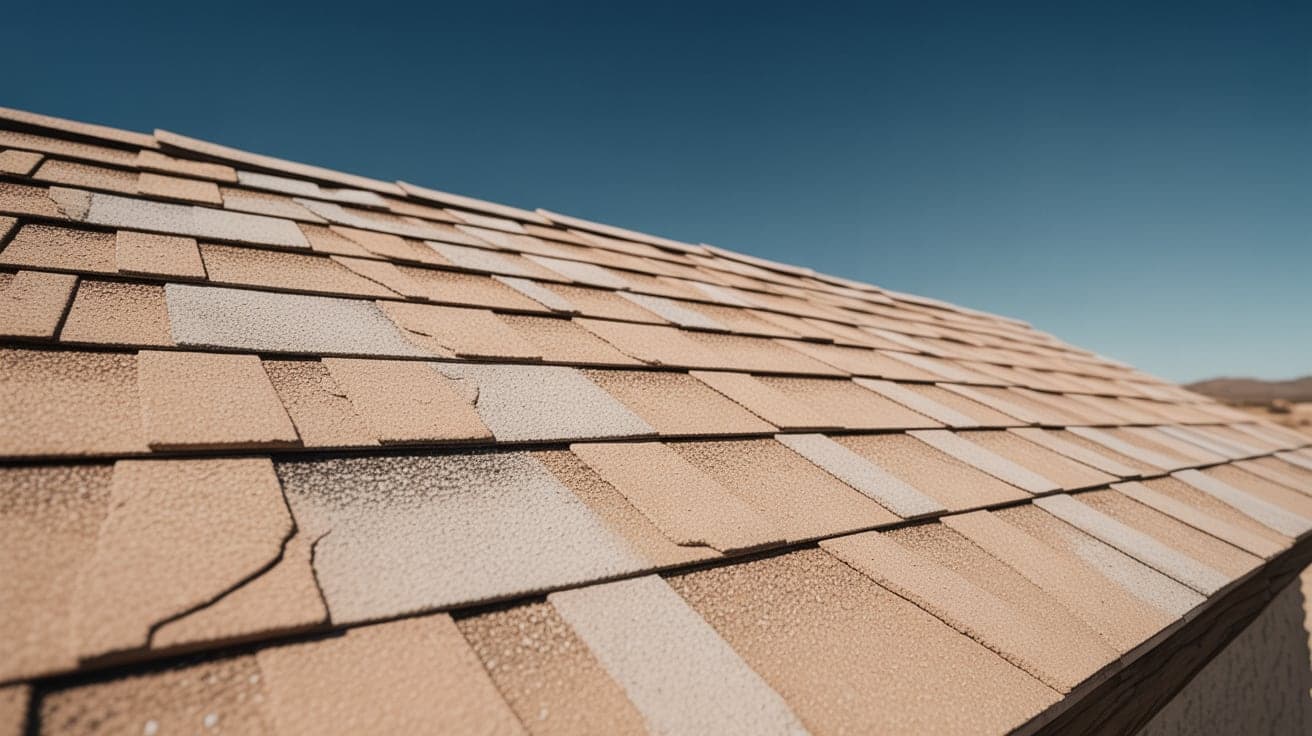
Under extreme heat, roofing materials can break down faster than in milder climates. For example, oils in asphalt shingles can evaporate when exposed to prolonged high temperatures. As a result, shingles may become brittle and start to crack or curl. These cracks affect your roof's appearance and compromise its ability to protect your home from the elements.
Once a shingle stiffens up, three things tend to follow:
- Granule loss. The mineral granules are the shingle's sunscreen. When the asphalt beneath them hardens, granules release more easily and wash into the gutters and downspouts.
- Curling and cupping at the edges. Corners lift, which gives monsoon wind something to grab.
- Weakened sealant strips. Shingles rely on a factory adhesive strip that bonds tab to tab. Shingle wind classifications under ASTM D3161 and ASTM D7158 are based on that bond holding. A brittle, heat aged shingle does not perform like the class it was rated at when it left the factory.
That last point is why heat damage and monsoon damage are really the same story told in two seasons. The sun does the weakening in June and July, and the first hard microburst finds the weak spot.
Do tile and foam roofs escape the heat?
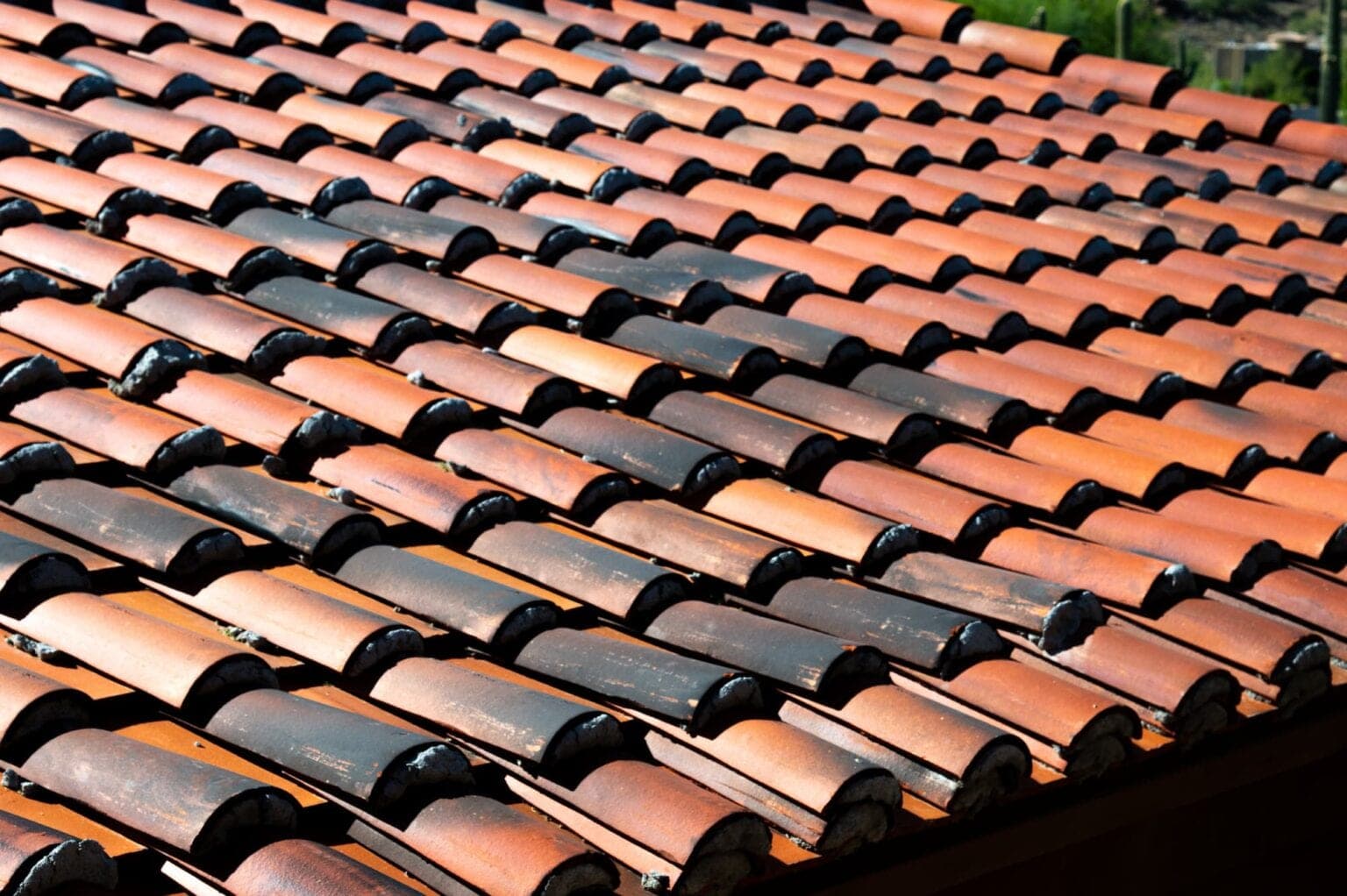
Not exactly, but they fail differently. On a tile roof the tile is not the waterproofing layer. The underlayment beneath it is, and the underlayment is the component the heat is aging. Most tile roofs in the East Valley start leaking with perfectly good tile still on them, because the felt underneath has gone brittle and cracked at the fasteners and laps. Replacing that underlayment while reusing sound tile is one of the most common jobs in our residential roofing work.
Spray polyurethane foam and low slope commercial systems have their own heat clock. The foam itself is durable, but the elastomeric topcoat above it is the sacrificial layer, and it thins under UV. Foam roofs are designed to be recoated on a cycle rather than torn off, which is exactly why a neglected foam roof on a warehouse turns into a full replacement instead of a recoat.
| System | Typical service life range | How heat shows up first | Maintenance that matters |
|---|---|---|---|
| 3-tab asphalt shingle | About 15 to 20 years | Granule loss, curling, brittle tabs | Sealant and boot checks, prompt repair of lifted tabs |
| Architectural shingle | About 25 to 30 years | Edge curl, weakened sealant strip | Same, plus attic ventilation and insulation |
| Concrete or clay tile | Tile 40+ years, underlayment far less | Cracked, brittle underlayment at laps | Underlayment replacement, broken tile swap-outs |
| Spray polyurethane foam | 20+ years with recoats | Thinning, chalking topcoat | Recoat on schedule, keep drains and scuppers clear |
| TPO, PVC, EPDM membrane | Roughly 15 to 30 years by type | Shrinkage stress at seams and curbs | Seam and flashing inspections, ponding control |
Service life ranges are industry and manufacturer figures for the material. Real world life in the low desert depends on color, slope, ventilation, and installation quality.
Why do sealants and flashing fail before the roof does?
Extreme heat affects sealants and flashing around vents and chimneys, which is crucial for keeping water out. They can dry out and crack since they are prone to intense temperatures. This issue then leads to leaks. Getting a tiny crack will allow water to damage your home bit by bit. Scheduling regular inspections will help you avoid unnecessary expenses and keep your roof in top condition.
The reason is straightforward. Sealants and rubber pipe boots are the softest, most flexible things on the roof, and flexibility is exactly what heat and UV take away first. They also sit at the transitions, where two different materials expand at two different rates. On most of the leak calls we run, the field of the roof is fine and the problem is a two dollar boot or a bead of caulk that gave up. Catching those on a maintenance visit is far cheaper than chasing drywall stains later.
Where to look first
- Plumbing vent boots, especially the rubber collar around the pipe
- Flashing at chimneys, skylights, and wall-to-roof transitions
- Around HVAC curbs and any penetration added after the roof was installed
- Valleys, where heat, debris, and water volume all meet
How does a hot roof raise your energy bill?
When your roof is subjected to extreme heat, it can transfer heat into your home. This makes your air conditioning work harder to maintain a comfortable temperature, putting additional strain on your cooling system and increasing energy bills. Reduce heat absorption with light-colored or reflective materials and save yourself from expensive cooling costs.
Reflectance is only one lever, though, and it is not the strongest one on most existing homes. Two others matter just as much:
- Attic insulation. ENERGY STAR and the Department of Energy place the Phoenix metro in climate zone 2, where the recommendation for an uninsulated attic runs from about R-30 up to R-60. Plenty of older East Valley attics are well below that.
- Attic ventilation. The International Residential Code sets a baseline of 1 square foot of net free vent area per 150 square feet of attic, and allows a 1:300 ratio when 40 to 50 percent of the vent area sits in the upper portion of the attic with the balance in the bottom third. Balanced intake and exhaust is what actually moves the hot air out.
The Department of Energy also reports that radiant barriers can cut cooling costs by 5 to 10 percent in warm, sunny climates, with the biggest gains in homes where the ducts run through the attic, which describes most houses in Gilbert and across the Phoenix valley.
What does UV do that heat alone does not?
The sun's ultraviolet rays can weaken roofing materials, causing them to degrade faster. Prolonged exposure to UV rays can fade the color of your roof and cause it to lose its protective properties. This damage is more severe in areas that experience high levels of sunlight throughout the year.
UV attacks at the molecular level rather than the structural one. Heat makes materials move; UV makes them chalk, fade, and lose elasticity. It is also why reflective coatings need to be evaluated on aged performance, not just on how they look the week they go down. The Cool Roof Rating Council rates roofing products for solar reflectance and thermal emittance on a 0 to 1 scale and publishes both initial and three-year aged values, which is the honest way to compare products that all look bright white in the brochure.
What should you actually do about it?
Taking proactive steps, such as regular roof inspections and considering heat-resistant materials, can help minimize the effects of intense heat and extend the life of your roof.
In practice, that means:
- Inspect twice a year. The National Roofing Contractors Association recommends inspecting roof systems at least twice annually, spring and fall, plus after major weather. In the Valley, make that a pre-monsoon check in late spring and a post-monsoon check in October.
- Fix small things while they are small. A cracked boot, a lifted tab, a dry sealant joint. All of it is cheap now and expensive after a storm drives water through it.
- Fix the attic, not just the roof. Insulation and balanced ventilation reduce the load the roof has to carry all summer.
- Choose for reflectance and durability when you replace. Compare CRRC aged values, and pick a system suited to your slope. Low slope buildings have different answers than pitched homes, which is why our commercial roofing approach starts with the drainage plan.
If your roof has been through more than a few Arizona summers and nobody has looked at it closely, that is worth changing before the next monsoon. Eric Perry and our team can walk it, tell you what is actually failing, and give you an honest read on whether you need repairs or a replacement. Reach out through our contact page or call the Gilbert office when you are ready.