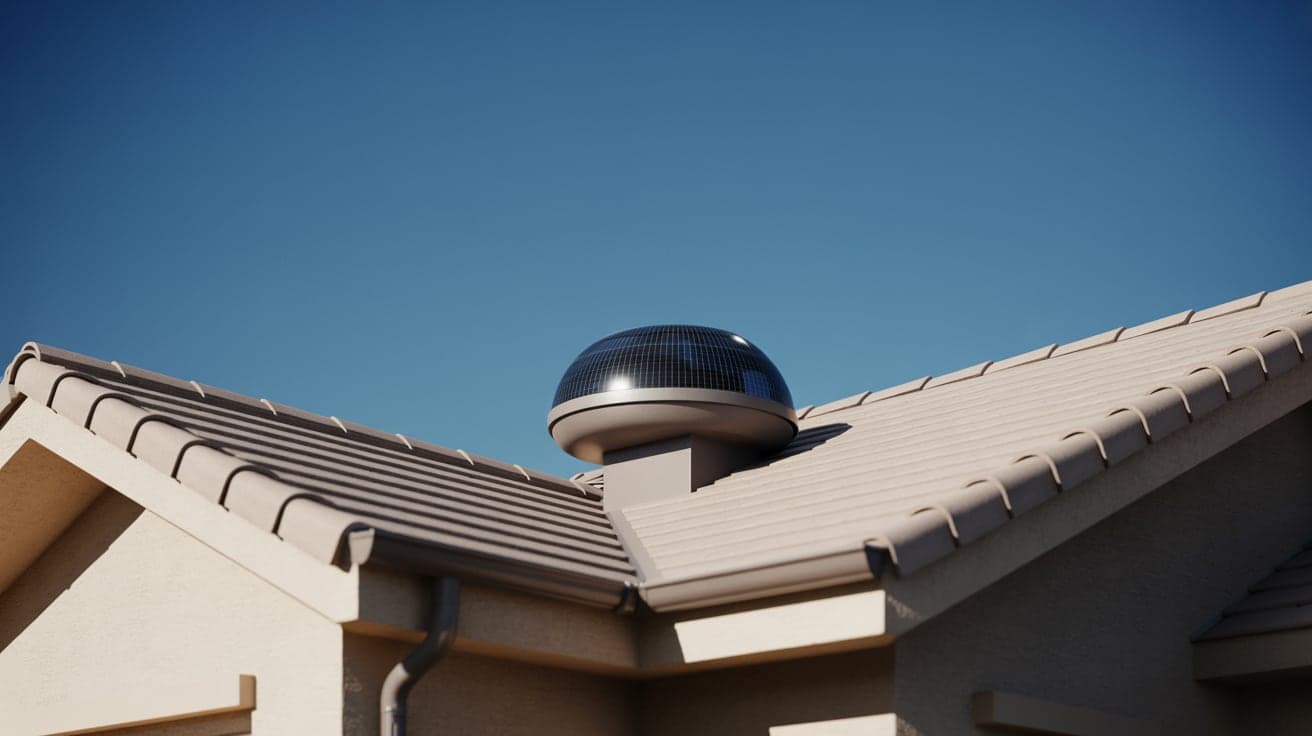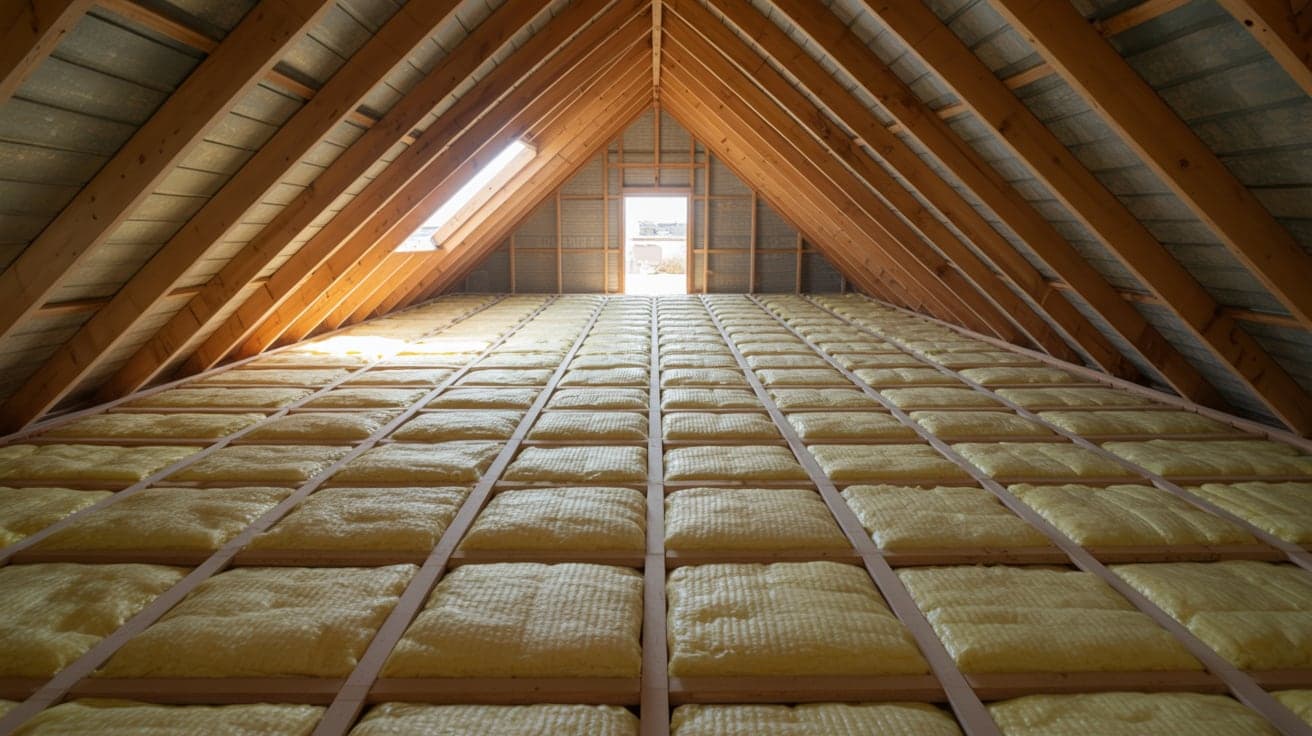
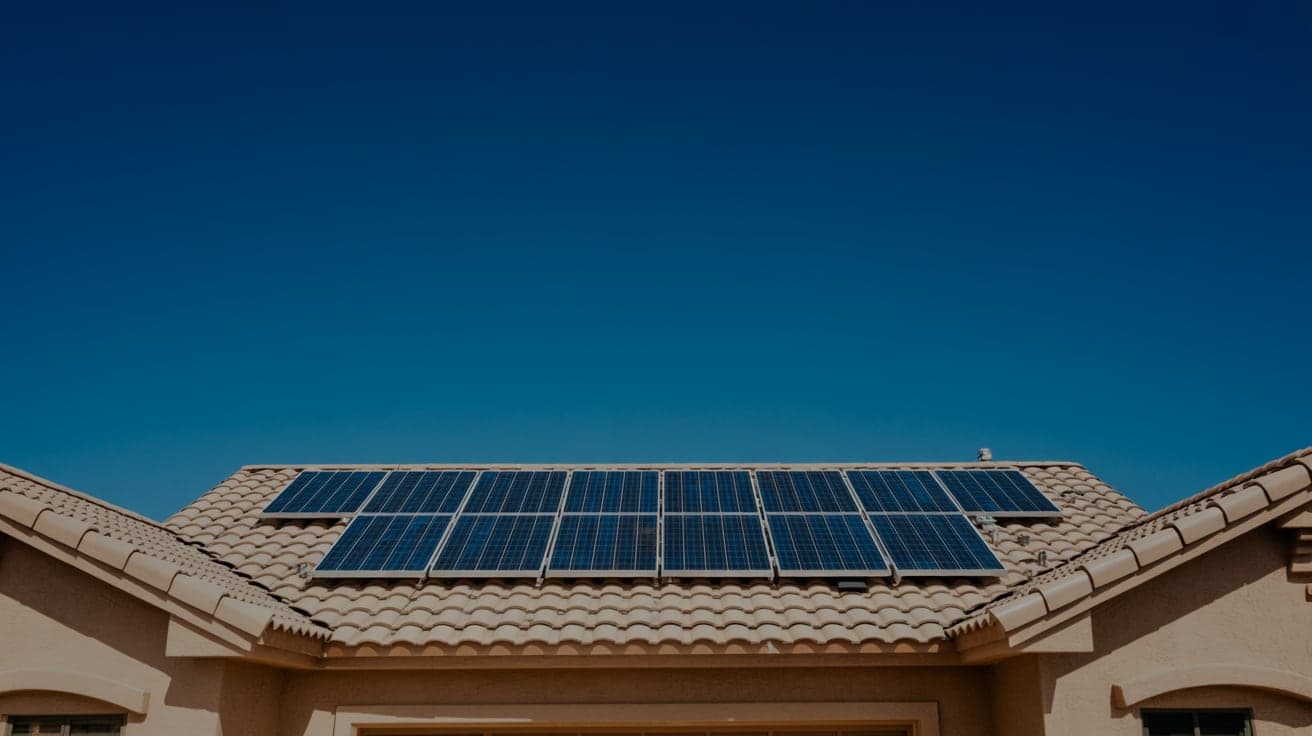
Combining solar panels with a cool roof is the ultimate energy-smart strategy. A cool roof isn't just a lighter color; it's made of reflective material that bounces sunlight and heat away from your home, unlike dark shingles that absorb it. This keeps your roof and attic cooler, so your A/C doesn't have to work as hard.
Here's the brilliant part: a cooler roof also helps your solar panels. Solar panels actually lose efficiency when they get too hot. By lowering the roof's surface temperature, a cool roof helps your panels operate more efficiently, maximizing your energy production.
Why Does a Cooler Roof Make Solar Panels Produce More?
Every photovoltaic module is rated at a standard cell temperature of 25°C, and every datasheet lists a temperature coefficient describing how much output falls off above that. Typical crystalline modules land somewhere around -0.3% to -0.5% of rated power per degree Celsius. On a July afternoon in Gilbert, cell temperatures run far above 25°C, so that coefficient is not a footnote. It is a real, daily haircut on production.
The array does not sit in open air. It sits a few inches above a roof surface that is radiating heat back up at it. Lower the temperature of that surface and you lower the temperature the modules operate at.
The relationship runs both directions, and there is good research on the other half of it. A team at the UC San Diego Jacobs School of Engineering used thermal imaging to compare covered and exposed sections of the same building and found the ceiling under the panels ran about 5°F cooler during the day. Their simulations for that case-study building showed a 38% reduction in annual cooling load attributable to the shading effect of the array.
What Are the Key Benefits of Pairing Solar Panels with Cool Roofing?
This combination creates a "dual efficiency" effect. Your cool roof reduces the amount of energy you need for cooling, while your solar panels reduce the amount of energy you buy.
This partnership also extends the life of your entire system. The cool roof reduces thermal stress on the roofing materials. The solar panels then act as a shield, protecting the roof sections beneath them from direct UV rays and weather.
Broken out, the benefits stack like this:
- Lower cooling load. The Environmental Protection Agency reports that solar reflectance from a cool roof can cut peak cooling demand in air-conditioned residential buildings by 11 to 27 percent.
- Better panel performance. Cooler modules stay nearer their rated output during the hottest, highest-value hours of the day.
- Less thermal cycling. Daily expansion and contraction is what works fasteners loose and opens seams on desert roofs. Reducing peak surface temperature reduces the range of that movement.
- Shaded roof area. The roof under the array is protected from direct ultraviolet exposure, which is the single biggest ager of roofing materials in the low desert.
Which Arizona Roof Types Work Best With Solar?
Almost any sound roof can carry an array. The mounting method and the prep work are what change.
| Roof type | How panels usually attach | What to watch |
|---|---|---|
| Asphalt shingle | Flashed mounts lagged into rafters | Remaining shingle life versus the 25+ year life of the array |
| Concrete or clay tile | Tile hooks or replacement flashing tiles | Cracked tile during install; age of the underlayment beneath |
| Sprayed polyurethane foam | Adhered or ballasted bases, minimizing penetrations | Keeping the recoat cycle accessible under and around the array |
| TPO or PVC single-ply | Ballasted racking, or curbs welded and flashed into the membrane | Drainage around racking; membrane manufacturer requirements |
| Metal panel | Seam clamps, often with no penetration at all | Panel gauge and clamp compatibility |
For commercial buildings, the low-slope conversation is mostly about drainage and membrane compatibility, which is why our commercial roofing team wants to see the roof plan before racking is laid out, not after.
What Should You Check Before the Panels Go On?
A successful integration is more than just putting panels on a roof. The roof's structure must be inspected to ensure it can support the added weight. You also need to ensure material compatibility, like using the correct, waterproof mounting hardware.
Beyond that, three checks matter most in Arizona:
Roof age versus array life
The Department of Energy's guidance for homeowners going solar is direct about this: consider how much life the roof has left, because the panels and racking have to come off to reroof later. If you do not know the roof's age, the local building department usually has the permit record. A roof with five years left under an array rated for decades is a problem you are scheduling for your future self.
Underlayment condition on tile
On an Arizona tile roof, the tile outlasts the underlayment by a wide margin. If the underlayment is already 20 years old, the right sequence is to lift the tile, replace the underlayment, and then set the array. Doing it in the other order means paying to detach and reset panels within a few years.
Structural capacity and attachment
Rafter spacing, decking condition, and attachment spacing all have to be confirmed rather than assumed, especially on older homes and on any roof that has taken monsoon wind damage.
How Do the Mounts Stay Watertight?
This is where solar and roofing meet, and it is where most of the problems come from.
A correctly detailed mount is flashed into the roof covering. Water sheds over the flashing the way it sheds over a plumbing vent, and sealant is a backup rather than the waterproofing itself. A mount that has simply been screwed down and buried in caulk is a leak on a timer, because desert sun dries and cracks exposed sealant within a few seasons.
The other common failure is broken tile. Concrete and clay tile crack under foot traffic, and an installer moving racking across a tile field will break some. Every broken tile has to be replaced, not left in place, because a cracked tile puts ultraviolet radiation directly onto the underlayment.
Most importantly, you need seamless professional coordination. A solar installer isn't a roofing expert, and a roofer may not understand solar. Having a solar-savvy roofing company like Eco Roofing Solutions ensures every penetration is perfectly sealed and your roof's warranty is protected.
How Does Maintenance Change After an Array Goes Up?
Panels do not eliminate roof maintenance, they complicate access to it. Plan for it:
- Keep the recoat schedule on a foam or coated roof in mind before the array layout is finalized. Coatings are consumable and need renewal on a cycle.
- Watch for debris accumulation. Dust and blown material collect at racking edges and can dam water on low-slope roofs.
- Include the array area in post-monsoon inspections. Wind loads on panels transfer into the attachments.
- Keep the roofing documentation and the solar documentation together. If either system ever needs warranty attention, you will want both.
Why Eco Roofing Solutions Recommends This Energy-Smart Combination
We recommend this energy-smart combination because it delivers the best possible long-term return on investment. It's not just about saving money on your monthly bills; it's about creating a sustainable, efficient, and comfortable home for your family while lowering your carbon footprint.
We are a family-owned contractor licensed in Arizona under ROC 330901 (CR-42) and a member of the Arizona Roofing Contractors Association, handling both residential roofing and commercial work across the valley from our office in Gilbert.
Ready to see how a cool roof and solar can work for you? Schedule a solar roof consultation with the EcoFamily today.
Image credit: // Shutterstock // Ingrid Balabanova