Plan on two full roof inspections a year, one in late spring before monsoon season and one in the fall after it, plus a quick look after any major storm. That is the schedule the National Roofing Contractors Association recommends for roof systems generally, and in the low desert it lines up almost perfectly with the weather calendar: the National Weather Service runs Arizona's monsoon season from June 15 through September 30. Everything else on this checklist hangs off those two anchor inspections.
Arizona homes face intense weather. The desert sun burns hot all day. UV rays degrade roofing materials quickly. Monsoon storms bring heavy wind and rain later. You need a plan to fight these elements. Regular checks stop small issues. Small issues become big leaks. Your roof lasts longer with proper care. Follow this guide to stay safe.
What Does a Full Year of Arizona Roof Maintenance Look Like?
Roofs here do not fail on a slow, even curve. They take nine months of ultraviolet exposure and thermal cycling, then get hit with three months of wind, dust, and sudden water. The maintenance year should follow that same rhythm.
| Season | Window | What to focus on |
|---|---|---|
| Late winter and spring | February to April | Trim trees back, clear debris, patch coatings and blisters, check attic insulation and ventilation |
| Pre-monsoon | May to mid-June | Tile and shingle check, flashing and sealant, clear gutters, scuppers, and drains |
| Monsoon | June 15 to September 30 | Post-storm walkarounds, photograph anything you find, repair leaks immediately |
| Fall | October to November | Full inspection, close out storm damage, reseal penetrations before winter |
If you only do two things all year, do the May check and the October check. Those two visits catch the majority of what turns into an interior leak.
What Should You Check Before Monsoon Season Starts?
Check your roof before July arrives. Summer storms hit hard. High winds lift loose tiles. Walk around the perimeter. Look for slipped or broken tiles. Fix them immediately. Wind gets under loose spots. It rips more tiles off.
The numbers behind that are not small. The National Weather Service office in Phoenix logged wind reports in the 50 to 65 mph range across the metro during the August 25, 2025 dust storm, with a gust near 70 mph at Sky Harbor. The Weather Service also describes microbursts as concentrated downdrafts, usually less than two and a half miles across, that can produce winds strong enough to match a weak tornado. A tile that is already loose in May does not survive that.
Tile, shingle, and panel checks
- Look for slipped, cracked, or missing tile along hips, ridges, and rakes, where wind pressure is highest.
- On shingle roofs, look for tabs that have lost their seal and lift at the corner. Shingles are rated for wind under ASTM D3161 and ASTM D7158, but that rating assumes the sealant strip has bonded and stayed bonded, and desert heat plus dust can interfere with it.
- Check that ridge and hip mortar or foam is intact and not crumbling.
Flashing and sealant
Inspect the metal flashing next. Flashing seals the joints. It sits around vents and chimneys. The sun dries out the sealant here. Cracks form in the caulk. Water enters through these cracks. Apply new sealant to these areas.
Sealant is a maintenance item, not a permanent detail. On a properly built roof, metal flashing does the waterproofing and sealant is the backup. If you find a penetration where caulk is clearly the only thing holding water out, that is a flashing problem to correct, not a bead to refresh every spring.
Drainage
Clear out your gutters and scuppers. Dust and leaves block them. Water must flow off the roof. Standing water causes severe damage. It adds heavy weight to the structure.
On flat and low-slope roofs, the standard worth knowing is the NRCA's: ponded water is water still sitting on the roof 48 hours after the last rainfall. Anything that evaporates before then is normal. Anything still there after two days points to a drainage problem, a low spot, or a blocked outlet, and it is the kind of thing our residential roof repair and maintenance crews look for first on a Gilbert flat roof.
What Should You Do After a Monsoon Storm?
Do a walkaround the morning after any storm that made noise. You are looking from the ground for tile in the yard, granules washed into the driveway, bent or missing vent caps, and dark streaks on the ceiling inside.
- Photograph anything you find, with the date. It matters if an insurance conversation follows.
- Check the attic with a flashlight during daylight. Wet insulation, water stains on the sheathing, or a pinhole of daylight all mean water is getting in.
- Do not wait for the next storm to schedule the repair. In the desert, a small breach that goes three weeks without attention has usually soaked the decking beneath it.
Dust matters too. A haboob leaves a layer of fine grit that packs into valleys, gutters, and drain baskets, and that grit is what turns the next storm's runoff into standing water.
What Needs Attention in Winter and Spring?
Winter brings cold nights to the desert. Materials contract in the cold. They expand in the heat. This cycle stresses the roof. Check flat roof coatings. The coating cracks or peels over time. Blisters form on the surface. These are weak spots. Patch any damage you see. A good coating reflects heat. This keeps your home cooler.
Check your trees in the spring. Branches grow fast. They rub against the roof surface. This damages shingles and tiles. Trim branches back. Keep them five feet away. Sweep off pine needles and leaves. Debris traps moisture against the roof. Rot starts in these damp spots.
Spring is also the right time to deal with the coating cycle on a foam or built-up roof. Reflective coatings are consumable. They are meant to be renewed on a schedule rather than run to failure, and recoating before the coating is chalked through is dramatically cheaper than repairing the substrate underneath it.
How Do Ventilation and Insulation Fit Into Roof Maintenance?
A roof is a system, and the parts you cannot see from the driveway do a lot of the work.
The International Residential Code sets the baseline for attic ventilation at a net free ventilating area of 1/150 of the vented space. That can be reduced to 1/300 when between 40 and 50 percent of the required vent area sits in the upper portion of the attic, with the upper vents no more than three feet below the ridge and the rest at the eaves. In plain terms: intake low, exhaust high, balanced. Blocked soffit vents, painted-over screens, and insulation stuffed into the eaves are extremely common, and they quietly cook a roof from underneath.
On insulation, the Department of Energy places the Phoenix metro in climate zone 2 and recommends attic insulation in the R-30 to R-60 range for that zone. Plenty of older homes in Gilbert, Mesa, and Tempe are well short of it. Adding insulation will not fix a leak, but it lowers the heat load that shortens the life of everything above it.
Which Tasks Should You Leave to a Roofer?
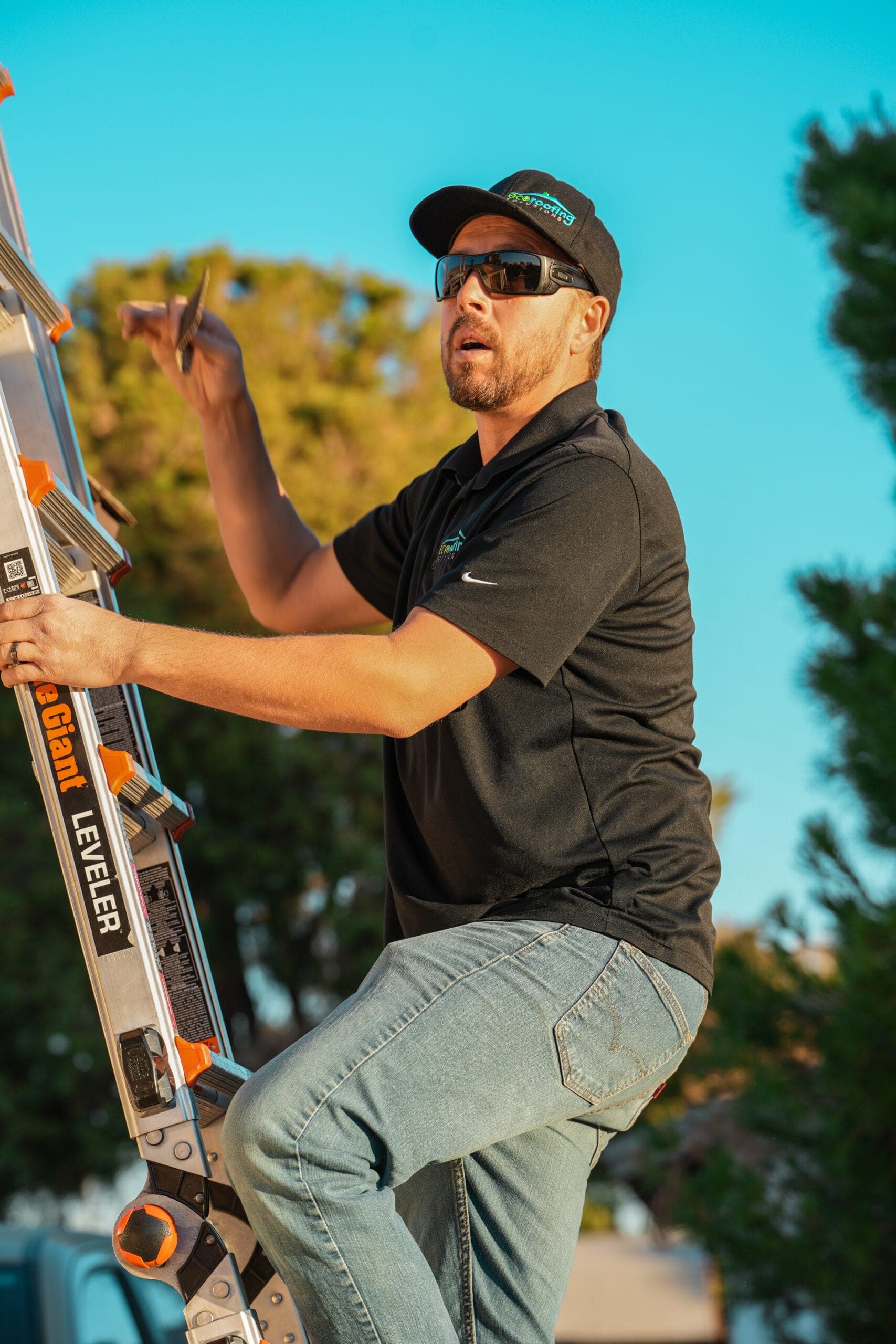
Roof work is dangerous. You risk injury on a ladder. Let the pros handle the height.
A reasonable division of labor looks like this:
- Safe from the ground: binocular inspection, checking the yard and driveway after storms, watching ceilings and walls for stains, keeping trees trimmed back.
- Safe from a ladder at the eave: clearing gutters, checking downspouts and scupper outlets.
- Leave to a licensed roofer: anything that requires walking the field of the roof, all tile work, flashing repairs, coating and membrane work, and anything involving a skylight or a rooftop unit.
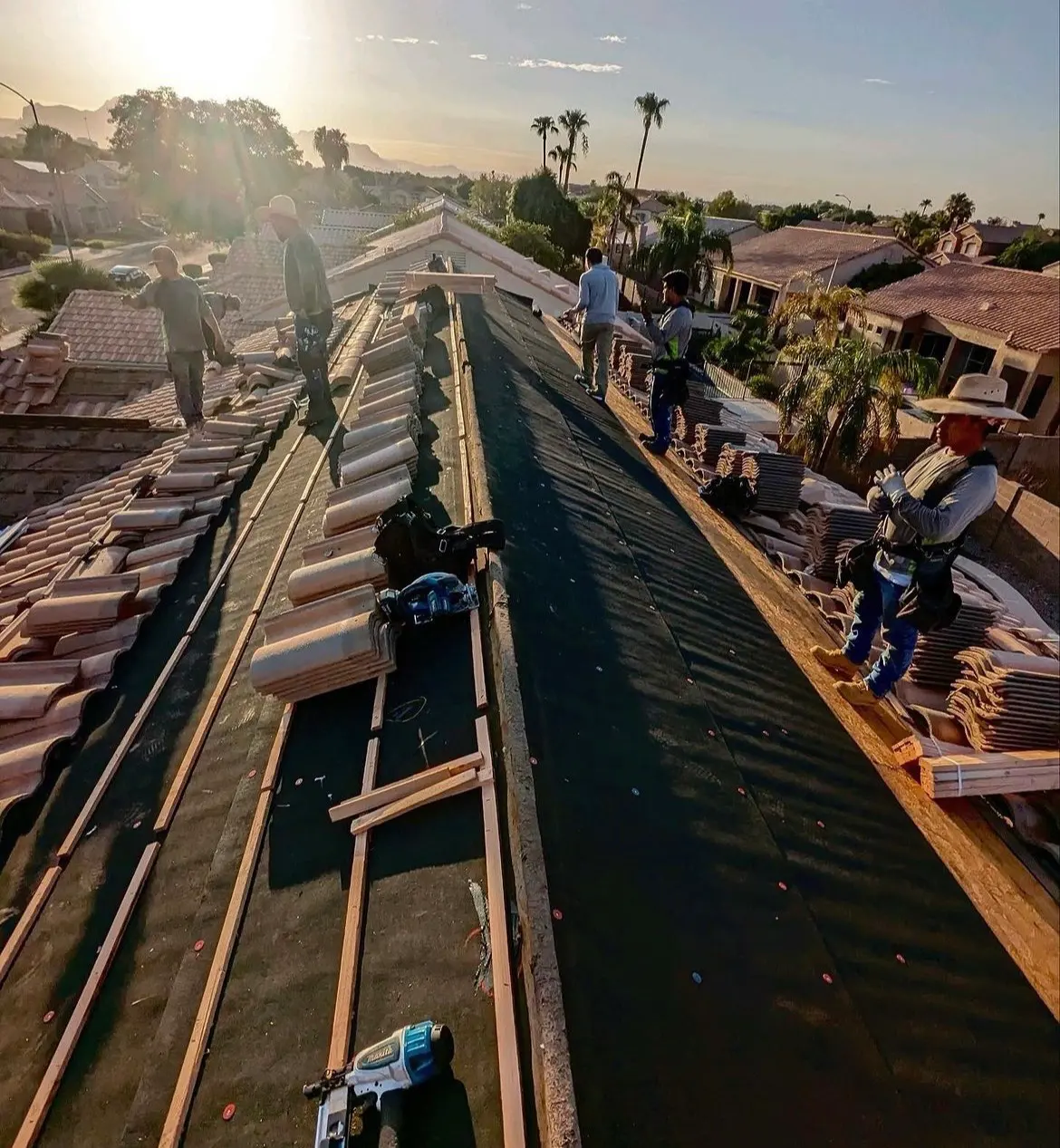
Tile is the big one. Walking a concrete tile roof without knowing where the battens and support points are cracks tile, and cracked tile is what lets the underlayment take UV and fail early.
Protect Your Home Today
Eco Roofing Solutions spots hidden damage. We fix leaks fast. Our team knows Arizona roofs. We use the right materials. Protect your investment now.
We are a family-owned, Arizona ROC licensed contractor (ROC 330901, CR-42) and a member of the Arizona Roofing Contractors Association, working on residential roofs and commercial buildings across the Phoenix metro from our office in Gilbert. If you want the spring or fall inspection on the calendar rather than on the to-do list, contact us for a free inspection and we will take a look before the next storm does. We keep your home dry.