Most roof failures in the Phoenix metro are not caused by one dramatic storm. They are caused by a short list of predictable decisions: picking a material that cannot handle desert sun, letting inspections slide, and waiting for a ceiling stain before calling anyone. Avoid those and an Arizona roof will usually reach the service life its manufacturer intended.
For Arizona homeowners, small oversights in roof care can quickly escalate into significant financial burdens. Understanding the most common and expensive mistakes is the first step toward protecting your home and your wallet.
What Does Arizona's Climate Actually Do to a Roof?
Extreme UV rays, thermal shock from temperature swings, monsoon storms, and abrasive desert dust all weaken roofing materials. What looks like minor damage often hides costly leaks and structural issues.
Three forces do most of the damage here, and they work on different parts of the system:
- Ultraviolet radiation attacks the organic components first. Asphalt binders oxidize, plastic vents go chalky and brittle, and exposed sealants shrink away from the metal they were supposed to bond to.
- Thermal cycling is the quiet one. A dark roof surface in full sun runs far hotter than the air around it, then drops sharply after sundown. That daily expansion and contraction works fasteners loose, opens seams, and fatigues flashing at every transition.
- Monsoon weather delivers the load test. The National Weather Service defines Arizona's monsoon season as June 15 through September 30, and its Phoenix office lists strong thunderstorms, lightning, and blowing dust among the season's primary hazards. Outflow winds from a collapsing storm can arrive with almost no warning and find every weak point at once.
The National Roofing Contractors Association makes the point plainly: actual service life is determined by local climate and environmental conditions, design, material quality, workmanship, and maintenance. Arizona is hard on all five.
Mistake 1: Choosing a Roof That Was Not Designed for This Climate
The cheapest bid and the right roof are rarely the same product. A material selected off a national spec sheet, without regard for solar load, will age faster than the brochure suggests.
Reflectivity is the lever most homeowners never hear about. The Cool Roof Rating Council rates products on two properties, solar reflectance and thermal emittance, both measured on a scale of 0 to 1. ENERGY STAR illustrates what that difference is worth on a hot afternoon: a clean white roof that reflects 80 percent of sunlight will stay roughly 50°F cooler than a gray roof reflecting only 20 percent. The CRRC also points out that a cool roof does not have to be white, because "cool color" products use darker pigments that stay highly reflective in the near-infrared part of the spectrum.
What to do instead
- Ask for the CRRC-rated solar reflectance and thermal emittance of any product you are quoted, not just the color name.
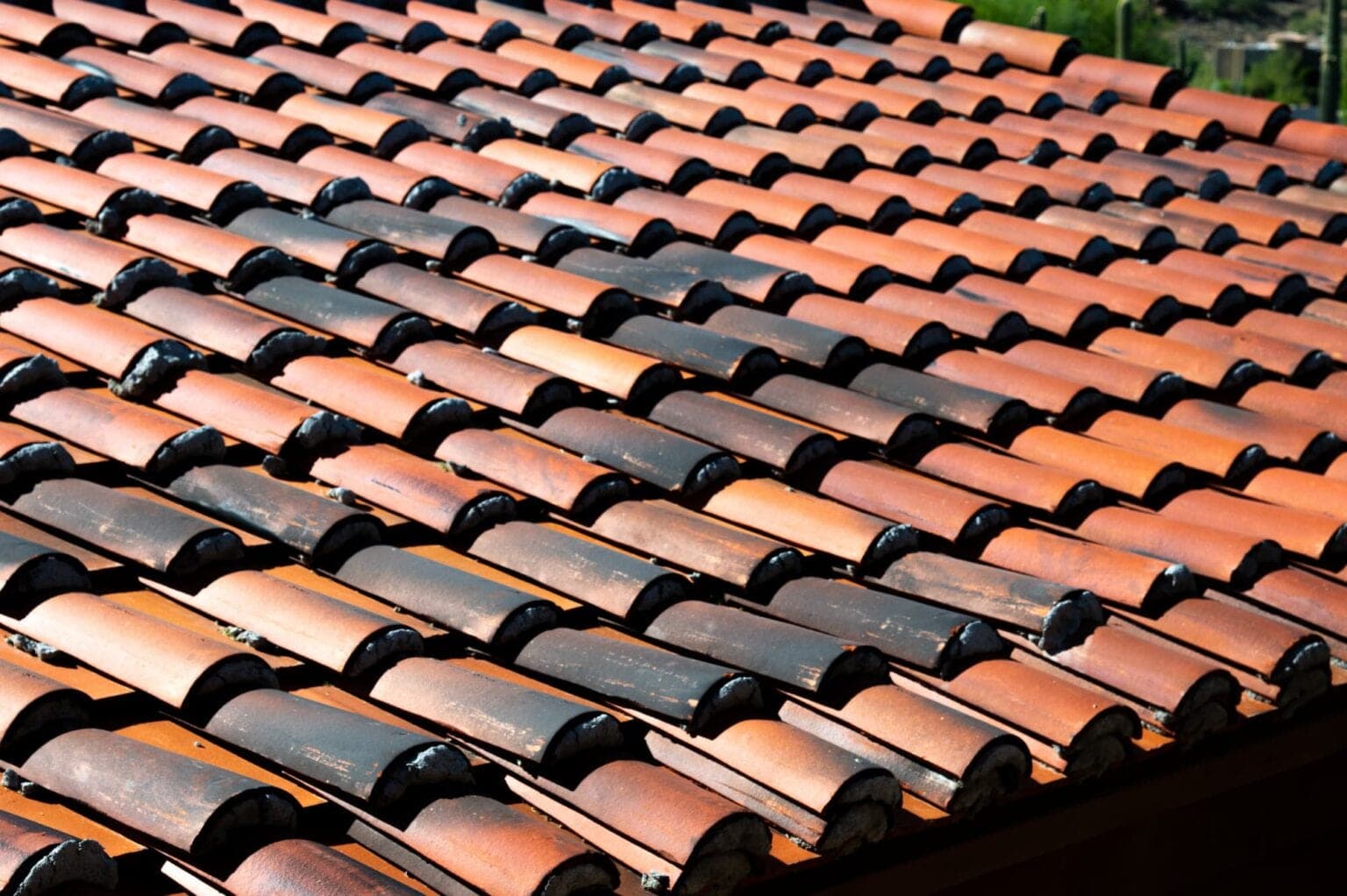
- On tile roofs, spend the money on better underlayment. The tile is the sun shield; the underlayment is what actually keeps water out, and it is the component that wears out first.
- On low-slope and flat sections, treat coating and reflectivity as part of the system rather than an upsell.
Our residential roofing team walks through these tradeoffs on site, because the right answer changes with slope, orientation, and what is already on the deck.
Mistake 2: Skipping Maintenance and Inspections
Delaying professional inspections or neglecting gutters invites bigger problems. DIY fixes may seem cheaper, but they often cause more damage and void warranties.
Waiting for a visible leak to schedule an inspection is a costly error. A qualified professional can spot subtle signs of wear, failing flashing, and potential roof problems long before they cause significant interior damage, saving you from expensive, emergency repairs.
Two inspections a year is the sensible cadence in the low desert. One in late spring, so anything loose gets addressed before mid-June. One in early fall, so storm damage gets found while it is still cosmetic. Regular roof repair and maintenance visits also keep manufacturer warranty conditions intact, which matters more than most homeowners realize when a claim finally comes up.
When is the best time to schedule roof work in Arizona?
Late winter through late spring is the window most homeowners should be aiming for. Temperatures are workable, schedules are more open, and any repair gets finished well ahead of the June 15 monsoon start. Fall is the second-best window, once the season has closed on September 30 and you know what the storms did.
The worst time is the one most people choose: the week after a leak appears in July, when every roofer in the Valley is triaging emergencies.
Mistake 3: Waiting Until You See a Stain on the Ceiling
Even small leaks signal deeper issues. A small stain on the ceiling indicates that water has already breached multiple layers of your roofing system. By the time it's visible, the moisture may have already caused mold growth and structural decay within your attic and walls.
Water also travels. It runs along rafters and across underlayment before it finds a seam in the drywall, which is why the stain and the entry point are frequently on opposite ends of a room. Chasing the stain instead of tracing the path is one of the most common reasons a "repaired" leak comes back the following season.
| What you notice | What it usually means | How urgently to act |
|---|---|---|
| Cracked or slipped roof tiles | Underlayment below is now exposed to direct sun and rain | Within weeks, before the next storm |
| Granules collecting in gutters | Asphalt shingles are oxidizing and losing their UV layer | Schedule an assessment this season |
| Rust or gaps at flashing and pipe boots | Sealant has failed from thermal cycling; a common entry point | Soon, especially before June 15 |
| Ceiling stain or bubbling paint | Water has already passed through multiple layers | Immediately |
| Sagging roof line or spongy decking | Long-term moisture has reached the structure | Immediately, treat as structural |
Mistake 4: Patching a Roof That Needs Replacing, or Replacing One That Needs a Patch
Acting too late, or choosing the wrong fix, can turn minor repairs into major projects. Patching an old, failing roof is a temporary solution that wastes money. Conversely, replacing a roof that only needs a targeted repair is an unnecessary expense. An honest roofing contractor can provide an accurate assessment.
The distinction is about how much of the system is failing, not how alarming the symptom looks. One torn boot on an otherwise sound ten-year-old roof is a repair. Brittle underlayment showing up in three separate test areas on a twenty-two-year-old tile roof is a replacement, no matter how small today's leak is.
Ask any contractor to show you what they found. Photos of the actual condition, from the actual slopes, are the difference between a diagnosis and a sales pitch.
Mistake 5: Ignoring the Attic Above the Ceiling
The roof is a system that includes everything under the deck. Two components inside the attic quietly decide how hard your roof and your air conditioner have to work.
Ventilation. The International Residential Code sets a baseline of 1 square foot of net free ventilating area for every 150 square feet of the space being ventilated, with an exception allowing a 1:300 ratio when intake and exhaust are properly balanced between the eaves and the upper portion of the attic. Most ventilation problems we find in the field are not a missing vent count. They are blocked soffit intake, which starves the exhaust vents and lets heat stack up.
Insulation. Following the 2021 International Energy Conservation Code, ENERGY STAR recommends R-49 for an uninsulated attic in Climate Zone 2, which covers the Phoenix metro, and adding R-38 where there are already 3 to 4 inches in place. Insulation that has been compressed, displaced by later trade work, or pushed into the soffit baffles is not doing the job it was rated for.
Mistake 6: Hiring the Wrong Contractor
After a big monsoon storm, crews appear in East Valley neighborhoods that no one has heard of before and no one can find afterward. A few checks filter almost all of them out:
- Verify the license. Look the number up with the Arizona Registrar of Contractors and confirm it is active and in the right classification. Ours is ROC 330901 (CR-42).
- Check for trade association membership. We belong to the Arizona Roofing Contractors Association for both residential and commercial work.
- Look for a real local address. Ours is 75 W Baseline Rd Suite 19 in Gilbert, and we work across Gilbert, Mesa, and the rest of the Phoenix metro.
- Read the reviews, not the star count alone. We hold 4.8 stars from 385(/reviews/), and the details in those reviews say more than the average does.
- Get the scope in writing. Materials, underlayment type, flashing details, and what happens if the crew finds bad decking should all be on paper before work starts.
Protect Your Arizona Home
Protect your home and your peace of mind with Eco Roofing Solutions. From inspections to repairs and full replacements, our expert team ensures your roof is built to withstand the toughest conditions while using quality, lasting materials. Eric Perry, our Owner and President, is a third-generation roofer with more than 25 years of hands-on experience, and that perspective shows up in what we recommend and what we tell you to leave alone.
Don't wait for small issues to become costly problems. Schedule an inspection and we will tell you honestly what your roof needs and what it does not.
Image credit: Shutterstock // Pritha_EasyArts