A professional roof inspection saves money by changing when you find a problem, not by preventing wear. Catching a cracked pipe boot, a failed sealant joint, or a slipped tile while it is still a roof issue costs a fraction of what the same defect costs after it has soaked sheathing, insulation, and drywall. In Arizona, where sun and monsoon storms attack a roof from opposite directions, that timing advantage is worth more than it is almost anywhere else.
At Eco Roofing Solutions, we recognize that your roof represents one of the most significant investments you will ever make for your home. While it is easy to ignore what is happening above your head, staying proactive with professional roof inspections is the most effective way to protect your budget from the high costs of neglect. In Arizona’s unique climate, where the sun and monsoon rains can be particularly harsh on building materials, having our team evaluate your system ensures your home remains a secure, dry sanctuary.
How does early detection prevent costly emergencies?
The main advantage of regular roof inspections is the ability to catch small problems before they become big, costly issues. Our experts use a thorough checklist to spot issues such as cracked shingles, damaged flashing, and small sealant problems that are easy to miss. Fixing these early helps prevent leaks and saves you from expensive repairs or mold cleanup later.
The reason this works is that roof failures escalate through predictable stages, and each stage pulls in more trades.
| Stage | What it is | What it takes to fix |
|---|---|---|
| 1. Component wear | Cracked boot, dried sealant, slipped tile, lifted flashing | A roofer, one visit |
| 2. Underlayment or membrane breach | Water reaches the waterproofing layer | Roofing repair, sometimes a section |
| 3. Deck saturation | Sheathing softens, fasteners rust, insulation compresses | Roofing plus carpentry |
| 4. Interior damage | Drywall staining, paint failure, mold growth, damaged flooring | Roofing, drywall, paint, remediation |
| 5. Structural involvement | Rafter or truss damage, deflection in the roof plane | Engineering and structural repair |
Nothing about that progression is unusual. It is simply what happens when a stage-one defect goes unnoticed through a monsoon season or two. Inspections exist to keep problems at stage one, and that is where our roof repair and maintenance work is most cost-effective for homeowners.
How often should an Arizona roof be inspected?
The National Roofing Contractors Association recommends inspecting roof systems at least twice a year, preferably in spring and fall, and again after any major weather event. That guidance maps neatly onto the Arizona calendar, since the National Weather Service defines the state's monsoon season as June 15 through September 30.
A practical Valley schedule
- Spring, before June 15. The pre-monsoon check. Clear drains and scuppers, secure loose tile, renew failing sealants, and confirm flashings are sound before the first microburst tests them.
- Fall, after September 30. The post-monsoon check. Look for displaced tile, lifted edge metal, storm debris, and any damage that has not yet produced a leak.
- After any significant storm. NWS Phoenix describes monsoon microbursts as localized downdraft winds that commonly reach 50, 60, and 70 miles per hour, with rare events exceeding 100. A storm like that deserves its own look regardless of when the last inspection happened.
Commercial buildings generally benefit from a tighter cadence, because low-slope roofs hold water rather than shed it and because more equipment sits on them. Our commercial roof repair and maintenance programs build around that reality.
What does an inspector actually look at?
A real inspection is systematic. If someone glances at your roof from the driveway and hands you a quote, that was a sales call, not an inspection.
On the roof
- The field. Granule loss, curling, cracking, blistering, and chalking on shingles. Cracked, slipped, or broken tile. Seam and lap condition on membranes.
- Penetrations. Pipe boots, vents, skylight curbs, and A/C stands. This is where the majority of Arizona leaks begin.
- Flashings and terminations. Valleys, wall flashings, counterflashing, edge metal, and drip edge.
- Ridges and hips. Mortar condition on tile, cap condition on shingles.
- Drainage. Drains, scuppers, gutters, downspouts, and any area holding water after rain.
Underneath and inside
- Underlayment condition on tile roofs. The tile is the cover; the underlayment is the waterproofing. A tile roof can look perfect and still be at the end of its serviceable life.
- Attic ventilation. The International Residential Code sets a baseline of 1 square foot of net free ventilating area per 150 square feet of attic, with a 1:300 allowance when the venting is properly split between the upper and lower portions of the attic.
- Attic insulation. ENERGY STAR recommends approximately R-49 for an uninsulated attic in Climate Zone 2, which covers the Phoenix metro, and about R-38 when adding over 3 to 4 inches of existing insulation.
- Deck and framing. Staining on the underside of sheathing, rusted nail shanks, damp or compressed insulation, and any deflection.
You should come away with written findings and photographs, a clear separation between what needs attention now and what to watch, and no pressure to decide on the spot. Our FAQ page covers what to expect in more detail.
How do inspections extend the life of the roof you already have?
Focusing on roof maintenance savings helps you maximize the service life of your existing materials. When Eco Roofing Solutions provides consistent long-term roof care, we help you avoid the premature need for a full replacement, which is a much larger capital expense than routine checkups. This disciplined approach to maintenance ensures that every component of your roof performs at its peak for as long as possible.
Arizona roofs almost never fail all at once. They fail at the details first. Ultraviolet exposure degrades exposed sealants and rubber boots years before the field material gives out. Daily thermal cycling, with roof surfaces the Department of Energy notes can reach 150 degrees or more on a sunny summer afternoon and then cooling overnight, loosens fasteners and works flashings apart. Blowing dust abrades coatings. Replacing a handful of degraded components on schedule is what lets the rest of the assembly reach the service life it was designed for.
That is especially true on tile. Because the underlayment is the real clock on a tile roof, homeowners who keep tile secure and penetrations sealed frequently reach the point where a lift-and-reset with new underlayment is the whole project, rather than a full tear-off.
Can an inspection lower my cooling costs?
A well-maintained roof not only keeps water out but also helps control your cooling costs by ensuring your ventilation and insulation work properly. During our inspections, we look for problems that could make your HVAC system work harder, which can raise your utility bills. Keeping your roof in good condition also protects your walls and attic from heat or moisture damage.
Three things drive that outcome, and an inspection touches all three:
- The roof surface. The Department of Energy notes that a reflective roof surface can stay more than 50 degrees cooler than a conventional roof under the same summer conditions. The Cool Roof Rating Council, which publishes third-party solar reflectance and thermal emittance ratings, reports average cooling cost savings for cool roofs in the range of 7 to 15 percent.
- Attic ventilation. Storm-damaged, blocked, or painted-over vents quietly defeat the code-required airflow, letting heat build against the ceiling plane.
- Attic insulation. Wet insulation loses R-value, and insulation that has been compressed or displaced by tradespeople working in the attic leaves gaps directly over living space.
None of this is exotic. It is just the part of the roof system that nobody looks at until the electric bill goes up.
Who should be doing the inspection?
Verify the license before anyone climbs a ladder. Every legitimate roofing contractor in Arizona is licensed through the Registrar of Contractors, and you can look up any company at roc.az.gov. Licensing also preserves your recourse: the ROC administers a Residential Contractors' Recovery Fund that can pay eligible homeowners up to $30,000 per residence, but only when the contractor was licensed at the time of the contract.
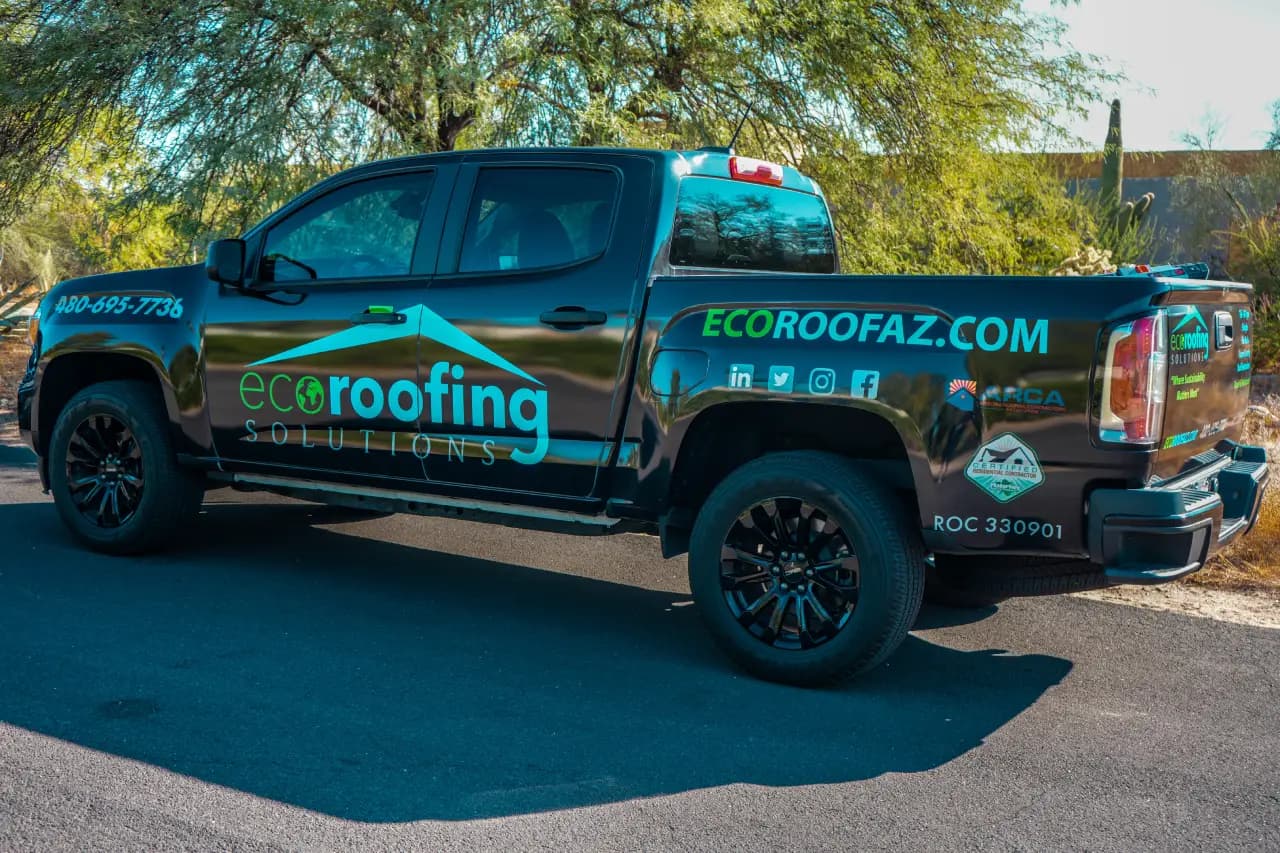
Eco Roofing Solutions is family-owned and serves the Phoenix metro from our office at 75 W Baseline Rd Suite 19 in Gilbert. We hold Arizona ROC license 330901 (CR-42), active, and are members of the Arizona Roofing Contractors Association for both residential and commercial work. Owner and president Eric Perry is a third-generation roofer with over 25 years of hands-on experience. Google reviewers rate us 4.8 stars across 385.
Schedule your inspection with Eco Roofing Solutions
Taking the time to invest in your roof now will lead to significant savings and peace of mind for years to come. Our team is ready to help you maintain your home with the professional care it deserves, whether that means a pre-monsoon check on a residential roof or a maintenance plan for a commercial building. Please contact Eco Roofing Solutions today to schedule your next inspection and secure your property against the elements.
Image Credit: Lopolo // Shutterstock