In Phoenix, a tile roof's real protection isn't the tile. It's the underlayment beneath it. When this hidden layer fails from Arizona's intense heat, leaks are inevitable. A tile roof underlayment replacement from Eco Roofing Solutions restores that crucial waterproof barrier by reusing your existing tiles over a new, durable membrane.
Table of contents
- What Does Underlayment Actually Do on a Tile Roof?
- Why Does Arizona Heat Destroy Underlayment?
- Felt vs. Synthetic: Which Underlayment is Right for Your Tile Roof?
- What Are the Signs I Need Tile Roof Underlayment Replacement?
- What’s Involved in a Tile Lift-and-Relay?
- How Long Does a Lift-and-Relay Take?
- What Factors Determine the Cost of Tile Roof Underlayment Replacement?
- When is Underlayment-Only a Better Choice Than a Full Re-Tile?
- Frequently asked questions
What Does Underlayment Actually Do on a Tile Roof?
While your tile is the first line of defense against sun and physical damage, it is not the primary waterproof layer of your roof. The real waterproofing is done by the underlayment, a sheet membrane installed directly on the wooden roof deck, underneath the tiles. Think of your beautiful concrete or clay tiles as a suit of armor. They shed the vast majority of rain and block brutal UV rays. The underlayment is the watertight barrier beneath that armor, catching and directing any water that gets past the tiles safely into the gutters. Without a healthy underlayment, your roof system will fail, and leaks will find their way into your home.
Concrete and clay tiles themselves can last for 50 years or more, so on most Valley roofs the underlayment wears out long before the tile does.
Why Does Arizona Heat Destroy Underlayment?
The space between your tiles and the underlayment can reach extreme temperatures in the summer, often exceeding 160 degrees. This intense, sustained heat, combined with our powerful UV radiation, dramatically accelerates the aging process of roofing materials. This constant thermal cycling, baking hot by day and cooling at night, causes the materials to expand and contract repeatedly.
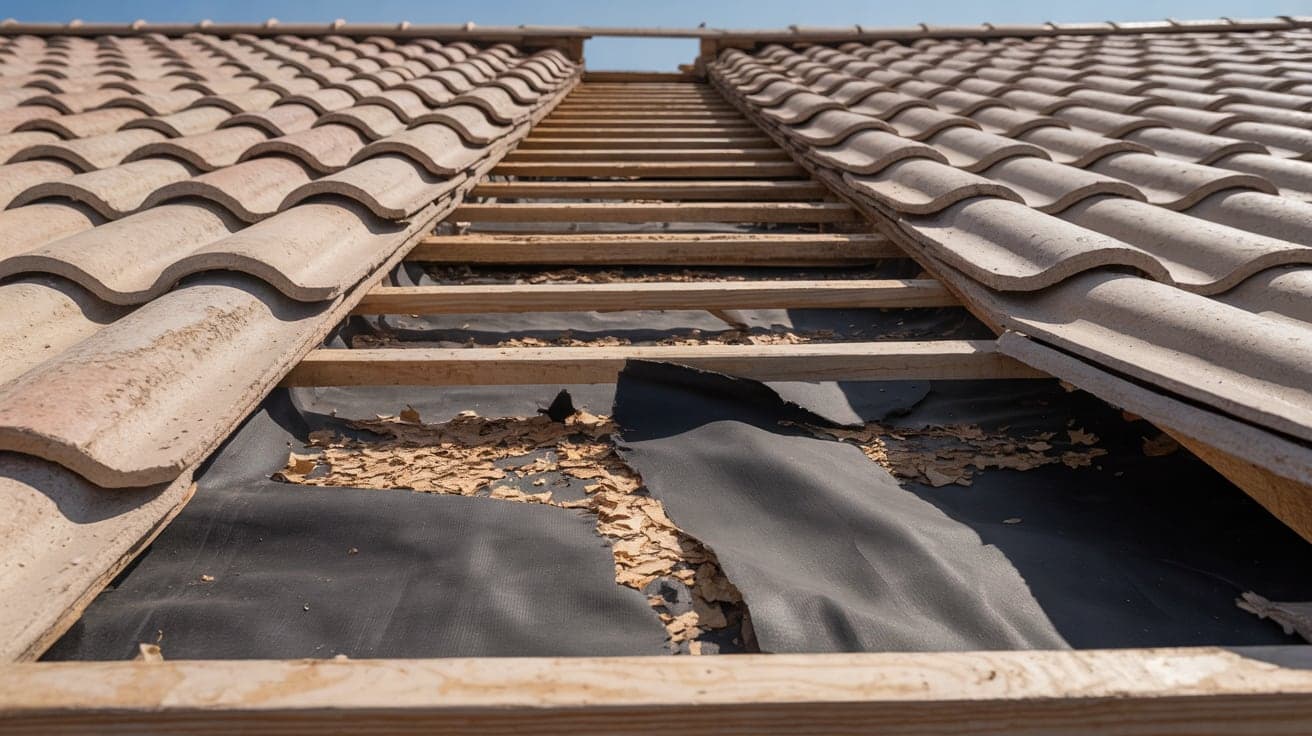
For traditional asphalt-saturated felt, this heat effectively “cooks” the volatile oils out of the asphalt. As these oils bake away, the felt becomes dry, brittle, and prone to cracking. Once it cracks, it loses its flexibility and waterproofing capability. A small crack can quickly become a major leak point during a monsoon storm, when high winds drive rain sideways underneath the tiles. This is why we see so many tile roofs in the Valley begin to leak after 15-25 years, even when the tiles on top look perfect.
Felt vs. Synthetic: Which Underlayment is Right for Your Tile Roof?
Choosing the right underlayment is the most critical decision in a tile roof replacement project. The two main categories are traditional asphalt-saturated felt and modern synthetic underlayments. While felt was the standard for decades, synthetic options offer significant advantages for the demanding Arizona climate.
Here’s a direct comparison of the trade-offs:
| Feature | Traditional Asphalt Felt | Modern Synthetic Underlayment |
|---|---|---|
| Material Composition | Paper or fiberglass mat saturated with asphalt. | Woven polypropylene or other polymers with water-resistant coatings. |
| Heat Resistance | Becomes brittle over time as heat bakes out essential oils. | Highly stable at extreme temperatures; does not dry out or crack from heat. |
| Durability & Tear Resistance | Can tear easily during installation, especially when hot or wet. | Extremely strong and tear-resistant, providing a safer walking surface for crews. |
| Weight | Heavy and cumbersome. A roll covers less area. | Very lightweight. A single roll covers a much larger area, reducing installation fatigue. |
| Lifespan in AZ | Typically 15-25 years before significant degradation. | Designed to last 30-50 years, often matching or exceeding the tile's lifespan. |
While felt may have a lower initial material cost, high-quality synthetic underlayment provides superior long-term performance and durability, making it a smarter investment for most Arizona homeowners. On Valley tile roofs, we almost always recommend a premium synthetic product.
What Are the Signs I Need Tile Roof Underlayment Replacement?
Since the underlayment is hidden beneath your tiles, its failure isn't always obvious until a leak appears. However, there are several warning signs you can look for that indicate your underlayment is reaching the end of its life.
- Leaks Inside Your Home: The most obvious sign. Stains on your ceiling or walls, especially after a storm, point to a failure in the waterproofing system.
- Debris in Gutters: If you see black, gritty, or papery material in your gutters, it could be pieces of deteriorating felt underlayment washing off the roof.
- Visible Sagging or Drooping: Looking along the eaves of your roof, if you see the material under the first course of tiles looking wavy, brittle, or cracked, it’s a clear sign of failure.
- Loose or Slipping Tiles: As underlayment degrades, it can affect the fasteners holding the tiles. If you notice tiles that have slipped out of place, it’s time for a professional inspection.
- Age of the Roof: If your tile roof is over 20 years old and has its original underlayment, it is living on borrowed time. It's wise to be proactive rather than wait for a leak to cause expensive interior damage.
If you see any of these signs, schedule an inspection. We inspect tile roofs in Phoenix, Gilbert and across the Valley.
What’s Involved in a Tile Lift-and-Relay?
A tile roof underlayment replacement, often called a “lift-and-relay,” is a systematic process to replace the failing waterproof barrier while reusing your existing tiles. This is a core part of our residential tile roofing work.
Here are the steps our experienced crew takes:
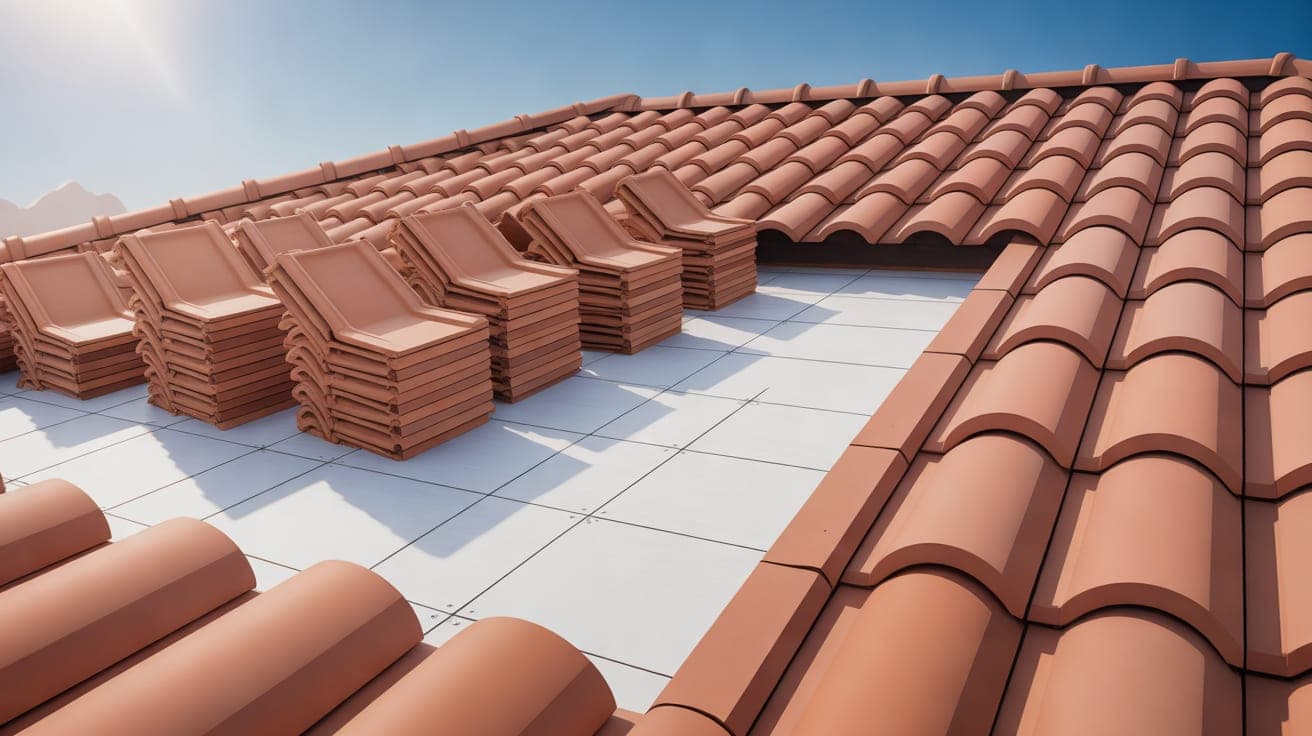
- Remove and Stack the Tiles: We carefully remove the existing tiles section by section and stack them on the roof, out of the way. Our crew takes great care to minimize breakage.
- Tear Off Old Materials: The old, failed underlayment and any existing wooden battens are completely removed, exposing the bare wood roof deck.
- Inspect the Roof Deck: This is a critical step. We thoroughly inspect the plywood or OSB decking for any signs of water damage, rot, or soft spots. Any compromised sections are replaced to ensure a solid foundation for the new roof system.
- Install New Underlayment: We install a new, high-quality synthetic underlayment, ensuring proper overlaps and sealing all seams to create a continuous waterproof barrier.
- Replace Flashings and Vents: Every transition point gets attention. Flashings around chimneys, skylights, walls and valleys are replaced or resealed, and worn pipe jacks and vents are swapped for new ones.
- Re-install Tiles: We re-install your original tiles over the new underlayment, securing them according to modern code standards. Any tiles that were broken during the process or were already damaged are replaced with new, matching tiles.
- Final Cleanup: We perform a meticulous cleanup of the job site, leaving your property as clean as we found it.
How Long Does a Lift-and-Relay Take?
For an average-sized single-family home in Phoenix, a complete tile lift-and-relay typically takes between 3 to 7 days. This timeline can be affected by the size and complexity of the roof, the extent of any necessary deck repairs, and weather conditions. Our team at Eco Roofing Solutions works efficiently to minimize disruption to your family while maintaining the highest standards of quality.
What Factors Determine the Cost of Tile Roof Underlayment Replacement?
Because every roof is unique, a fixed price is impossible without a detailed inspection. However, the primary factors that influence the final cost of a tile roof underlayment replacement are consistent.
- Roof Size and Complexity: A larger, steeper roof with more hips, valleys, and dormers requires more labor and materials than a simple, low-pitch gable roof.
- Type of Tile: Heavy concrete tiles require more labor to handle than lighter clay tiles. Some tile profiles are also more fragile, leading to a higher percentage of replacement tiles needed.
- Underlayment Choice: The cost of materials varies significantly between standard felt and premium, high-temperature synthetic underlayments. We help you choose the best value for long-term protection.
- Flashing and Ventilation: The amount of flashing that needs to be replaced around chimneys, walls, and skylights will impact the cost.
- Decking Repairs: The extent of any water-damaged or rotted wood decking that needs to be replaced is unknown until the old underlayment is removed. This is the most common variable in any roofing project.
When is Underlayment-Only a Better Choice Than a Full Re-Tile?
An underlayment-only replacement (a lift-and-relay) is the right choice when your existing tiles are still in good structural condition. If the tiles are not widely cracked, flaking (spalling), or faded to the point where you want a new look, reusing them is a fantastic option. It saves a significant amount of money compared to a full re-roof. It also keeps thousands of pounds of good tile out of the landfill.
A full tile replacement is necessary only when the tiles themselves have failed or when a homeowner desires a completely new aesthetic for their home.
Your roof protects everything under it. If you suspect your underlayment may be failing, don't wait for a monsoon storm to confirm it. Contact Eco Roofing Solutions today for a free, no-obligation inspection and a detailed written estimate.
Frequently asked questions
Can I walk on my tile roof to check the underlayment? We strongly advise against it. Walking on a tile roof is dangerous and can easily break tiles, causing more damage. A professional roofer knows how to navigate a tile roof safely and can identify subtle signs of underlayment failure that an untrained eye would miss.
Will all my tiles be saved during a lift-and-relay? Our crews handle tile carefully, but some breakage is normal because old tile gets brittle. A good estimate says up front how replacement tiles will be sourced and matched, so it is not a surprise. Typically only a small share of the tiles need replacing.
How do I know if I need a small repair or a full underlayment replacement? A small, isolated leak might be fixable with a targeted repair. However, if your underlayment is over 20 years old, it's likely failing system-wide. A spot repair on an old, brittle underlayment is often a temporary fix, as a new leak will likely appear elsewhere soon. A thorough inspection is the only way to know for sure.
Is synthetic underlayment always the better choice in Arizona? For the vast majority of residential tile roofs in the Valley, a high-quality synthetic underlayment is the superior choice. Its resistance to extreme heat, durability, and long lifespan provide the best long-term value and protection against the harsh Arizona climate, far outweighing the modest initial cost difference compared to traditional felt.
How long does synthetic underlayment last under tile in Arizona? A quality synthetic underlayment is built to outlast felt by a wide margin in our heat, and many are made to match the life of the tile above them. Check the product's heat rating and warranty, since not every synthetic is rated for the temperatures under a Phoenix tile roof.