Most roofing problems on Arizona homes come down to four things: leaks at flashing and penetrations, shingles degraded by UV, failed attic ventilation, and drainage that stopped draining. All four are cheap to fix early and expensive to fix late. The trick in the desert is that a roof can look fine from the driveway for years while sun and heat quietly work on the details that keep water out.
Your roof is your home's first line of defense against the elements, but even the best roofing systems can develop issues over time.
At Eco Roofing Solutions, we help homeowners spot problems early and address them effectively. Here are the most common roofing issues and how to fix, or better yet, prevent, them.
What Are the Most Common Roofing Issues on Arizona Homes?
| Issue | What you'll notice | DIY or pro |
|---|---|---|
| Leaks and water damage | Ceiling stains, musty smell, bubbling paint | Pro |
| Cracked or missing shingles | Granules in gutters, bare patches, curled tabs | DIY if a few; pro if widespread |
| Faulty flashing | Rust, lifting, cracked sealant at chimneys and vents | Pro |
| Poor ventilation | Musty attic, warped decking, high cooling bills | Pro |
| Failed tile underlayment | Leaks under intact tile, especially at valleys and eaves | Pro |
| Ponding on flat sections | Water still standing 48 hours after rain | Pro |
| Split pipe boots | Cracked rubber collar at plumbing vents | Pro |
Why Do Leaks Go Unnoticed in Arizona's Dry Climate?
Leaks can begin as small issues and may go unnoticed for some time in the typically dry conditions of Arizona. They often start as a slow drip or a water stain on the ceiling. Common causes include broken shingles, poor flashing, or clogged gutters.
DIY Tip: Regularly inspect your shingles and flashing after heavy rains, and keep your gutters clean. If you notice missing or damaged shingles, or issues with flashing, mold, or sagging in your ceiling, it's time to contact a professional.
The dry stretch between storms is what hides the problem. Water gets in during a monsoon cell, wets the decking and insulation, and then the desert dries most of it out before anything reaches your ceiling. The damage accumulates anyway. By the time a stain shows up, the assembly above it has usually been getting wet on and off for a couple of seasons. The National Weather Service defines Arizona's monsoon as June 15 through September 30, which makes the two weeks before June 15 the most valuable inspection window on the calendar.
Remember that water travels. It runs along framing and decking before it drops, so the stain on your ceiling sits downhill from the actual entry point, sometimes several feet away.
What Causes Shingles to Crack or Go Missing in the Desert?
Shingles age, weather, and break. This leaves your roof vulnerable to leaks and UV damage. Minor repairs, like replacing a few shingles, can be a DIY project, but if the damage covers a large area, it's best to let a roofing expert handle it to maintain the roof's integrity.
Two forces do most of the work here.
Ultraviolet degradation
Intense desert sun breaks down the asphalt binder that holds a shingle together. Granules shed, the mat goes brittle, edges curl, and the self-seal strip stops bonding to the course below. That's why asphalt shingle roofs in the low desert commonly run 15 to 25 years rather than the longer figures quoted nationally.
Wind
Once tabs stop sealing down, wind gets underneath them. Monsoon microbursts produce straight-line winds strong enough to strip roofing material outright. Shingle wind performance is a rated property worth asking about on any replacement: ASTM D3161 classifies shingles for resistance at 60, 90, or 110 mph, and ASTM D7158 classifies them against basic wind speeds of 115, 150, or 190 mph.
If you're seeing granules piling up at your downspouts and tabs lifting across the whole roof, that's not a repair conversation any more. That's a residential roofing replacement conversation.
How Do I Know If My Flashing Has Failed?
Flashing seals the edges around chimneys, vents, and skylights. When it's improperly installed or deteriorates, water can seep in. Check for rust, lifting, or cracks. In many cases, resealing or replacing flashing is a quick professional fix.
Flashing fails in Arizona mostly because of thermal movement. The roof heats up every day and cools every night, and metal, sealant, and roofing material all expand and contract at different rates. Sealant that was flexible three summers ago is cracked and pulling away now.
Give the same attention to the plumbing vent boots. The rubber collar around a vent pipe hardens and splits in desert sun, often years before the roof around it shows any wear, and the crack sits right at the base where you'd never spot it from the ground. Split boots are one of the most common leak sources we find on otherwise healthy roofs.
What Does Poor Attic Ventilation Do to a Roof?
Without proper airflow, your attic traps moisture and heat, leading to mold, rot, and higher energy bills. Look for signs like a musty smell or warped roof decking. Improving insulation and adding vents can solve the issue.
Ventilation is a code minimum, not an upgrade. The International Residential Code requires net free ventilating area of at least 1/150 of the vented attic area, with a 1/300 allowance permitted when the system is balanced, including the requirement that 40 to 50 percent of the ventilating area comes from upper vents no more than 3 feet below the ridge and the balance from eave or cornice vents.
Two failures are near universal on valley homes:
- Blocked intake. Insulation pushed into the soffit bays chokes off the low-side airflow. The ridge and turbine vents then have nothing to draw from.
- Unbalanced systems. Exhaust added piecemeal over the years without matching intake, which can end up pulling conditioned air out of the house.
Check insulation depth while you're in there. The Department of Energy recommends attic insulation in the R-30 to R-60 range for climate zone 2, which covers the Phoenix metro. A hot, under-insulated attic drives up cooling costs and bakes the roof assembly from underneath.
How Do Problems Differ on Tile and Flat Roofs?
Not every Arizona roof fails the same way. Tile and low-slope systems each have their own weak points, and both are easy to misread from the ground.
Tile roofs
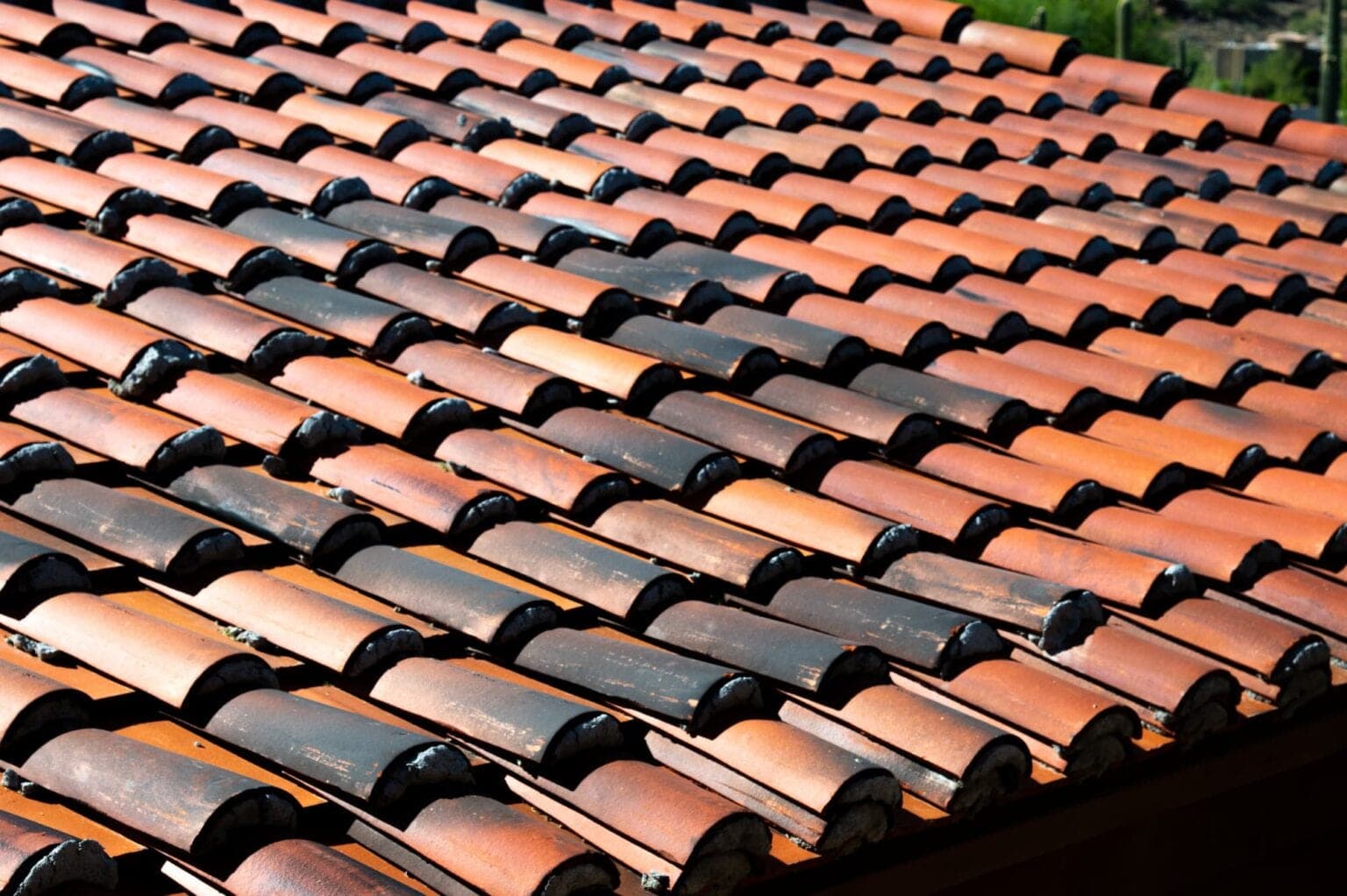
The difference catches a lot of Arizona homeowners off guard. The tile is not what keeps water out. The underlayment beneath it is. Concrete and clay tile can serve 50 years or more, while felt underlayment in this climate typically gives out well before that. Most "tile roof leaks" we're called out to are underlayment leaks under perfectly intact tile.
Tile-specific things to watch:
- Slipped or cracked tiles, which expose the underlayment directly to sun and rain
- Foot traffic damage from solar, HVAC, satellite, and painting crews
- Deteriorated mortar or foam at hips and ridges
- Valley and eave conditions, where underlayment fails first
That last item is the practical case for keeping a rooftop access log. Note the date any time a trade goes up there, and have the roof checked afterward.
Flat and low-slope roofs
Plenty of Arizona homes have a flat section over a patio, addition, or garage, and every commercial building in the valley has one. The dominant failure is drainage. The National Roofing Contractors Association defines ponded water as any accumulation still standing on a finished roof 48 hours after the last rainfall under conditions conducive to drying. Anything short of that after a monsoon cell is normal. Water still sitting there two days later is a defect, and on a commercial system it can be grounds for a manufacturer to deny a warranty claim.
Watch also for seam separation, blistering, and failed terminations at parapets and curbs. Spray foam roofs need their coating renewed on schedule to keep serving their expected 20 to 50 years, since the coating is what protects the foam from UV. If your building has a low-slope system, our commercial roofing team handles inspections, drainage corrections, and coating work across the metro.
Which Repairs Are Safe to DIY and Which Need a Pro?
Some small repairs can be done safely on your own, but major issues require expert help. At Eco Roofing Solutions, we offer inspections, repairs, and eco-conscious solutions that keep your roof strong and sustainable.
Here's the honest dividing line:
Do it yourself, from the ground:
- Clear gutters, downspouts, and scuppers, especially after a dust storm
- Trim tree limbs back off the roof surface
- Check ceilings and attic for stains after heavy rain
- Scan the roof with binoculars for slipped tiles and missing shingles
Call a licensed roofer:
- Anything requiring you to stand on the roof
- Active leaks, spreading stains, or sagging decking
- Flashing, skylight, and pipe boot work
- Storm damage assessment and insurance documentation
- Any work that has to keep a manufacturer warranty intact
That last point matters more than people expect. Most system warranties are only enforceable when repairs are done by an approved contractor with approved materials, and a well-intentioned tube of hardware-store caulk can cost you the coverage. When you hire, ask for the license number. Ours is Arizona ROC 330901 (CR-42), active, and we're members of the Arizona Roofing Contractors Association on both the residential and commercial side.
Get Ahead of the Next Season
Small fixes now prevent costly problems later. That is the whole argument, and in Arizona it has a deadline attached to it every June. Whether you need a straightforward inspection, roof repair and maintenance, or a second opinion on someone else's estimate, we're a family-owned company working across the Phoenix metro from our shop in Gilbert. Contact Eco Roofing Solutions to schedule a roof checkup.