Cool roofs reduce the environmental impact of a building in three connected ways: they reflect solar energy instead of absorbing it, which lowers cooling demand and the power plant emissions tied to it; they lower rooftop and neighborhood air temperatures, easing the urban heat island effect; and they run cooler, which reduces the thermal cycling that wears roofing materials out. In a place like the Phoenix metro, where cooling drives the energy bill for most of the year, those effects compound.
As the name suggests, cool roofs reflect more sunlight and absorb less heat than the usual roofing materials. Their unique, simple, and practical design offers numerous benefits, making them a sustainable choice for residential and commercial buildings. So, let's break down some of the positive effects of cool roofs on the environment.
What makes a roof "cool" in the first place?
The Cool Roof Rating Council rates roofing products on two measured properties, each on a scale of 0 to 1. Solar reflectance is the share of sunlight the surface bounces back. Thermal emittance is how readily the surface radiates away the heat it does absorb. Those two values are combined under ASTM E1980 into the Solar Reflectance Index, where a standard black surface is 0 and a standard white surface is 100.
Programs that reference cool roofs typically use aged solar reflectance of 0.63 or greater paired with aged thermal emittance of 0.75 or greater, or an aged SRI of 75 or greater. The word aged is doing a lot of work there. The CRRC measures products both when new and after three years of outdoor exposure, because every roof gets dirtier and less reflective over time. That is not a footnote in Arizona, where haboob season deposits a fine layer of dust on every rooftop in the Valley.
The temperature difference is not subtle. The EPA reports that conventional roofs in the United States can hit summer peak surface temperatures of 150 to 185 degrees Fahrenheit, while cool roofing products can stay roughly 50 to 60 degrees cooler under the same conditions.
How do cool roofs reduce the urban heat island effect?
The Urban Heat Island (UHI) effect frequently causes temperatures in urbanized regions to be higher than in their rural environs. Dark roofing materials contribute to this by absorbing significant amounts of heat. Cool roofs mitigate UHI by reflecting sunlight, thereby lowering ambient temperatures. This heat reduction can improve outdoor air quality and comfort for urban residents.
The EPA's review of research found that in the United States, heat islands push daytime temperatures in urban areas roughly 1 to 7 degrees Fahrenheit above outlying areas, and nighttime temperatures about 2 to 5 degrees higher. That nighttime gap is the one that matters most in the desert. Absorbed daytime heat stored in roofs, walls, and pavement gets released after dark, which is a large part of why the Valley's overnight lows have become such a public conversation. Roof surfaces make up a substantial share of the total absorbing area in any developed corridor, so changing what they do with sunlight moves the number.
How much energy and emissions does a cool roof actually save?
Cool roofs lower surrounding temperatures, reducing the need for air conditioning during hot months. This decrease in energy demand lowers utility bills and the strain on power grids, especially during peak usage times. Consequently, it reduces greenhouse gas emissions from power plants, decreasing overall environmental pollution.
The EPA puts specific figures on that. In air-conditioned buildings, solar reflectance from a cool roof can reduce peak cooling demand by 11 to 27 percent. In non-air-conditioned residential buildings, cool roofs can lower maximum indoor temperatures by 2.2 to 5.9 degrees Fahrenheit.
Peak demand is the environmentally important half of that. Grid operators meet the hottest hours of a July afternoon with their least efficient generation, so shaving demand at the peak has an outsized emissions effect compared with the same kilowatt-hour saved at midnight. A commercial building with a large flat roof is the clearest case, which is why reflective membranes and coatings are so common on commercial roofing projects across the metro.
Does a cool roof last longer than a dark one?
Traditional roofs undergo thermal expansion and contraction due to temperature fluctuations, which can lead to material degradation over time. Cool roofs maintain more regular temperatures, lessening thermal stress and may increase the lifespan of roofing materials. Because of their endurance, fewer roofs will need to be replaced, lowering construction waste and resource usage.
Thermal cycling is a real failure mechanism, not a talking point. Every day, a dark low-slope roof heats through a wide temperature swing and then contracts overnight. That movement works on seams, fasteners, flashings, and sealants. Running the surface 50-plus degrees cooler narrows the swing and slows that fatigue. The waste side of the ledger is worth stating plainly too: roofing tear-off is heavy, bulky construction debris, and any material choice that delays the next tear-off keeps tons of it out of the landfill.
What are the climate and air quality effects?
The reflective properties of cool roofs can have a global cooling effect. Reflecting solar radiation into space helps offset greenhouse gas warming effects. Cool roofing could mitigate climate change by lowering the total heat that metropolitan areas absorb.
There is a second, more local mechanism. Ground-level ozone forms faster at higher temperatures, so lowering urban air temperature suppresses ozone formation on the days when it is already worst. Between that and the reduced emissions from lower power generation, the air quality benefit of reflective roofing is both direct and indirect.
Are there public health benefits in a climate like ours?
Implementing cool roofs can lower ambient temperatures, reducing the incidence of heat-related illnesses. Additionally, decreased energy consumption leads to lower emissions of air pollutants from power plants, improving air quality and reducing respiratory issues among the population.
In the low desert this is not abstract. Heat-related illness in Maricopa County is driven heavily by nighttime temperatures that never fall far enough for the body to recover, and by indoor temperatures in buildings with weak envelopes or failing air conditioning. A reflective roof over adequate insulation raises how long a building stays survivable if the power goes out during a monsoon microburst. That is a legitimate resilience argument for reflective roofing on apartments, schools, warehouses, and single-family homes alike.
What do cool roofs cost, and what are the trade-offs?
Cool roofs cost about the same to install initially as more conventional roofing materials. However, over time, what you save from lower energy bills and upkeep costs frequently exceeds any initial expenditures. In some regions, incentives or rebates are available to offset installation costs, making cool roofs an economically viable and environmentally friendly option for building owners.
The honest trade-offs are short:
- Soiling. Dust and biological growth reduce reflectance. Cleaning as part of scheduled maintenance recovers much of it.
- Glare. Bright white surfaces adjacent to occupied windows or neighboring buildings occasionally need a lower-gloss product.
- Winter heat gain given up. Real, but small in climate zone 2B, where cooling dominates the year.
- The label question. The EPA sunset the ENERGY STAR roof products program on June 1, 2022, so that certification no longer exists for roofing. Compare CRRC-rated aged values instead.
| Cool roof approach | Typical application | Notes |
|---|---|---|
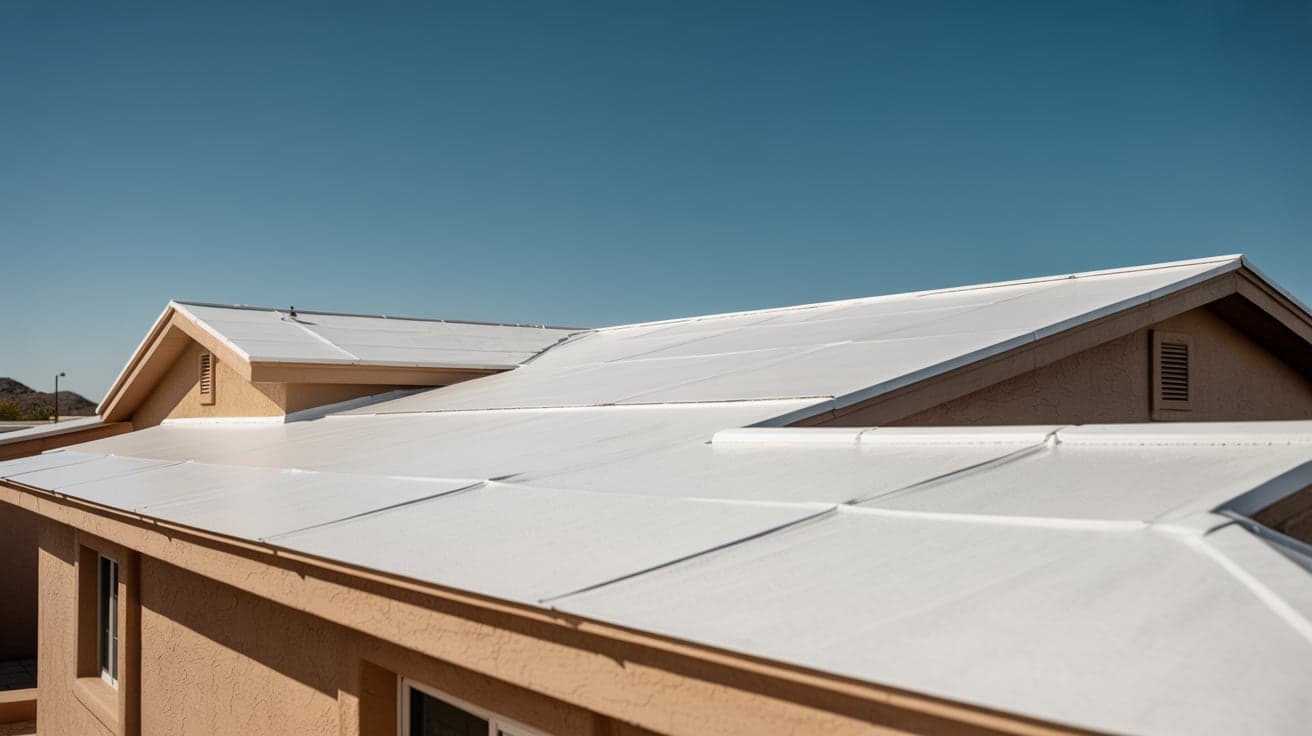
| White TPO or PVC single-ply | Low-slope commercial and multifamily | High reflectance built into the membrane, commonly 20 to 30 years of service life |
| Reflective elastomeric coating | Existing low-slope roofs with life left | Restores reflectance and seals seams; requires a sound, clean, well-drained substrate |
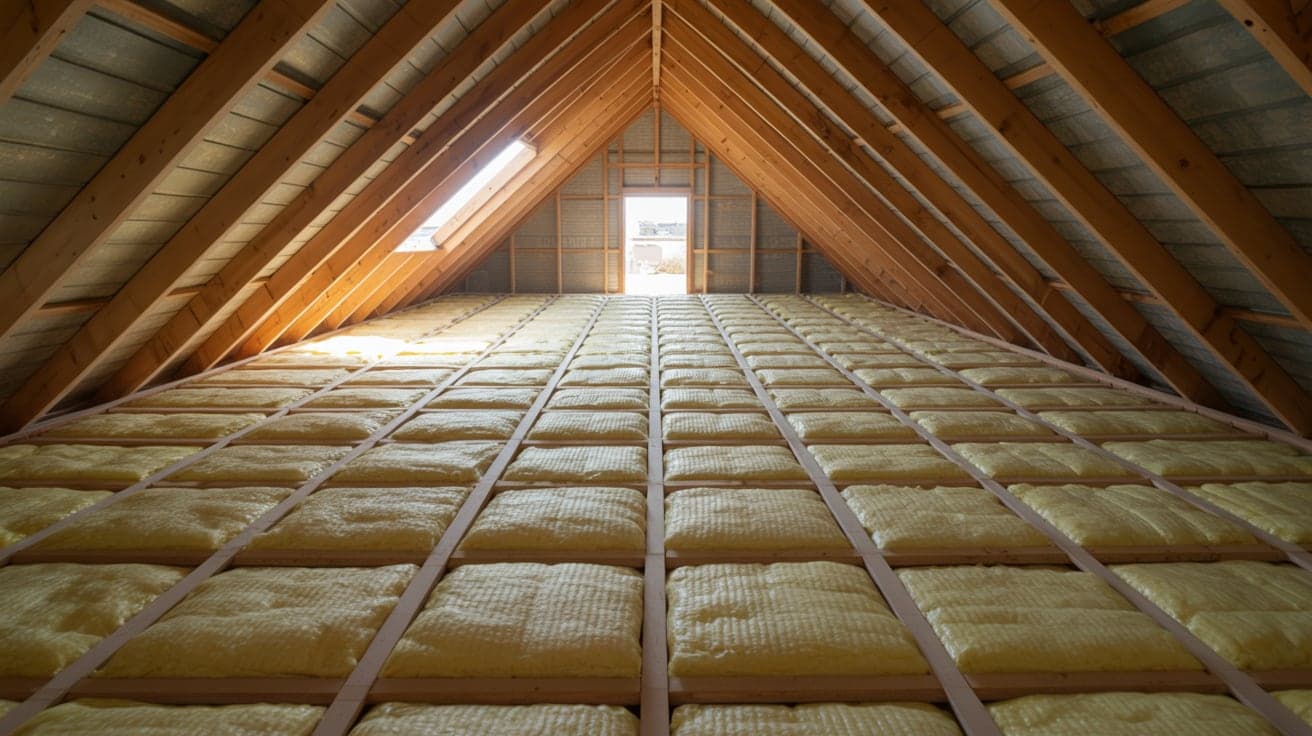
| Spray polyurethane foam with reflective topcoat | Low-slope roofs needing insulation too | Roughly R-6.5 per inch of continuous insulation; recoat on a schedule, commonly every 10 to 15 years |
| Cool-rated tile | Pitched residential | Ventilated air gap under the tile adds to the effect; tile itself can last 50 years or more |
| Cool-rated metal | Pitched residential and commercial | Finish determines the rating more than the color you see |
| Cool-rated shingle | Pitched residential on a budget | Modest reflectance gain over standard granules |
Where do cool roofs make the biggest difference in the Valley?
The buildings with the most to gain share three traits: a large roof area relative to their volume, long occupied hours during the hottest part of the day, and ductwork or equipment exposed to rooftop heat. Warehouses, retail strips, schools, and single-story homes all fit that profile. Distribution and light industrial buildings around Phoenix are the textbook case, since acres of dark membrane sitting under a July sun is exactly the condition reflective roofing was designed for.
If your existing roof still has service life, this is often a maintenance decision rather than a replacement decision. A commercial roof maintenance inspection will tell you whether a restoration coating is a legitimate option or whether the deck and insulation below have already taken on water.
In conclusion, cool roofs have several environmental advantages, such as cutting energy use, eliminating urban heat islands, lessening climate change, and enhancing public health. Their adoption represents a practical step toward creating more sustainable and livable urban environments.
If you want to know more about which roof can keep your building cool and potentially reduce energy consumption, contact Eco Roofing Solutions, LLC. We are a family-owned, ARCA-member contractor working across the Phoenix metro on both residential and commercial projects, and we are happy to walk your roof and give you a straight assessment. Reach out when you are ready.