Asphalt shingles are the most widely used roofing material in the country for three straightforward reasons: they cost less up front, they install faster than almost anything else, and they come in more colors and profiles than any competing product. The trade-off in the low desert is service life. Relentless UV and heat pull the oils out of asphalt faster here than in a milder climate, so a shingle roof will not match the decades a concrete tile roof can deliver. Whether that trade-off makes sense depends on your budget, your roof's pitch, and how long you plan to stay in the house.
In the United States, asphalt shingles are among the most popular roofing materials, and the reasons for this are cost and adaptability. However, like any other roofing option, they have advantages and drawbacks.
What are the real advantages of asphalt shingles?
Here are the perks that make asphalt shingles an excellent choice for roofing.
Affordable
Running on a tight budget? When it comes to affordability, asphalt shingles shine the brightest. They have an exceptional cost-performance ratio compared to pricey tile or metal roofing. Part of that advantage is the material itself, and part of it is structural: shingles are light enough that most framing already handles them without reinforcement, which is not always true when a homeowner wants to move from shingle to tile.
Ease of installation
These shingles are lightweight and straightforward to install, which can reduce labor costs. Many roofing contractors are familiar with asphalt shingles, so you have access to experienced professionals. A typical single-family tear-off and re-roof also moves quickly, which matters when a section of your roof is open and monsoon storms are in the forecast.
Styles and colors
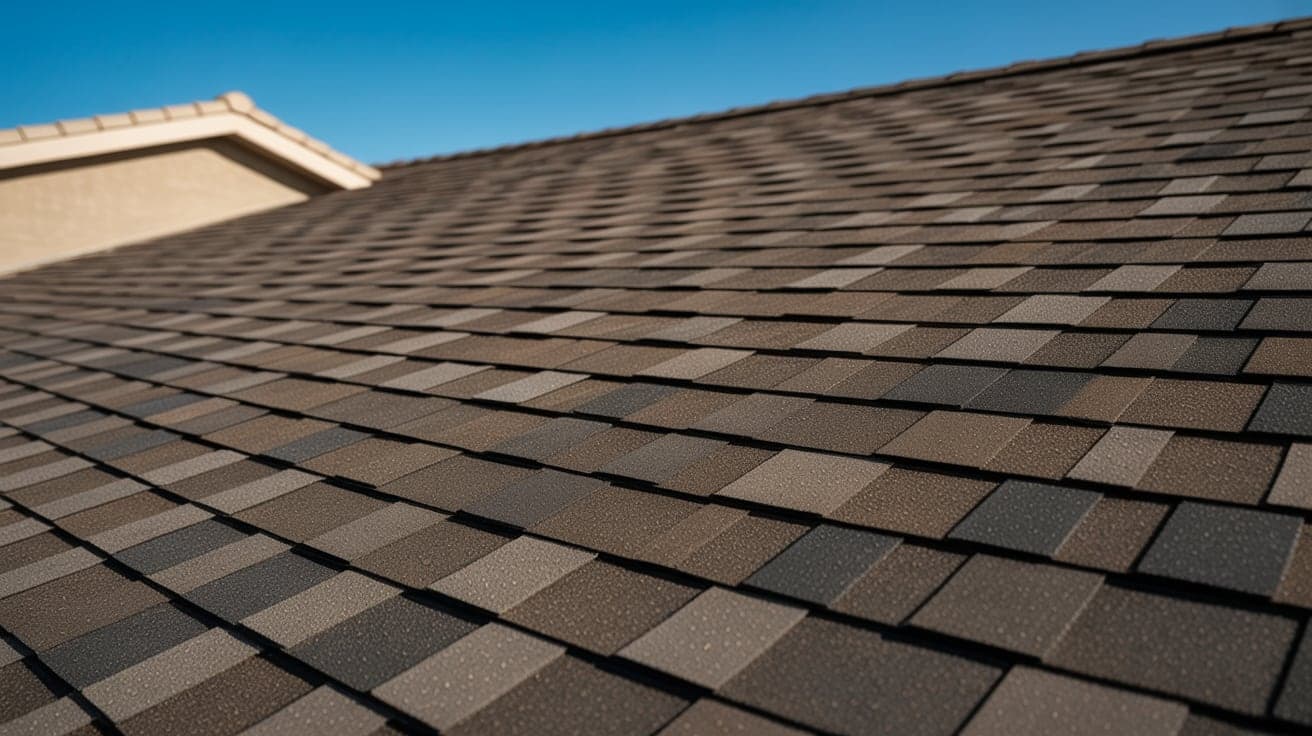
With the wide range of patterns, hues, and textures available for asphalt shingles, you can alter the look of your roof to fit the aesthetic of your house. Architectural, or laminated, shingles add dimension and shadow lines that read closer to a wood shake or slate look from the street than flat three-tab shingles do.
Durable
Asphalt shingles can survive for 20 to 30 years if installed and maintained correctly. Some varieties, like architectural shingles, provide even more weather resistance and endurance. Durability is not only a function of the shingle, though. Underlayment, starter course, fastening pattern, and ventilation all decide whether a roof reaches the upper end of its range or the lower one.
Recyclable
Many asphalt shingles can be recycled into pavement materials, reducing their environmental impact.
What are the drawbacks you should know about?
Like other roofing options, asphalt shingle roofs face disadvantages you must know.
Shorter lifespan. While durable, asphalt shingles do not last as long as metal, slate, or tile roofing. Each can last up to 50 years or more. This drawback means you need to replace asphalt shingles sooner, increasing long-term costs.
Vulnerable to extreme weather. Asphalt shingles can crack or blow off in high winds and may struggle in extreme temperatures, making them less ideal for areas with severe weather conditions. In Arizona, both halves of that sentence apply during the summer: the National Weather Service defines the monsoon as June 15 through September 30, and the microbursts that come with it can produce straight-line winds that NOAA notes sometimes exceed 100 mph.
Environmental concerns. While recyclable, not all asphalt shingles are recycled, and the manufacturing process involves petroleum-based products with a significant carbon footprint.
Susceptibility to algae and moss. In humid climates, asphalt shingles may develop algae or moss growth, which can affect their appearance and potentially reduce their lifespan if not addressed. This is one drawback the desert largely spares you, with the exception of shaded slopes and areas kept damp by sprinklers or an evaporative cooler.
Maintenance requirements. Regular inspections and occasional repairs are necessary to maintain the roof's integrity, particularly in areas prone to heavy storms.
How do asphalt shingles hold up in Arizona heat specifically?
Ultraviolet exposure is the main aging mechanism for asphalt. The volatile oils that keep the asphalt flexible break down and drive off under sustained UV and heat, and once that happens the mat becomes brittle, granules release more easily, and the shingle loses its ability to lie flat and seal.
Two practical consequences follow for Valley homes:
- Expect the lower half of published lifespan ranges, not the upper half. A shingle marketed on a long rating is describing performance under average national conditions, not a Sonoran summer. Plan replacement timing accordingly.
- Ventilation and attic heat matter more here than almost anywhere. A shingle sitting on an attic that runs superheated all summer cooks from both sides. Bringing attic ventilation and insulation up to standard is one of the few things a homeowner can do that measurably slows shingle aging. We cover the details in our post on roof insulation and heat protection.
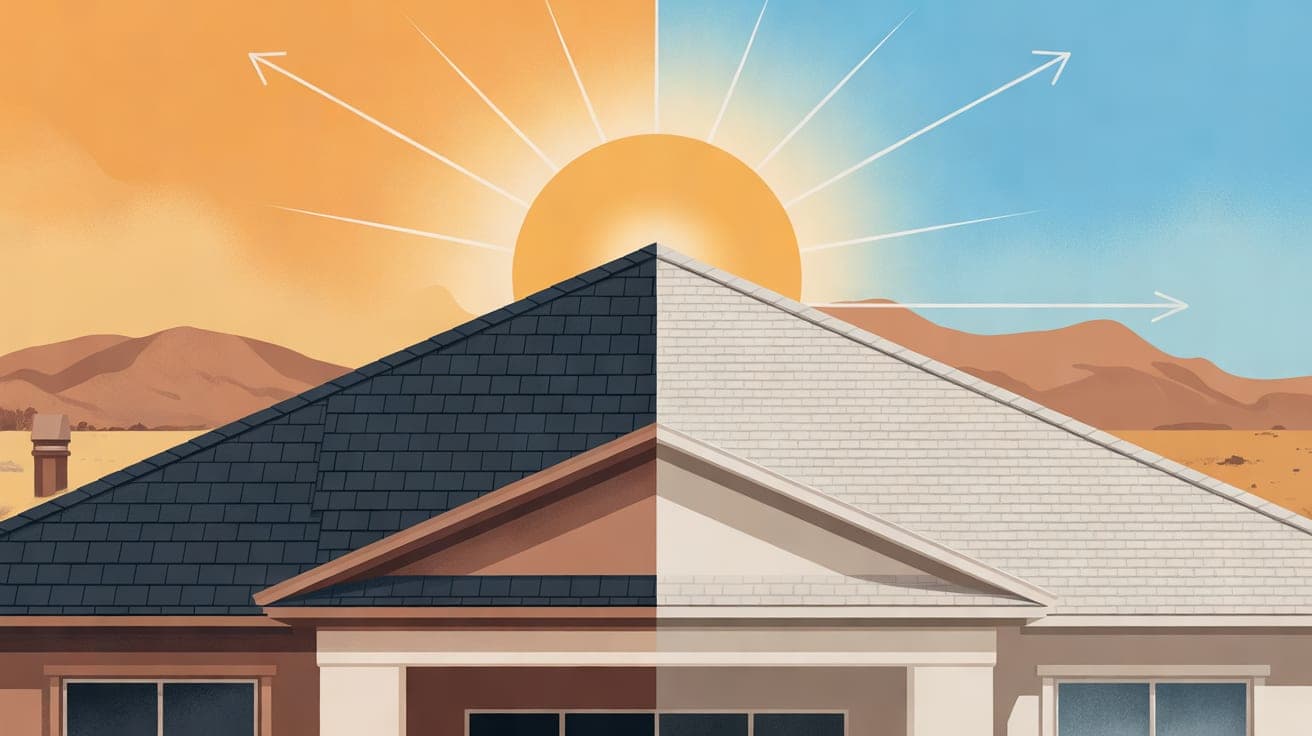
Color and reflectivity also matter more in the desert. Some shingle lines are rated by the Cool Roof Rating Council, which independently measures solar reflectance and thermal emittance and publishes both initial values and values aged after three years of real outdoor exposure. One of the CRRC's approved exposure test farms is in Arizona precisely because hot and dry is its own weathering category.
How do shingles compare to tile, foam, and metal here?
| Roofing system | Typical service life | Relative up-front cost | Where it fits in the Valley |
|---|---|---|---|
| Three-tab asphalt shingle | Shortest of the shingle grades, generally the low end of the 20 to 30 year window | Lowest | Budget re-roofs and rental property on a 4:12 or steeper pitch |
| Architectural (laminated) shingle | Longer than three-tab within the same 20 to 30 year window | Low to moderate | Most pitched Valley homes; better wind and impact ratings available |
| Concrete or clay tile | The Tile Roofing Industry Alliance puts tile itself at roughly 40 to 50 years; the underlayment beneath is the wear item | Higher | Homes already framed for tile weight |
| Spray polyurethane foam | Maintained indefinitely on a recoat cycle rather than replaced outright | Moderate | Flat and low-slope sections, common on Valley additions and patios |
| Single-ply membrane (TPO, PVC, EPDM) | Long service life on low-slope commercial decks | Varies by system | Commercial buildings and large flat areas |
Many Phoenix-area homes are not one system at all. A pitched tile or shingle main roof over a flat patio cover or addition is extremely common, and the two areas fail in completely different ways. That is worth knowing before you accept a bid that treats the whole roof as one product.
What ratings should you look for on the shingle itself?
Do not shop on color alone. The label and the manufacturer's data sheet tell you more about how a shingle will perform than a showroom sample does.
| What it covers | Standard | What to look for |
|---|---|---|
| Product quality | ASTM D3462 | The baseline specification the International Residential Code references for fiberglass-mat asphalt shingles |
| Wind resistance | ASTM D3161 | Class F is the highest tier, corresponding to 110 mph in the fan-induced test |
| Wind resistance | ASTM D7158 | Class H is the highest tier at 150 mph, measured by an uplift method |
| Fire resistance | UL 790 / ASTM E108 | Class A is the highest of the three fire classes |
| Algae resistance | Manufacturer class I through III | Class I is the most resistant; relevant mainly for shaded slopes |
Slope is a code issue, not a preference. The International Residential Code limits asphalt shingles to roof slopes of 2:12 or greater, and any slope between 2:12 and 4:12 requires a double underlayment application. If a contractor proposes shingles on something flatter than that, ask why.
Are asphalt shingles the right choice for your home?
For many homeowners, asphalt shingles are a sensible and affordable option. They provide a decent mix of durability, price, and style. However, better options may be for those seeking a long-lasting, low-maintenance solution. Consider your budget, climate, and aesthetic preferences to decide if asphalt shingles fit your home.
A useful way to frame the decision: if you expect to sell within ten or fifteen years, the lower up-front cost of shingles is real money in your pocket. If this is the house you intend to stay in, run the numbers on tile or foam over the same period, including the underlayment replacement a tile roof will eventually need.
Whichever direction you lean, the installation matters as much as the material. Eco Roofing Solutions is family-owned, licensed in Arizona under ROC 330901 (CR-42), and a member of the Arizona Roofing Contractors Association. Owner and president Eric Perry is a third-generation roofer with over 25 years of hands-on experience, and that experience is what tells you whether a roof needs a new covering or a targeted repair.
If you want to know whether an asphalt shingle roof is right for you, contact Eco Roofing Solutions, LLC today. Our expert roofers in Arizona can help you decide on the best type of roofing for your needs and aesthetics. We also handle shingle repairs and ongoing maintenance if your existing roof still has life left in it, and we work throughout the East Valley from our office in Gilbert. Get in touch when you are ready for a straight answer about your roof.