For an Arizona business, the commercial cool roof vs. green roof debate comes down to one thing: fast, measurable ROI. At Eco Roofing Solutions, we've seen that while green roofs have unique benefits, cool roofs consistently deliver superior energy savings and financial returns in our harsh climate, without the massive structural and maintenance costs.
Table of contents
- What defines a commercial cool roof system?
- How does a green roof function in arizonas climate?
- Key comparison: commercial cool roof vs green roof in arizona
- What is the real financial roi for a commercial cool roof vs a green roof?
- Making the right choice for your arizona property
- Frequently asked questions
In Arizona, your commercial building's roof isn't just a shield—it's the first line of defense against relentless solar heat. The right roofing system directly impacts your operating costs, building longevity, and environmental footprint. Two leading sustainable options, cool roofs and green roofs, offer powerful benefits but achieve them through entirely different means. Understanding these differences is the key to making a sound financial decision for your property.
What Is a Commercial Cool Roof System?
A commercial cool roof is a system engineered to reflect more sunlight and absorb less heat than a standard roof. This performance isn't just about color; it's defined by two key properties. The first is solar reflectance (or albedo), which measures how much solar energy is reflected away from the surface. A high value means sunlight bounces back into the atmosphere instead of heating your building. The second is thermal emittance, the roof's ability to efficiently radiate away any heat it has absorbed. A material with high emittance cools down quickly after sunset.
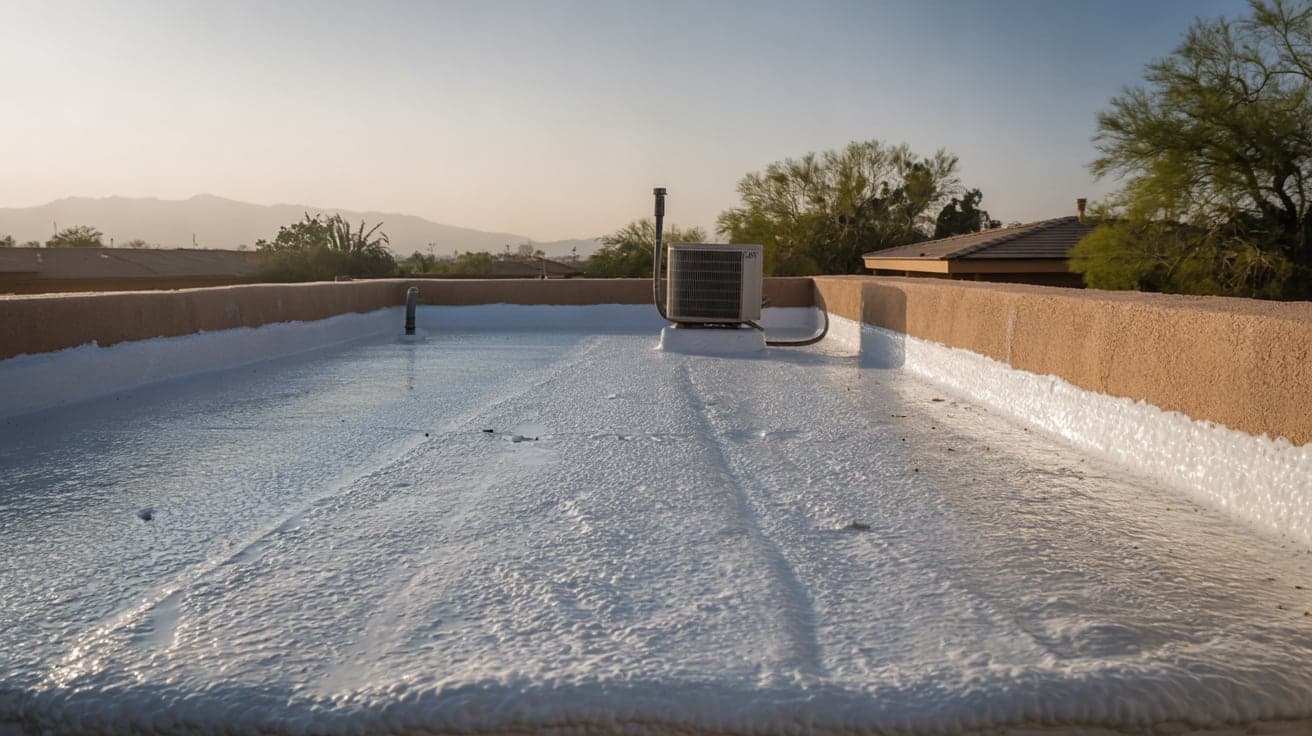
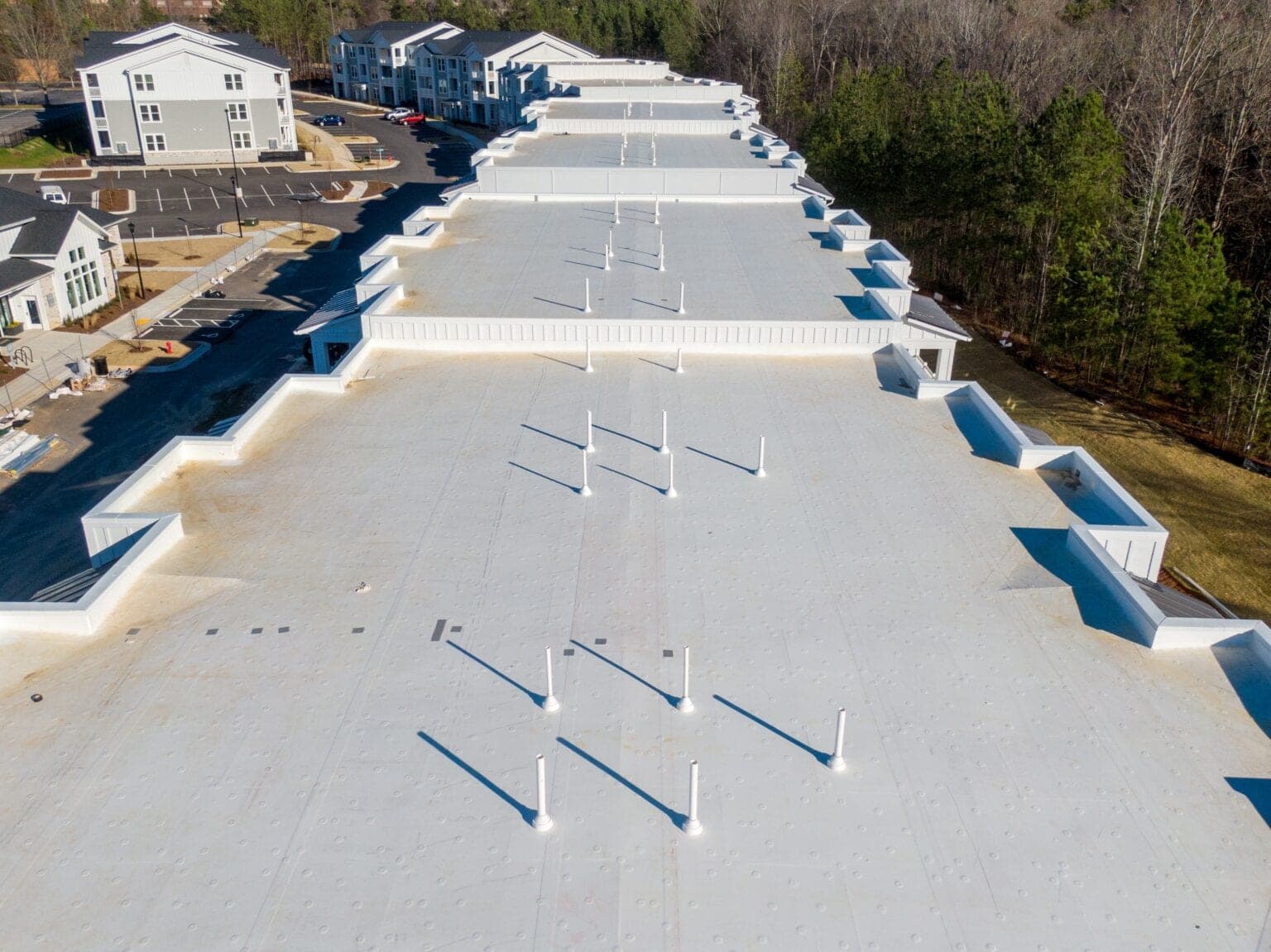
In practice, this is achieved with modern materials like single-ply membranes (TPO, PVC) or specialized coatings in brilliant white or light colors. These systems are exceptionally effective on the flat or low-slope design common to most Arizona commercial buildings. By stopping heat from penetrating the building envelope, a cool roof dramatically reduces the load on your HVAC system, leading to immediate energy savings and a more stable indoor environment.
How Do Green Roofs Work in Arizona's Climate?
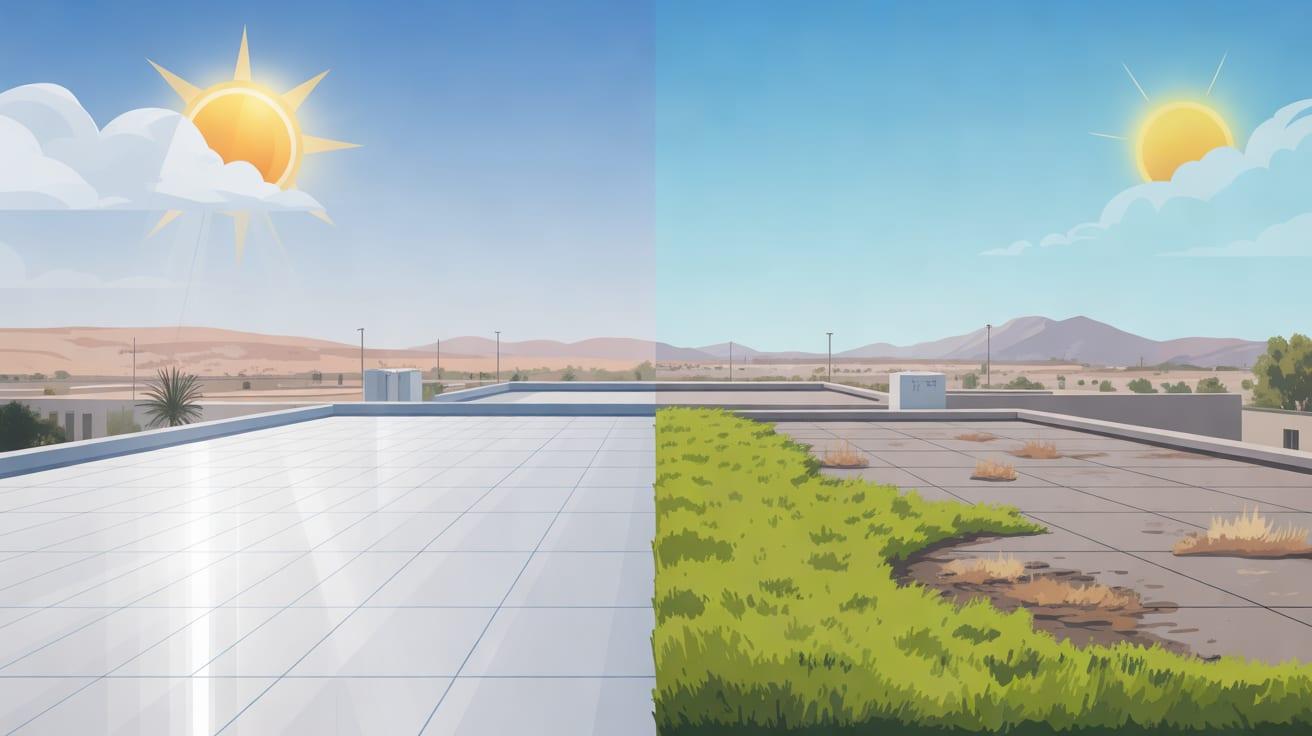
A green roof, or living roof, is a complex system covering a roof with a waterproof membrane, drainage layers, a lightweight growing medium, and live vegetation. Its cooling method is entirely different from a cool roof. Instead of reflecting sunlight, a green roof absorbs it to fuel a natural cooling process called evapotranspiration. As plants draw water from the soil and release it as vapor, they actively cool the roof surface and the surrounding air.
This soil layer also provides significant insulation, slowing heat transfer into the building. However, while this natural process is effective, installing a green roof in Arizona presents unique hurdles. The system's weight alone often requires significant and costly structural reinforcement. Furthermore, it demands a dedicated irrigation system, adding to installation costs and ongoing water consumption—a critical factor in our desert climate.
Cool Roof vs. Green Roof: A Head-to-Head Comparison
Choosing the right system requires a clear-eyed look at the trade-offs. While both are excellent eco-friendly options, their performance, costs, and maintenance needs are worlds apart, especially for a commercial property in Arizona.
| Feature | Commercial Cool Roof | Commercial Green Roof |
|---|---|---|
| Primary Cooling Mechanism | High Solar Reflectance & Thermal Emittance | Evapotranspiration & Soil Insulation |
| Upfront Installation Cost | Lower | Significantly Higher (2-3x or more) |
| Structural Requirements | Minimal; lightweight and suitable for most existing structures. | Major; heavy and often requires structural engineering and reinforcement. |
| Maintenance Demands | Standard cleaning and inspections. | Requires ongoing landscaping: irrigation, weeding, and drainage checks. |
| Water Usage in Arizona | None. | Significant; requires a consistent irrigation system to sustain plant life. |
| Lifespan Impact | Protects the building structure from extreme heat stress. | Protects the roofing membrane from UV radiation and physical damage, potentially doubling its life. |
| Immediate Energy Savings | Excellent and immediate reduction in HVAC load. | Very good, but performance is tied to plant health and water availability. |
| Additional Benefits | Simple, proven, and highly effective for energy reduction. | Stormwater management, improved air quality, sound insulation, and habitat creation. |
| Best Fit for Arizona | The vast majority of new and existing commercial buildings. | New construction where structural loads and water systems can be integrated from the start. |
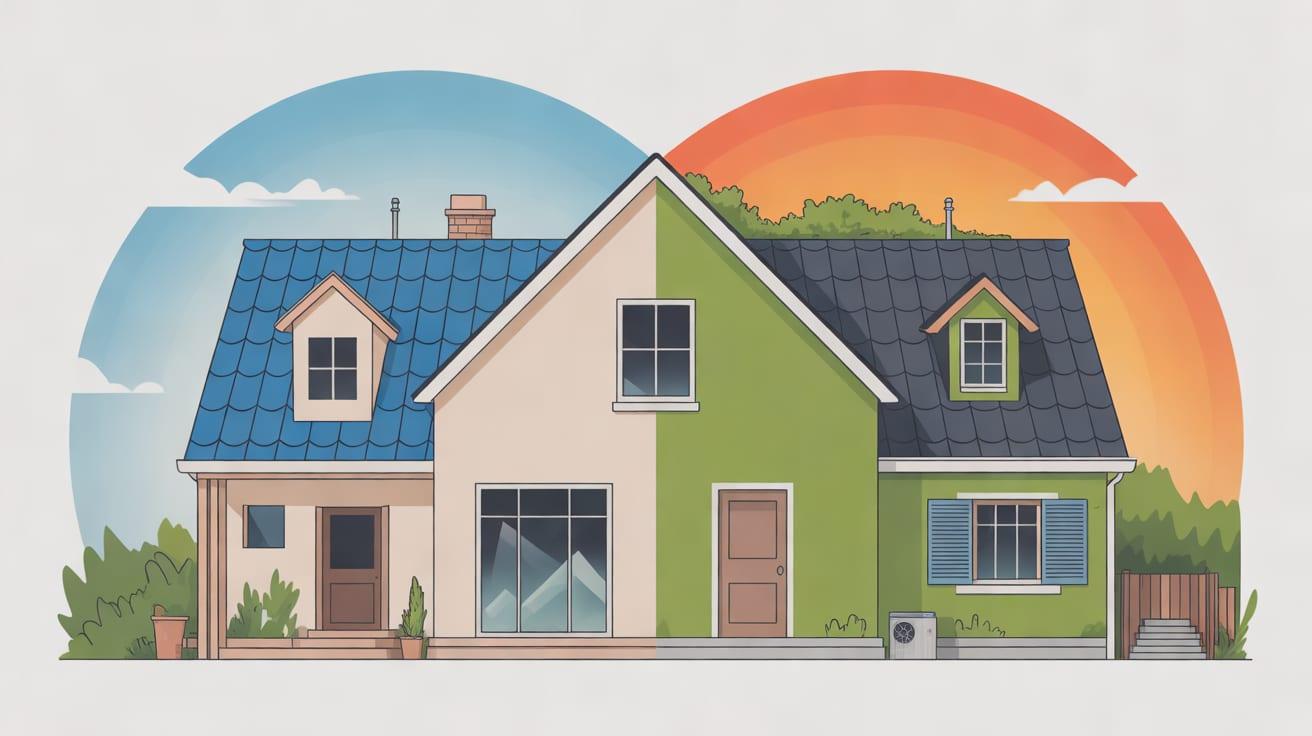
Financial ROI: Cool Roofs vs. Green Roofs in Arizona
For most Arizona businesses, the return on investment for a cool roof is faster, clearer, and more predictable. The lower installation cost, combined with immediate and substantial reductions in summer energy bills, means the system can often pay for itself in just a few years. These savings come directly from slashing your building's peak cooling demand—the single largest driver of electricity costs for commercial properties in our state. A professionally installed cool roof is a cornerstone of our commercial roofing services because it provides a clear, measurable financial win for our clients.
A green roof's ROI is more complex and spread over a longer term. The high upfront cost is a major hurdle. While it provides energy savings, its financial benefits are diluted across other areas: extending the life of the underlying membrane, potentially reducing stormwater fees, and contributing to LEED points, which can have tax or marketing advantages. These benefits must be carefully weighed against the high initial investment and the ongoing costs of water and specialized landscape maintenance.
Which Is Right for Your Arizona Commercial Property?
Ultimately, your decision should be guided by your building's structure, your budget, and your long-term business goals.
Choose a cool roof if:
- Your primary goal is rapid ROI through energy savings.
- You are retrofitting an existing building with structural limitations.
- You need a low-maintenance, reliable solution proven to perform in extreme heat.
- You want a cost-effective way to improve building comfort and reduce your carbon footprint.
Consider a green roof if:
- You are undertaking new construction and can engineer the building to support the load.
- Your company has broad sustainability goals beyond just energy savings, such as stormwater management and creating green space.
- The higher upfront cost and long-term maintenance budget are feasible.
- You are pursuing a high level of green building certification.
At Eco Roofing Solutions, our family has spent over 25 years helping Arizona business owners make these exact decisions. We believe in providing solutions that are both environmentally responsible and financially sound. For the vast majority of commercial properties in our climate, a cool roof provides the most practical and powerful ROI. It directly attacks your biggest challenge—solar heat gain—with an efficient, durable, and cost-effective system.
Ready to see how a cool roof can lower your operating costs? Contact our team for a straightforward assessment of your commercial property. We’ll provide a clear plan that respects your budget and protects your investment for decades to come.
Frequently asked questions
What defines a cool roof? A cool roof is a roofing system with high solar reflectance and high thermal emittance. These two properties allow it to reflect a significant portion of sunlight and efficiently radiate away absorbed heat, keeping the building underneath cooler and reducing the need for air conditioning.
Which roof color is best for energy efficiency in Arizona? White is the most energy-efficient roof color because it has the highest solar reflectance, meaning it absorbs the least amount of heat from the sun. Light gray, beige, and other light colors are also effective, but brilliant white offers the maximum cooling benefit, making it ideal for Arizona's intense climate.
Is a cool roof more expensive than a traditional commercial roof? Modern cool roofing materials, like white TPO or PVC membranes, are now standard for commercial applications and are competitively priced with less efficient options like traditional black EPDM or built-up roofing (BUR). While some high-performance coatings may add a premium, the overall installation cost is often comparable, and the energy savings provide a rapid return on investment.
How is a green roof considered a sustainable option? A green roof is sustainable in multiple ways. It reduces the urban heat island effect, manages stormwater runoff to lessen the load on sewer systems, improves air quality by filtering pollutants, creates habitats for wildlife, and provides excellent insulation to reduce a building's energy consumption.
Can my existing commercial building support a green roof? Most existing commercial buildings cannot support a green roof without significant and expensive structural reinforcement. A fully saturated green roof system can weigh a great deal, far exceeding the load capacity of a typical roof structure. A structural engineer must always be consulted to determine feasibility.
How much can a cool roof really save on my energy bills? While exact savings vary based on your building's size, insulation, and HVAC efficiency, studies and real-world results show that a cool roof can reduce a commercial building's cooling energy consumption significantly. This translates directly into lower electricity bills, especially during Arizona's long, hot summers.
What kind of maintenance does a cool roof require? Cool roof maintenance is straightforward. It primarily involves periodic cleaning to maintain its reflective properties, as dirt and debris can reduce its effectiveness. It should also be part of a routine commercial roof maintenance plan that includes inspections of seams, flashing, and drainage areas to ensure long-term performance.