TPO, PVC and EPDM are the three single-ply membranes that dominate flat and low-slope commercial roofing, and all three suit Arizona for the same core reasons: they resist UV and heat, they cover large areas with few seams, and they can be repaired in place rather than torn off. The differences that matter are chemical resistance, how the seams are made, and how reflective the surface is. Picking between them is a building question, not a brand question.
Blog highlights
- TPO, PVC, and EPDM are strong options for flat and low-slope commercial roofs.
- These roofing systems can help Arizona businesses manage heat, UV exposure, and long-term maintenance needs.
- Choosing the right system depends on your building, budget, and performance goals.
Commercial buildings in Arizona need roofing systems that can handle intense sun, high temperatures, and daily wear. That is why many business owners compare TPO vs EPDM vs PVC when looking for the best roofing material for their property. Each option offers its own advantages, but all three are commonly used because they are durable, practical, and designed for commercial roof performance.
What Are TPO, PVC and EPDM?
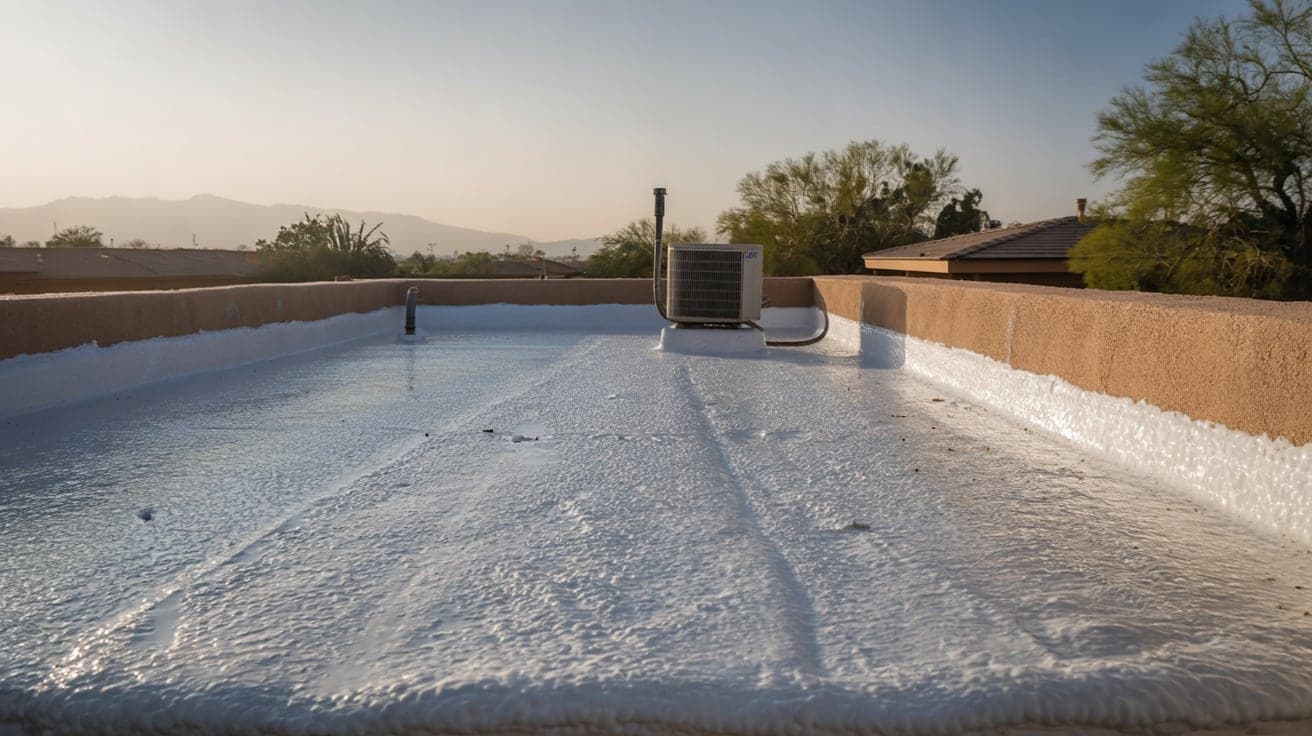
TPO is a popular single-ply roofing option known for its reflective surface and energy-efficient benefits. It can help reduce heat absorption, which is especially helpful for commercial buildings in Arizona. It is a thermoplastic, so its seams are joined with hot air into a continuous weld rather than glued.
PVC is another durable single-ply material. It is often chosen for its strength, chemical resistance, and ability to perform well in demanding commercial environments. Like TPO, it is hot-air welded, and it carries a long track record on buildings that put oils, fats or industrial chemicals onto the roof surface.
EPDM is a rubber roofing membrane known for its flexibility and reliable weather resistance. It can be a good fit for certain flat roof applications, especially when long-term durability is a priority. Its seams are made with adhesives or seam tape, which makes seam workmanship a bigger variable than it is on a welded system.
Thickness and attachment
Membranes are specified in mils. TPO is commonly available in 45, 60 and 80 mil, with fleece-backed options for added impact resistance, and EPDM ranges from roughly 45 up to 90 mil. Thicker is generally more forgiving of foot traffic, hail and rooftop equipment work.
Attachment method matters as much as the membrane itself. Mechanically attached systems fasten through the membrane into the deck, fully adhered systems bond the sheet to the insulation across its whole face, and ballasted systems hold it down with stone. On a building exposed to monsoon downdrafts, the attachment and perimeter detailing are what keep the roof on.
How Do TPO, PVC and EPDM Compare?
| TPO | PVC | EPDM | |
|---|---|---|---|
| Material | Thermoplastic polyolefin | Polyvinyl chloride | Synthetic rubber |
| Typical surface | White, reflective | White, reflective | Most often black; white available |
| Seams | Hot-air welded | Hot-air welded | Adhesive or seam tape |
| Chemical and grease resistance | Limited. Not suited to kitchen exhaust exposure | Strong. Resists fats, oils and many chemicals | Moderate. Vulnerable to petroleum-based products |
| Common thicknesses | 45, 60, 80 mil | Comparable range | 45 to 90 mil |
| Industry service life range | Roughly 20 to 30 years | Roughly 25 to 35 years | About 25 to 40+ years per the EPDM Roofing Association's 2025 survey of roofing professionals |
| Strongest fit | Large reflective roof areas on warehouses, retail and light industrial | Restaurants, food processing, labs, anywhere chemicals hit the roof | Buildings prioritizing membrane flexibility and long-term durability over reflectance |
Treat those service life ranges as what the systems are capable of, not what they are guaranteed to do. The variables that decide where a specific roof lands in the range are membrane thickness, the quality of the flashing and penetration details, drainage, and whether anyone inspects it between leaks.
Why Do These Materials Work Well in Arizona?
Arizona roofs take a beating from heat, sunlight, and seasonal storms. TPO, PVC, and EPDM are built to withstand those conditions better than many traditional roofing options. Their materials can help protect the building beneath while improving indoor comfort and roof performance.
Three specific stresses shape how these systems perform here:
- Sustained heat and UV. The Department of Energy notes that a conventional roof can reach 150°F or more on a sunny summer afternoon. Single-ply membranes are formulated to hold up under that, but the details around penetrations, curbs and terminations age fastest and deserve the most attention.
- Monsoon wind. The National Weather Service defines Arizona's monsoon as June 15 through September 30. Microbursts, produced when cold dense air from a thunderstorm hits the ground and spreads outward, can generate straight-line winds strong enough to strip roofing. Perimeter and corner attachment is where wind damage starts.
- Dust and debris. Haboobs, the dust storms formed by thunderstorm gust fronts, coat the roof and clog drains and scuppers. On a flat roof, blocked drainage is a bigger threat than the storm itself.
Does a Reflective Membrane Actually Cut Cooling Costs?
For many businesses, energy efficiency is also a major concern. Reflective systems like TPO and PVC can help reduce heat transfer, potentially reducing cooling demand during the hottest months.
The measurable part is surface temperature. The Department of Energy notes a reflective roof can stay more than 50°F cooler than a conventional roof under the same afternoon conditions, and the EPA puts the range for cool roofs at up to 50 to 60°F cooler during peak summer weather. The Cool Roof Rating Council rates products on solar reflectance and thermal emittance, both on a 0 to 1 scale, and publishes aged values measured after three years of real outdoor exposure. One of the CRRC's approved test farms is in Arizona, representing the hot, dry climate, so the aged numbers for these products already account for what our sun and dust do to them.
How much of that reaches your utility bill depends on your roof insulation, how much rooftop equipment you run, and your operating hours. It also depends on keeping the surface clean, because soiling is exactly why aged reflectance values come in below initial ones.
Which System Fits Which Building?
- Warehouse, distribution or big-box retail. Large uninterrupted roof area, high cooling load, and few chemical exposures. A reflective TPO system in an appropriate thickness is the common answer.
- Restaurant, commercial kitchen, food processing. Grease and cooking oils land on the roof around exhaust fans. PVC's chemical resistance is the reason it is the standard choice in this category.
- Manufacturing and light industrial. Depends entirely on what leaves the exhaust stacks. This is worth a conversation before the material gets specified.
- Buildings with heavy rooftop traffic. HVAC service crews, solar contractors and telecom techs all walk your roof. Thicker membrane, walkway pads and protected traffic routes pay for themselves.
- Office and multi-tenant properties. Any of the three can work. Tenant disruption during installation and the noise profile of the install method often drive the decision as much as the membrane does.
What Does It Take to Get 20+ Years Out of a Single-Ply Roof?
Almost every premature single-ply failure we get called to has one of a handful of causes, and none of them are the membrane in the middle of the field:
- Blocked drainage. Ponding water where drains, scuppers or crickets are not doing their job.
- Neglected penetrations. Pipe boots, curbs, skylight flashing and equipment supports are the first things to open up.
- Damage from other trades. Dropped tools, dragged equipment and unsealed new penetrations from HVAC or solar work.
- Failed sealant at terminations. Termination bars and counterflashing that have not been resealed in a decade.
- No inspection schedule. The National Roofing Contractors Association recommends inspecting roof systems at least twice per year, preferably spring and fall, plus after any major weather event.
In this climate, the natural schedule is one inspection before monsoon season starts and one after it ends, with a check after any significant storm. That is the core of a sensible commercial roof repair and maintenance program, and it is the difference between the low end and the high end of every service life range in the table above.
What Is the Long-Term Value for Commercial Properties?
The right commercial roofing system can help reduce repair needs, improve building protection, and support long-term cost savings. Eco Roofing Solutions works with Arizona businesses to help identify roofing options that fit their property and goals.
Longer term, the roof also affects things that never show up on a roofing invoice: interior damage and downtime from an unplanned leak, wear on cooling equipment, and whether a future solar or HVAC project can proceed without a tear-off first. Choosing the membrane that matches your building's actual exposure, then maintaining it on a schedule, is what keeps those costs off the books.
Talk Through the Options for Your Building
Eco Roofing Solutions is family-owned, licensed under Arizona ROC 330901 (CR-42), and a member of the Arizona Roofing Contractors Association for both residential and commercial work. Owner and president Eric Perry is a third-generation roofer with over 25 years of hands-on experience. We serve businesses across the Valley, including commercial roofing in Phoenix and throughout Mesa.
To learn more about commercial roofing options for your building, contact us or give us a call at (480) 695-7736.
Image credit: // Shutterstock // Oak City Drone