Most roof leaks come from a short list of failure points, and flashing, penetrations, and drainage cause more of them than the roofing material ever does. In Arizona the pattern is specific: eleven months of UV and heat dry out the seals and underlayment, then the monsoon arrives and finds every weak spot in a single afternoon. Knowing the nine usual culprits lets you catch them during an inspection instead of discovering them through a ceiling stain.
A leaky roof can be your nightmare, leading to costly repairs if not addressed promptly. Your best bet is to look for early warning signs and remember the causes of roof leaks to help you take preventive measures. Here are the main culprits.
What Are the 9 Most Common Causes of Roof Leaks?
| Cause | Where water gets in | Typical fix |
|---|---|---|
| Damaged or missing shingles | Exposed underlayment and nail heads | Replace affected shingles, check sealant strip |
| Clogged gutters | Backed-up water under the roof edge | Clear and re-pitch gutters, clear downspouts |
| Cracked flashing | Wall, chimney, skylight, and valley joints | Reset or replace flashing, reseal terminations |
| Age of the roof | Brittle, dried-out material across the field | Repair if isolated; replace when widespread |
| Improper installation | Misaligned courses, poor sealing, missing flashing | Corrective rework by a licensed roofer |
| Ice dams | Roof edge in freeze-thaw climates | Ventilation and insulation correction |
| Skylight and vent problems | Curbs, boots, and collar seals | Replace boots, reseal curbs and collars |
| Poor roof ventilation | Trapped attic moisture and heat, degraded decking | Balance intake and exhaust vents |
| Third-party damage | New penetrations and broken tiles from other trades | Repair penetrations, replace broken material |
Which Roofing Material Failures Cause Leaks?
Damaged or Missing Shingles
Shingles are your roof's first line of defense against the elements. Over time, exposure to severe weather like high winds, hail, and heavy rain can cause them to crack, curl, or fall off. Missing or damaged shingles leave your roof vulnerable to leaks.
In the low desert there's an extra factor: UV. Intense sun breaks down the asphalt binder, granules shed, and tabs go brittle and stop sealing down. A shingle that no longer bonds to the one below it is a shingle a microburst can peel. Wind performance is measurable, and it's worth knowing what's on your roof. Under ASTM D3161, shingles are classified for resistance at 60, 90, or 110 mph; under ASTM D7158, classes correspond to basic wind speeds of 115, 150, or 190 mph.
Age of the Roof
As roofs age, materials naturally deteriorate, losing their ability to repel water effectively. Asphalt shingles, for instance, dry out and become brittle over time, increasing the likelihood of leaks.
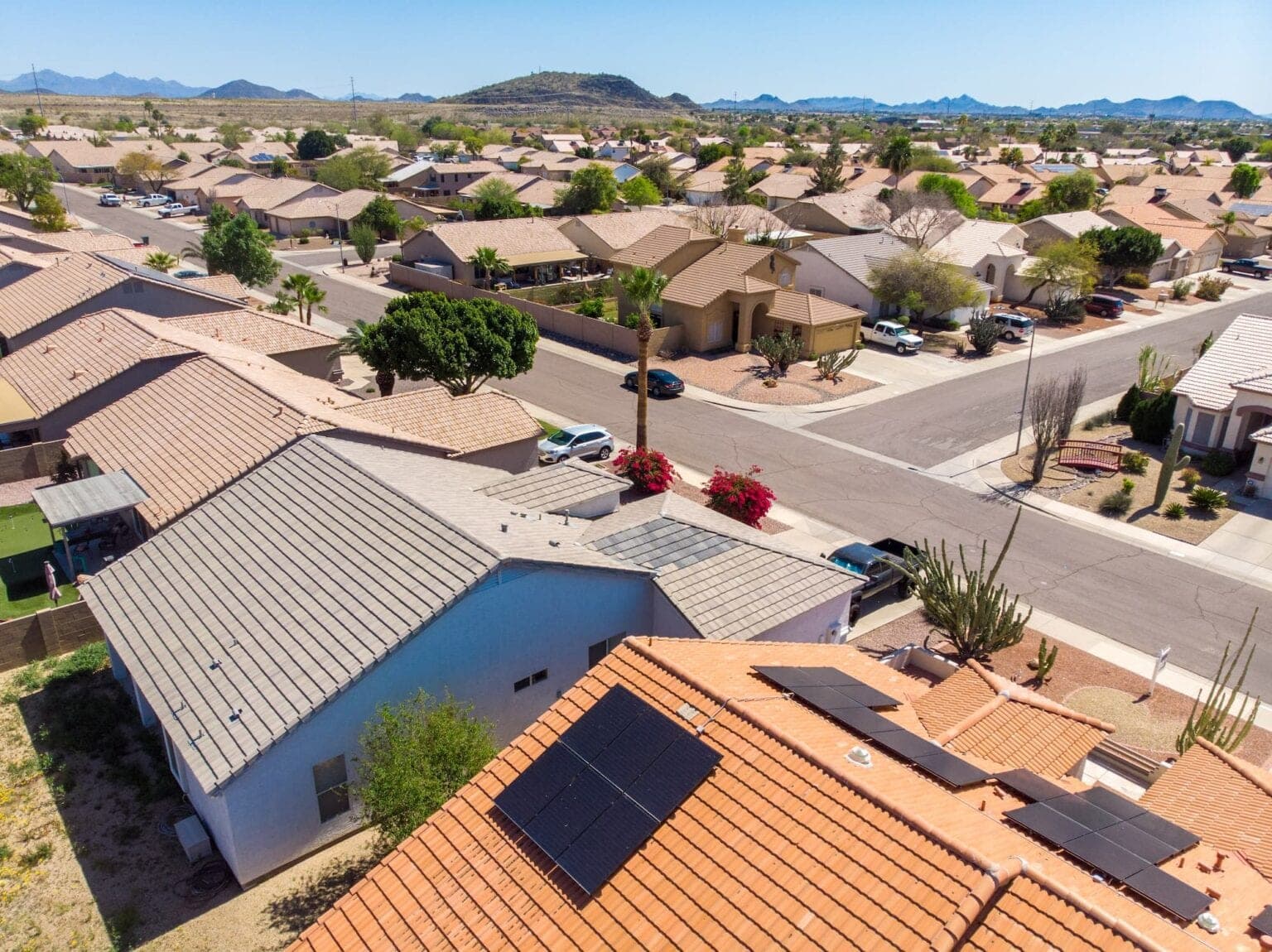
Arizona exposure compresses those timelines. Asphalt shingle roofs here commonly run 15 to 25 years rather than the national figures you'll see quoted. Tile is a different story: the tile itself can last 50 years or more, but the underlayment beneath it is the actual waterproofing layer, and felt underlayment in this climate typically gives out well before the tile does. Plenty of "tile roof leaks" we're called out to are really underlayment leaks under perfectly good tile.
Cracked Flashing
Flashing seals roof joints and edges around chimneys, skylights, and vents. If the flashing is improperly installed, corroded, or cracked, water can penetrate these areas, leading to leaks.
Flashing is where thermal movement does its damage. Every day the roof heats up and expands and every night it cools and contracts, and the metal, the sealant, and the roofing material all move at different rates. Sealant that was fine three summers ago is often cracked and pulling away now.
How Do Drainage Problems Cause Roof Leaks?
Clogged Gutters
Gutters direct rainwater away from your roof. When clogged with debris, water can pool and seep under your roofline, eventually causing leaks.
Arizona adds a wrinkle. A haboob can deposit a heavy layer of fine dust and debris across a roof in minutes, and the next storm washes all of it straight into the gutters, scuppers, and drains. Clearing them after a dust storm, not just seasonally, is what keeps water moving off the roof instead of backing up under the edge.
Ice Dams
In colder climates, ice dams form when snow melts and refreezes at the roof's edge. When this happens, the dam prevents proper drainage, forcing water back under the shingles and into your home.
This one isn't a Phoenix metro concern, but it is real in Arizona's high country, where Flagstaff, Prescott, and the White Mountains see genuine freeze-thaw cycles. If you own a cabin up north as well as a home down here, they need two different maintenance plans. The interesting part is that the fix for ice dams is the same fix as the next item on this list: proper attic ventilation and insulation, so the roof deck stays close to outside temperature.
Which Penetrations and Outside Work Cause Leaks?
Skylight and Vent Problems
Improperly sealed skylights or vents can allow water to seep in, especially during heavy rains. Regularly inspecting these areas can prevent moisture from entering your home.
Rubber pipe boots are the usual offender. Desert sun hardens and splits them, often years before the surrounding roof shows any wear, and the crack sits right at the base of the pipe where you'd never see it from the ground. Skylight curbs and swamp cooler penetrations deserve the same attention every year.
Improper Installation
A poorly installed roof can quickly develop leaks. Common issues include misaligned shingles, inadequate sealing, and missing flashing. To avoid future problems, work with a qualified professional for proper installation.
Ask to see the license before work starts. Ours is Arizona ROC 330901 (CR-42), active, and we're members of the Arizona Roofing Contractors Association. A licensed, insured contractor is also what keeps a manufacturer warranty enforceable, since most system warranties are only issued through approved installers.
Third-Party Damage
Roof damage caused by contractors, such as those installing antennas or solar panels, can leave your roof prone to leaks. Always ensure professionals working on your roof take precautions to avoid damage.
Solar is the big one in Arizona. Racking is anchored through the roof, and every anchor is a penetration that has to be flashed correctly. Add HVAC technicians, satellite installers, and painters, and a lot of feet cross a roof over its life. Tile cracks under foot traffic, so keep a simple log of who has been on your roof and when, and have any new penetration inspected by a roofer afterward.
How Does Poor Ventilation Cause a Roof to Leak?
A lack of proper ventilation traps moisture and heat in your attic, accelerating roof deterioration. Eventually, your worn-out roof will have mold growth, warped materials, and leaks.
Ventilation is a code requirement, not an upgrade. The International Residential Code sets the minimum net free ventilating area at 1/150 of the vented attic area, with a 1/300 allowance permitted when the ventilation is properly balanced, including the condition that between 40 and 50 percent of the required area is provided by upper vents placed no more than 3 feet below the ridge, with the balance at the eaves.
Two things go wrong constantly on Arizona homes:
- Blocked intake. Insulation pushed into the soffits kills the low-side airflow, so the exhaust vents have nothing to pull.
- Unbalanced systems. Exhaust added over the years without matching intake, which can pull conditioned air out of the house instead of moving attic air.
While you're up there, check insulation depth. The Department of Energy recommends attic insulation in the R-30 to R-60 range for climate zone 2, which covers the Phoenix metro, and thin or displaced insulation shows up on your summer power bill long before it shows up on your ceiling.
What Does Monsoon Season Do to a Marginal Roof?
It finds every one of the nine causes above in about ninety minutes. The National Weather Service defines Arizona's monsoon as June 15 through September 30. During that window the valley sees microbursts capable of straight-line winds strong enough to strip roofing material, haboobs that pack every drain and valley with dust, and rainfall intense enough that any drainage restriction becomes standing water.
The practical takeaway is timing. An inspection in May is worth several in September, because in May the problems are still cheap. Small flashing repairs, new pipe boots, cleared drains, and a handful of replaced tiles are routine roof repair and maintenance items. The same defects after two months of storms are drywall, insulation, and framing work.
What Are the Early Warning Signs of a Roof Leak?
Catching a leak early is mostly about knowing where to look:
- Ceiling or wall stains, especially rings that grow after rain
- Bubbling or peeling paint near the top of a wall
- A musty smell in a closet, hallway, or the attic
- Daylight visible through the roof deck from inside the attic
- Granules collecting in gutters or at downspout outlets
- Slipped, cracked, or missing tiles or shingles visible from the ground
- Rusted or lifted flashing around chimneys and skylights
Remember that water travels. The wet spot on your ceiling is downhill from where the water actually got in, sometimes by many feet.
When Should You Call a Roofer?
While these common causes of leaks might be a lot to remember, knowing them can help you address them promptly. Remember to schedule regular roof inspections. An expert can help you clean your gutters, check for damaged shingles and flashing, and ensure proper ventilation. Call sooner rather than later if you see active dripping, a spreading stain, sagging decking, or damage after a storm.
When looking for a roofer to help you maintain your roof, turn to Eco Roofing Solutions, LLC. We're a family-owned company providing residential roofing and commercial services across the Phoenix metro, from our home base in Gilbert out through Mesa, Tempe, Phoenix, and Glendale. Contact us and we'll take a look before the next storm does.