The commercial roofing systems that perform in Arizona all solve the same two problems: they reflect solar energy instead of absorbing it, and they hold together through a large daily temperature swing and a violent monsoon season. TPO, PVC, modified bitumen, metal, and spray polyurethane foam each do that in a different way, and the right pick depends on your deck, your existing insulation, what your building does, and how long you plan to own it. Below is how each one behaves in the Valley, and what to check before you sign anything.
Arizona can experience intense heat, sunlight, and occasional monsoon storms, which can damage roofs. The best commercial roof solutions should offer durability, energy efficiency, and low maintenance. Here are some top roofing options ideal for businesses in Arizona.
Which Commercial Roofing Systems Work Best in Arizona?
1. TPO Roofing
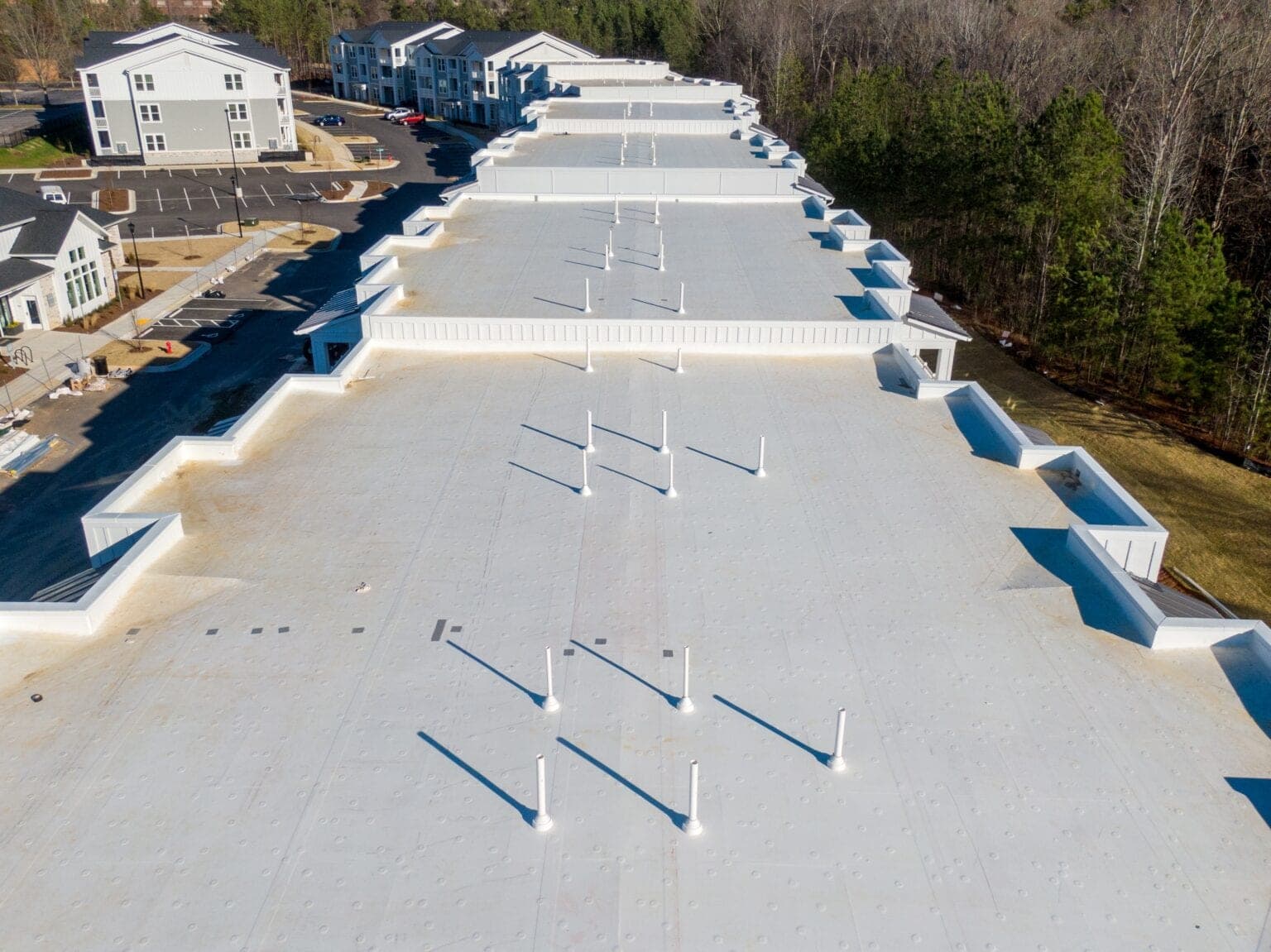
Thermoplastic Olefin (TPO) is an affordable, energy-efficient, and durable roofing choice for businesses. This white, reflective membrane helps reduce cooling costs by reflecting the sun's rays. It also holds up well against UV radiation, chemicals, and punctures. With proper maintenance from expert roofers, TPO can last a long time, typically around 20 to 30 years.
The two variables that separate a good TPO roof from a mediocre one are membrane thickness, measured in mils, and the quality of the hot-air welded seams. Thin membrane over an uneven substrate with rushed welds is where premature failures come from, not the material itself.
2. PVC Roofing
Polyvinyl Chloride (PVC) roofing is similar to TPO. Still, it offers enhanced chemical resistance, making it suitable for restaurants or industrial facilities that release oils or chemicals through vents. Like TPO, it reflects sunlight and helps lower energy bills. It's lightweight, flexible, and fire-resistant, making it a safe and cost-effective choice.
If you run kitchen exhaust, PVC is usually the call. Animal fats and cooking oils will soften a membrane that was not formulated to resist them, and the damage always shows up downwind of the hood.
3. Modified Bitumen Roofing
Modified bitumen is a reliable roofing system that performs well under Arizona's harsh sun. This asphalt-based material is reinforced with polyester or fiberglass and layered for durability. It offers strong resistance to tears, punctures, and extreme temperatures. Modified bitumen can help enhance businesses' energy efficiency when coated with reflective materials.
It is also the system that tolerates foot traffic best. On buildings with a lot of rooftop equipment and frequent HVAC service visits, that durability is worth real money.
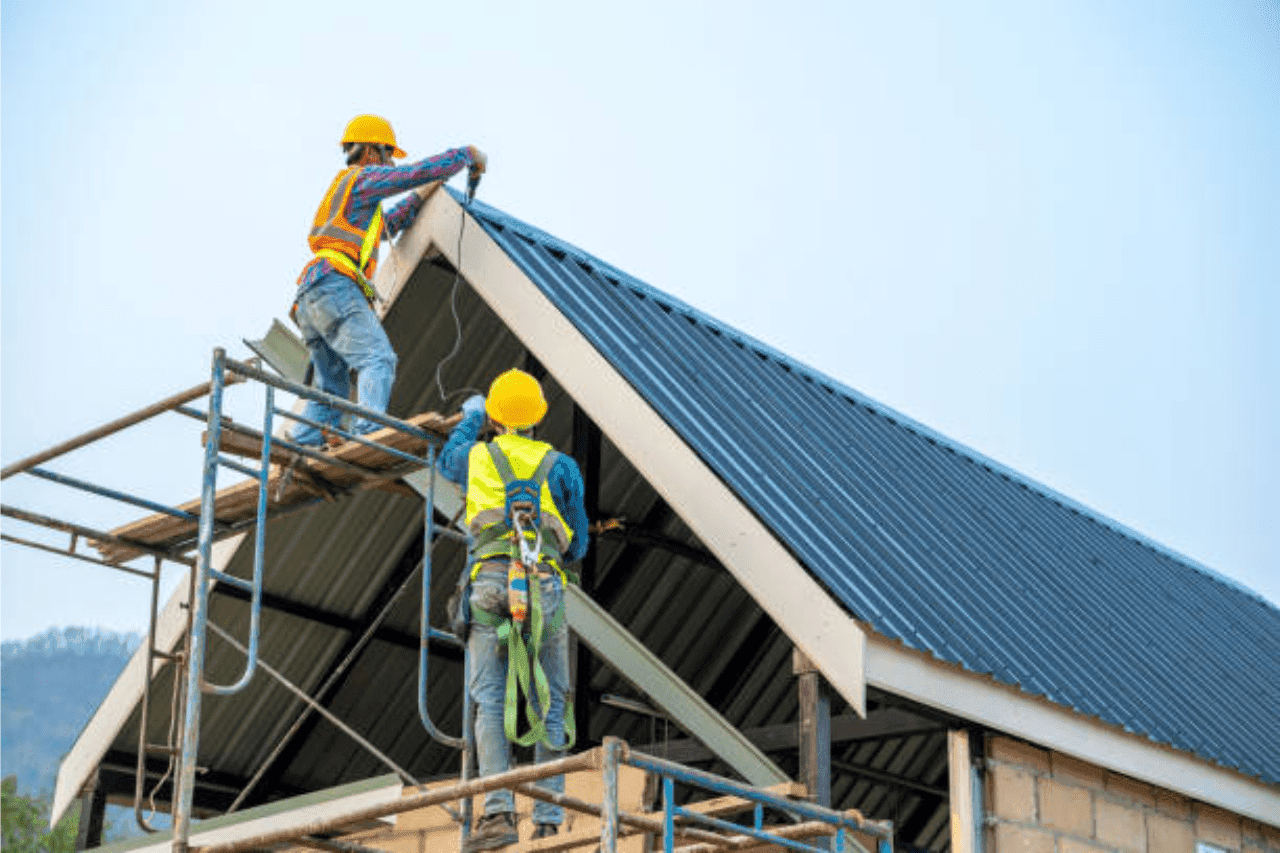
4. Metal Roofing
Metal roofs are known for their longevity and strength. In Arizona, metal roofing systems, often steel or aluminum, are an excellent investment. They reflect sunlight and cool quickly at night, which helps regulate building temperatures. Modern coatings can enhance corrosion resistance and energy efficiency.
Metal is easy to verify before purchase. Most finish manufacturers list their colors in the Cool Roof Rating Council directory with measured solar reflectance and thermal emittance, so you can compare finishes on data rather than on a brochure photo.
5. Foam Roofing
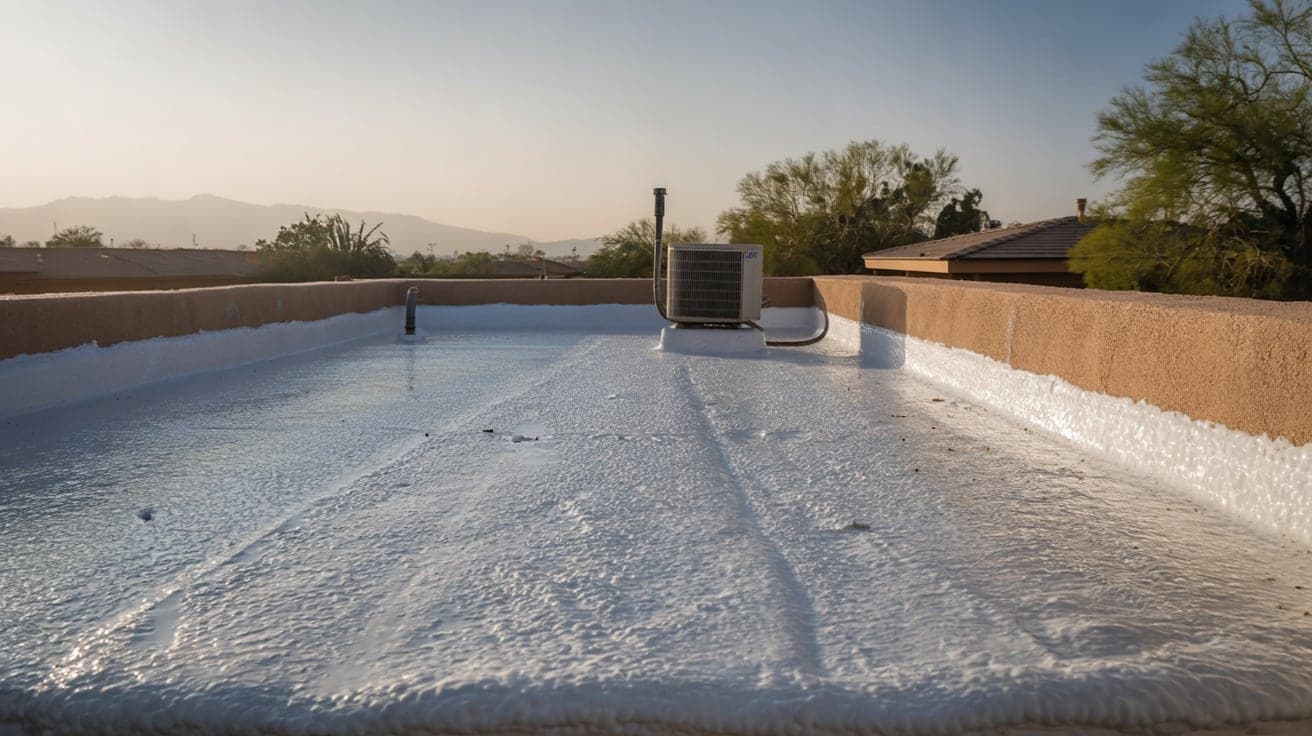
Spray Polyurethane Foam (SPF) roofing is unique because it's sprayed on as a liquid and expands into a foam, creating a seamless, insulating layer. This type of roof is ideal for Arizona because of its exceptional insulation properties, significantly reducing cooling costs. It's also lightweight, waterproof, and easy to maintain with periodic recoating.
The insulation claim is backed by the numbers. The Department of Energy lists closed-cell spray polyurethane foam at roughly R-6.5 per inch, the highest insulating value of anything commonly applied to a commercial roof. Foam also solves drainage problems that other systems cannot, because it can be built up to fill low spots and redirect water toward drains. The protective topcoat is the wear layer and is renewed on a cycle rather than torn off.
How Do These Systems Compare Side by Side?
| System | Surface reflectance | Chemical and grease resistance | Seams | Adds insulation | Best fit |
|---|---|---|---|---|---|
| TPO | High, bright white | Good | Hot-air welded | No | Warehouses, retail, offices with large roof areas |
| PVC | High, bright white | Excellent | Hot-air welded | No | Restaurants, food processing, industrial exhaust |
| Modified bitumen | Moderate, high when coated | Good | Torched or self-adhered laps | No | Roofs with heavy equipment and service traffic |
| Metal | High with a reflective finish | Excellent | Mechanically seamed or fastened | No | Steep-slope commercial, canopies, long-hold assets |
| Spray polyurethane foam | High with reflective topcoat | Good | Seamless | Yes, roughly R-6.5 per inch | Buildings needing drainage correction or added R-value |
A note on published lifespans, because the numbers you find online conflict. InterNACHI's Standard Estimated Life Expectancy Chart lists built-up roofing at 30 years, modified bitumen at 20, EPDM at 15 to 25, and TPO at 7 to 20, while manufacturers of heavier-mil modern membranes will quote you considerably longer. Both can be true. Membrane thickness, weld quality, substrate prep, and whether anyone maintains the roof move the outcome far more than the acronym on the invoice does.
What Does Arizona's Climate Actually Do to a Commercial Roof?
Two forces, working in opposite seasons.
Heat and thermal cycling
The Department of Energy notes that a conventional roof can reach 150 degrees or more on a sunny summer afternoon, while a reflective roof under the same conditions can stay more than 50 degrees cooler. Every day your roof heats hard and then dumps that heat after sundown, and every cycle expands and contracts the membrane. The movement concentrates at seams, flashings, curbs, and penetrations, which is exactly where roofs open up.
Monsoon
The National Weather Service defines Arizona's monsoon season as June 15 through September 30. NWS Phoenix describes monsoon thunderstorms as bringing damaging winds, torrential rainfall, frequent lightning, and dust storms, with downburst winds reaching 50, 60, and 70 mph and rare events exceeding 100 mph. Haboobs can drop visibility below a quarter mile.
For a commercial building, that translates to a short list of vulnerabilities:
- Edge metal and parapet caps, which take the highest uplift pressure.
- Rooftop equipment curbs, where wind works fasteners loose over time.
- Drains and scuppers, which blowing dust and debris will clog right before the heaviest rain of the year.
- Loose rooftop items, which become projectiles that puncture the membrane.
Do I Have to Replace, or Can I Restore?
Plenty of Valley buildings get sold a full tear-off when the deck and insulation are still fine and only the surface has given up. A restoration coating is worth evaluating first.
The honest test is straightforward. We take core cuts and run a moisture survey. If the insulation is dry and the deck is sound, a coating system can renew the roof without the disruption, the landfill cost, or the exposure risk of a tear-off. If the insulation is wet, it comes out, because a coating seals moisture in rather than drying it out.
Coating chemistries are covered by ASTM standards worth knowing by name:
- ASTM D6083 covers liquid-applied acrylic coatings used in roofing. Water-based, highly reflective, cost-effective over large fields.
- ASTM D6694 covers liquid-applied silicone coatings used in spray polyurethane foam roofing systems. Strong ponding-water resistance, which is why silicone is the common topcoat over foam.
Either way, the prep does the work. Seams, flashings, pitch pans, and splits get repaired and reinforced first; the field coat goes on last. Our commercial roofing repair and maintenance crews handle that detail work on buildings from Gilbert out to Tempe and across the metro.
Does My New Roof Need to Meet a Cool Roof Requirement?
Possibly, and it is worth confirming before you spec anything. The 2021 International Energy Conservation Code includes a cool roof option in Table C402.3 for low-slope roofs in Climate Zones 0 through 3, which covers the Phoenix metro. The option calls for a minimum three-year aged solar reflectance of 0.55 together with a minimum three-year aged thermal emittance of 0.75, or a minimum three-year aged Solar Reflectance Index of 64.
Notice that all three values are aged, not initial. Dust dulls every roof in this valley, and the aged number is the one that reflects reality. The Cool Roof Rating Council publishes both initial and three-year aged values in its Rated Products Directory.
One label to disregard: the EPA sunset its ENERGY STAR roof products program effective June 1, 2022. No roofing product carries that mark legitimately anymore, so the CRRC directory is the reference to ask for.
What Should You Look for in a Roofing Service?
Consider the following when choosing a commercial roofing service for your business:
- Energy Efficiency: Look for reflective or insulating materials to decrease cooling costs.
- Durability: Choose materials that can handle UV rays and heavy rains.
- Maintenance: Opt for low-maintenance systems to reduce long-term costs.
- Building Use: Some materials perform better depending on the type of business and exposure to chemicals or foot traffic.
A few more that will save you trouble:
- A verifiable Arizona license. Every contractor's ROC license can be looked up. Ours is ROC 330901 (CR-42), active.
- Local track record and trade membership. We are a member of the Arizona Roofing Contractors Association for both residential and commercial work.
- A written scope that names products and thicknesses. "Install new TPO" is not a scope. Mil thickness, attachment method, insulation type, and edge metal detail are.
- A maintenance plan, not just an install. Two inspections a year, before and after monsoon, is what keeps a warranty intact and a roof out of trouble.
Get the Best Commercial Roof Solutions Today
Arizona's climate demands roofing systems that withstand high heat, sun exposure, and occasional storms. TPO, PVC, modified bitumen, metal, and foam roofing are strong options for business owners.
Eco Roofing Solutions is a family-owned contractor working out of 75 W Baseline Rd Suite 19 in Gilbert, serving commercial clients across the Phoenix metro including Phoenix, Mesa, Glendale, and Tempe. Owner and President Eric Perry is a third-generation roofer with more than 25 years of hands-on experience, and that is the perspective we bring to a roof survey.
If you need a specialist to help you address your commercial roofing issues, reach out and we will walk the roof and give you the options in plain language.