Roof maintenance is the cheapest protection you can buy for an Arizona roof. The National Roofing Contractors Association recommends inspecting a roof at least twice a year, preferably in spring and fall, and again after any major weather event. In the low desert that schedule matters more than it does almost anywhere else, because relentless UV, extreme summer heat, and monsoon wind and rain all work on the same roof in the same twelve months.
It's no secret that roofs are one of the biggest investments when it comes to owning a home. After all, ensuring a quality roof guarantees protection for you and your family from outside elements. Though most roofs have a 20-30 years lifespan, their lifespan is only guaranteed if they receive regular maintenance.
If you haven't scheduled a roof maintenance service in a few years or you're still on the fence about requesting one, here is what upkeep buys you, and what skipping it costs.
When Should Roof Maintenance Be Scheduled in Arizona?
Twice a year, tied to the desert calendar rather than the national one. The National Weather Service defines Arizona's monsoon season as June 15 through September 30, so the two natural service windows are late spring, before the first storms, and October, after the last of them.
The spring visit is the important one. Monsoon storms produce microbursts with straight-line winds strong enough to strip roofing material, and haboobs that drive fine dust into every seam, valley, and drain on the roof. A flashing that is merely loose in May is an open seam in July.
Add an unscheduled inspection any time one of these happens:
- A named storm, microburst, or hail event passes over your neighborhood
- You see tiles or shingles in the yard or driveway
- A ceiling stain, musty smell, or bubbling paint appears indoors
- Another trade has been on the roof for solar, HVAC, satellite, or antenna work
- You are buying or selling the house
What Does Regular Maintenance Actually Prevent?
As shingles break or tiles crack due to the constant weather changes, it deteriorates your roof and ultimately leads to leaks into your home. Though leaks may be visible right away, standard roof maintenance tips suggest inspecting your roof once or twice a year to prevent moisture from entering your walls.
That is the core of it. Water almost never enters through the middle of a healthy field of tile or shingle. It enters at the details, and the details are exactly what maintenance addresses:
- Penetrations. Plumbing vents, exhaust flues, and swamp cooler or HVAC curbs. Rubber pipe boots dry out and split in desert sun long before the roof around them fails.
- Flashing and transitions. Walls, chimneys, skylights, and valleys, where two planes meet and sealant has a hard job.
- Drainage. Clogged gutters, blocked scuppers, and debris dammed behind a parapet turn a two-hour storm into standing water.
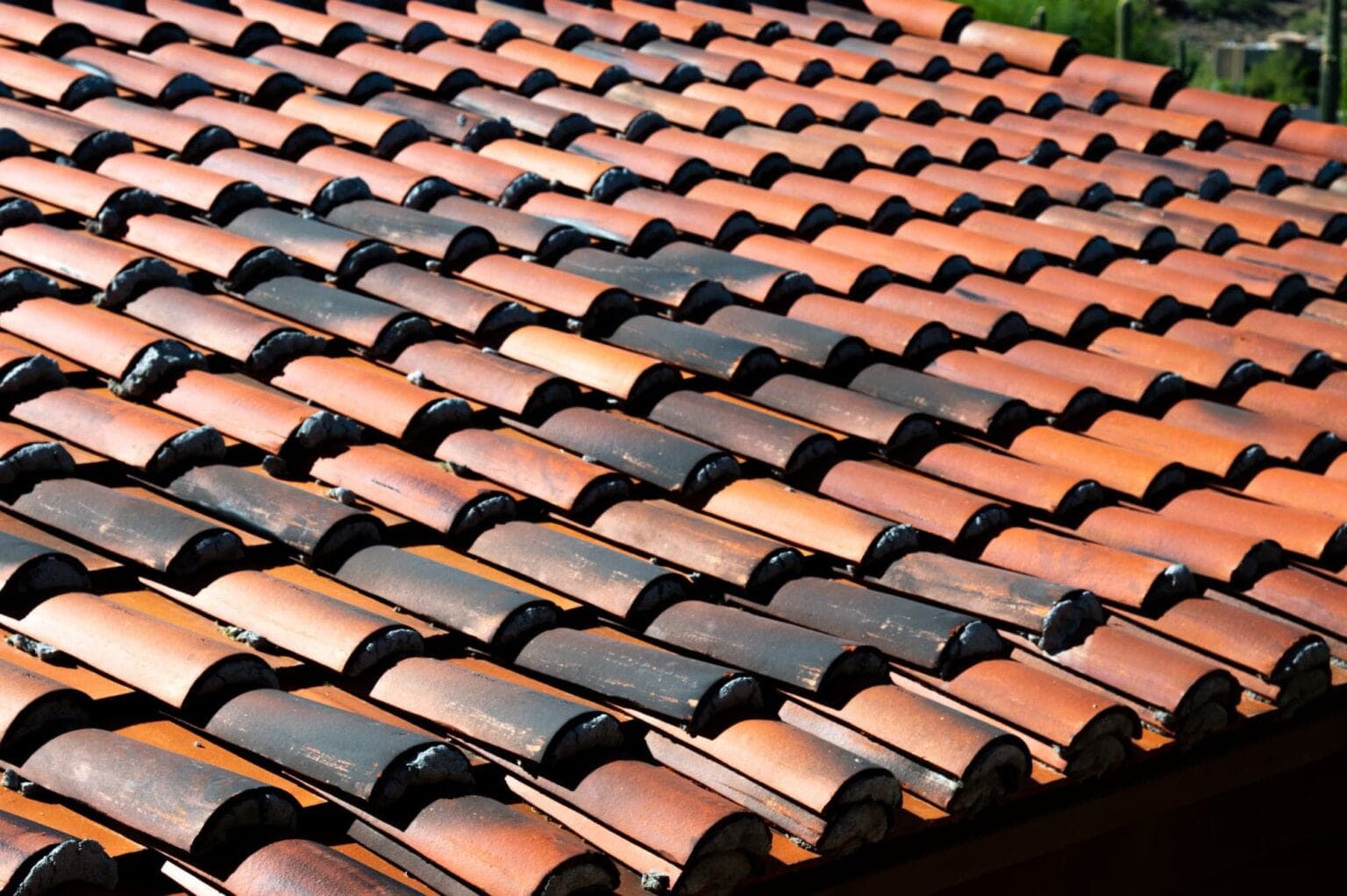
- Displaced material. A single slipped tile exposes the underlayment beneath it, and the underlayment is what is actually keeping your house dry.
Does Roof Maintenance Really Save Money?
Yes, and the math is not subtle. A full roof replacement is one of the largest single expenses in owning a home, and water damage repairs to drywall, insulation, and framing land on top of it. Properly maintaining your roof spares you both. Sealing a split pipe boot is a small line item. Replacing the ceiling, insulation, and framing under that same boot after two seasons of quiet leaking is not.
There is a second, less obvious saving. A roof that lets heat and moisture into the attic makes your air conditioner work harder every summer afternoon. Maintenance visits catch blocked soffit vents, crushed insulation, and failed attic ventilation, all of which show up on your utility bill long before they show up on your ceiling.
Does a Maintained Roof Improve Curb Appeal and Resale?
Whether you're planning on selling your home soon or considering it for the future, keeping your roof in the best shape is always a great idea. Missing shingles or cracked tiles can hinder your home's aesthetics, so make sure to schedule a roof maintenance service to keep your home looking beautiful all year long.
It also shortens the sale. Arizona buyers order roof certifications as a matter of routine, and a documented maintenance history answers the inspector's questions before they're asked. A stack of dated service reports is worth more at the negotiating table than a fresh coat of anything.
How Long Should My Roof Last in the Arizona Heat?
Desert exposure shortens most published lifespans. Intense UV breaks down the asphalt binder in shingles, and daily thermal cycling works on every fastener and seam. These are the ranges the industry generally reports for low-desert Arizona service:
| Roof system | Typical Arizona service life | What maintenance protects |
|---|---|---|
| Asphalt shingle | 15-25 years | Granule loss, curling, lifted tabs, sealant strips |
| Concrete or clay tile (tile itself) | 50+ years | Cracked and slipped tiles, mortar at hips and ridges |
| Tile underlayment (the real waterproofing) | Felt roughly 15-20 years; synthetic longer | The layer that ends the roof's life, not the tile |
| Spray polyurethane foam (SPF) | 20-50 years with recoating | Coating thickness, UV protection, pinholes |
| TPO, PVC, or EPDM single-ply | 20-30 years | Seams, terminations, drains, ponding |
The tile row is the one that surprises people. The tile can outlive the house while the underlayment beneath it quietly reaches the end of its life. That's why an Arizona tile roof needs a trained eye on it, not just a glance from the street. Our residential roofing repair and maintenance crews check underlayment condition at valleys, eaves, and penetrations, where it fails first.
What Does a Professional Maintenance Visit Include?
A real maintenance service is more than a walk-around. Expect the roofer to:
On the roof
- Clear debris from the field, valleys, gutters, scuppers, and drains
- Inspect and reseal flashing at walls, chimneys, skylights, and curbs
- Replace failed pipe boots and deteriorated sealant
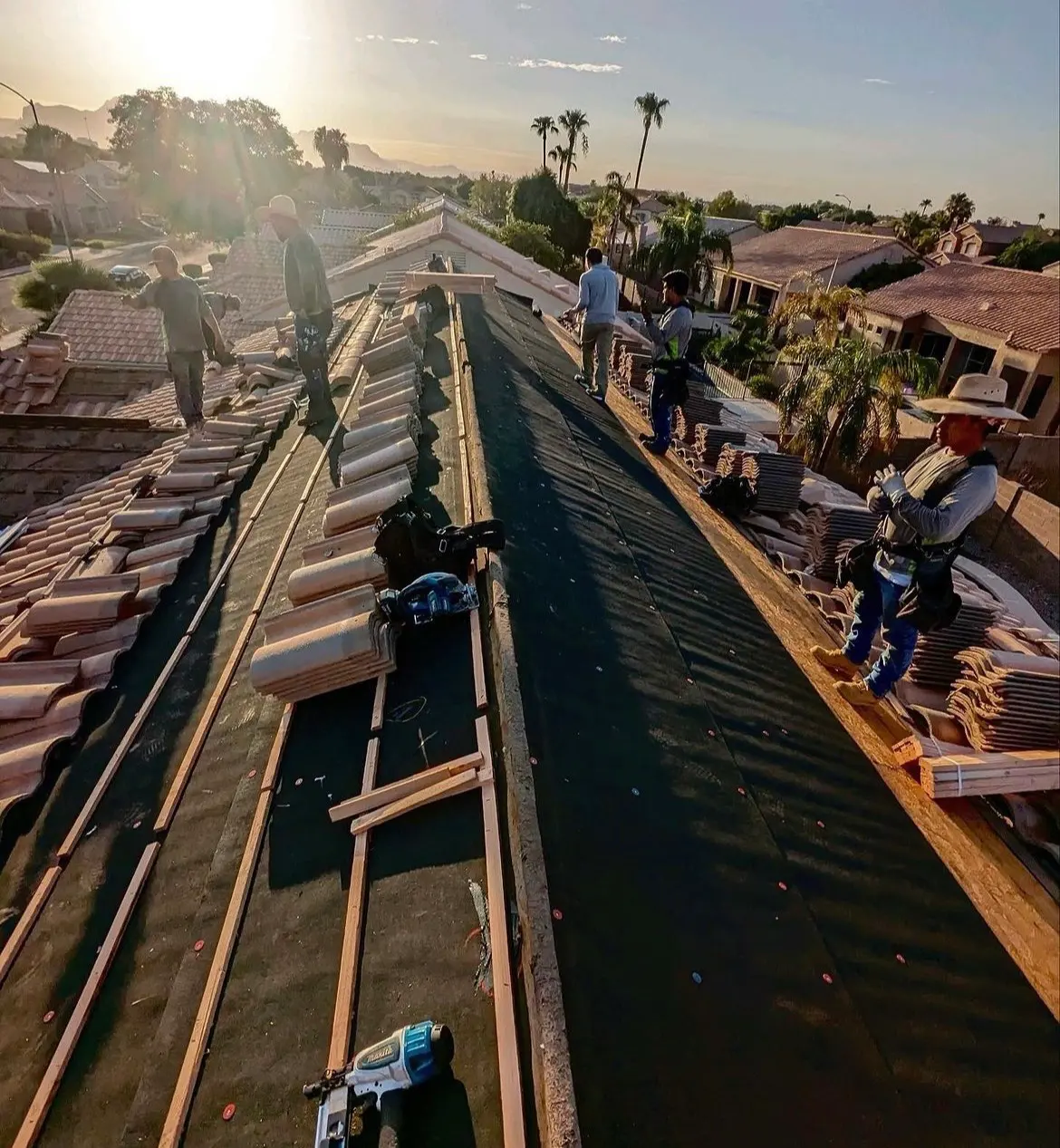
- Reset or replace cracked, slipped, and broken tiles or shingles
- Check ridge and hip mortar or foam, and fastener condition
- On low-slope areas, look for ponding, seam separation, and blistering
Inside and underneath
- Check attic ventilation intake and exhaust for blockage
- Look for daylight, moisture staining, and mold on decking and framing
- Confirm insulation is in place and not blocking soffit vents
On paper
- Dated photos of every condition found
- A written report separating "fix now" from "watch this"
- A record you can hand to a manufacturer, an insurer, or a buyer
What Can I Do Between Professional Visits?
Plenty, all of it from the ground. Keep gutters and downspouts clear, especially after a dust storm. Trim tree limbs so they aren't scraping the roof surface or dropping debris into valleys. After heavy rain, walk your ceilings and look in the attic with a flashlight for fresh staining. From the driveway with a pair of binoculars, look for slipped tiles, missing shingles, and anything sitting where it shouldn't be.
What you should not do is walk the roof. Tile cracks under foot traffic, and shingles that have baked through a Phoenix summer are brittle. The most common damage we repair on otherwise healthy roofs was caused by someone on top of it who didn't need to be. If something looks wrong, that's what roof repair and maintenance service calls are for.
Extend Your Roof's Lifespan Today
The most important thing to keep in mind is that you need to work with professionals to ensure long-lasting results. At Eco Roofing Solutions, LLC, we're your trusted ally when it comes to all things roofing. We're family owned, licensed by the Arizona Registrar of Contractors (ROC 330901, CR-42), and members of the Arizona Roofing Contractors Association, and we'll provide you with the best roof repair and maintenance in Mesa, AZ to keep your roof in tip-top shape.
Rest easy knowing that we're a roofing company that uses only the most reliable and eco-friendly materials to give you the best results while protecting the environment. Regardless of the complexity or size of your roof, we've got you covered. Get in touch with our experienced team to get on the schedule before the next season turns.