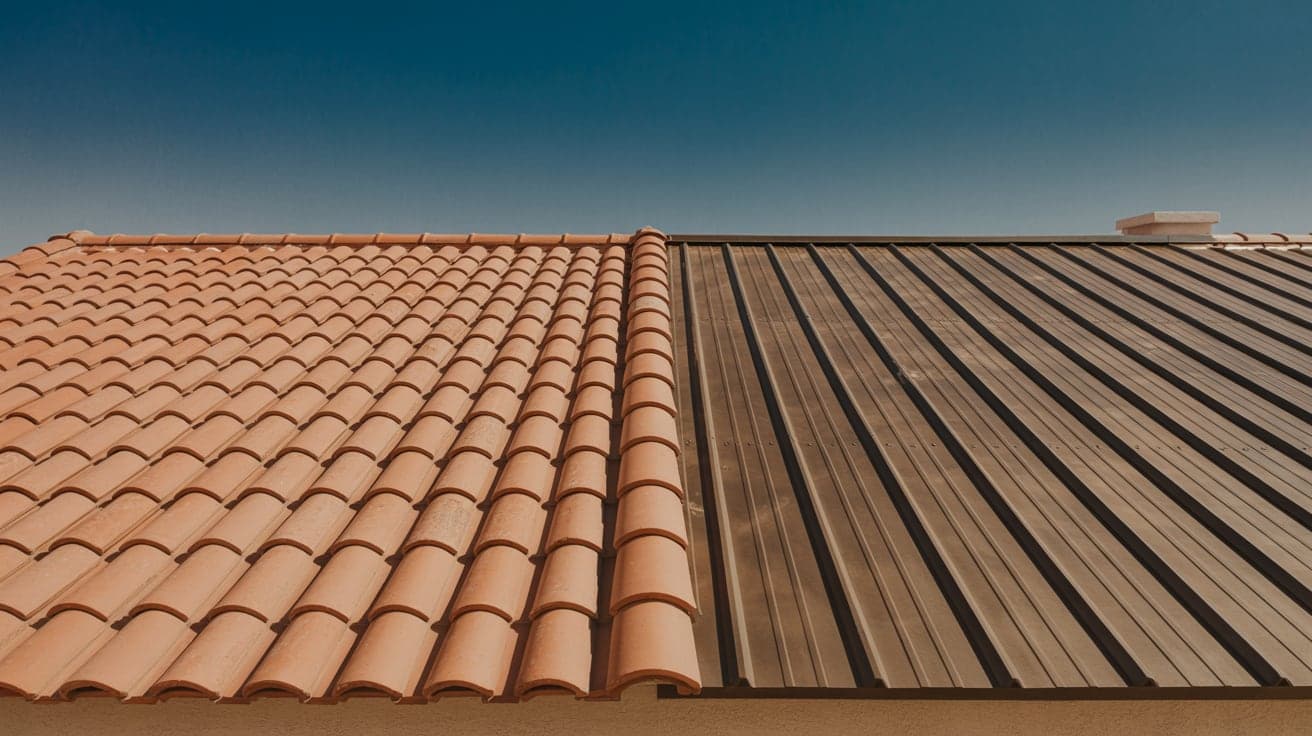
Both metal and tile will outlast an asphalt shingle roof in the Arizona desert, so the real question is which trade-offs suit your house. Metal wins on weight, wind performance, and speed of installation. Tile wins on thermal mass, curb appeal in Southwestern neighborhoods, and sheer longevity of the material itself. For most Valley homes the deciding factors end up being what the framing can carry, what the neighborhood expects, and how long you plan to own the house.
Living in the harsh desert environment of Arizona means your home needs a roof that can withstand extreme temperatures and seasonal monsoons without failing under the constant pressure of the sun. At Eco Roofing Solutions, we frequently help local homeowners decide between the two most popular premium options: metal and tile. While both materials provide vastly superior protection compared to standard shingles, understanding the specific advantages of each will help you make a wise investment that protects your property for many decades to come.
How well does metal roofing hold up in Arizona?
The resilience and longevity of metal roofing in Arizona are major selling points, as the material handles intense solar radiation during the peak of summer so effectively. When you look at the pros and cons of metal roofing, the primary benefit is its ability to reflect heat away from the structure, keeping your monthly cooling costs significantly lower. These systems are also incredibly lightweight and durable, often lasting 50 years or more with very little homeowner maintenance required, compared to traditional roofing materials.
A few technical points are worth understanding before you assume all metal performs the same way.
The coating does the work, not the metal
Bare, unpainted metal reflects sunlight well but sheds absorbed heat poorly. The Cool Roof Rating Council, the third-party body that measures and publishes solar reflectance and thermal emittance values for roofing products, makes the distinction clear: reflectance is how much solar energy bounces off the surface, and emittance is how well the material releases the heat it does absorb. A factory-applied cool coating is what gives a metal roof a high emittance value. The CRRC also points out that color alone is not a reliable indicator of performance, which is why the rated products directory exists.
Wind, fire, and impact
- Wind. Standing seam systems, where the fasteners are concealed in the seam rather than driven through the face of the panel, are the strongest configuration against uplift. Manufacturer wind ratings on engineered standing seam assemblies commonly run well above 100 miles per hour.
- Fire. Class A is the highest roof covering fire classification, and metal assemblies routinely achieve it. That matters on the desert fringe of the Valley.
- Impact. UL 2218 rates impact resistance from Class 1 to Class 4, with Class 4 the toughest. Many metal products carry Class 4, which is relevant for both hail and the debris a microburst throws around.
Weight
Metal is by a wide margin the lighter of the two systems. On a re-roof over existing framing that was never designed for tile, metal removes the structural question entirely.
Why do tile roofs remain the Southwestern standard?
The timeless appeal and performance of tile roofing remain staples of Southwestern architecture due to the natural insulation and durability provided by high-quality clay and concrete materials. Many residents choose tile roofing, which Arizona homes are famous for, because its high thermal mass helps regulate indoor temperatures throughout the day-night cycle. While these tiles are significantly heavier than metal and require a strong structural foundation for a safe installation, they offer a classic aesthetic that perfectly matches the unique desert landscape of our region.
There is measured science behind the thermal mass argument. Oak Ridge National Laboratory, working with Lawrence Berkeley National Laboratory, studied tile roofs with an air channel underneath the tile and found the combination of thermal mass and that sub-tile airspace reduced peak heat transfer through the roof deck at solar noon by roughly 70 percent compared with a direct-nailed asphalt shingle roof. Deck venting alone accounted for about a 50 percent reduction in heat reaching the conditioned space. In plain terms, the gap between the tile and the deck is doing real work, not just holding the tile up.
The part homeowners miss: the underlayment
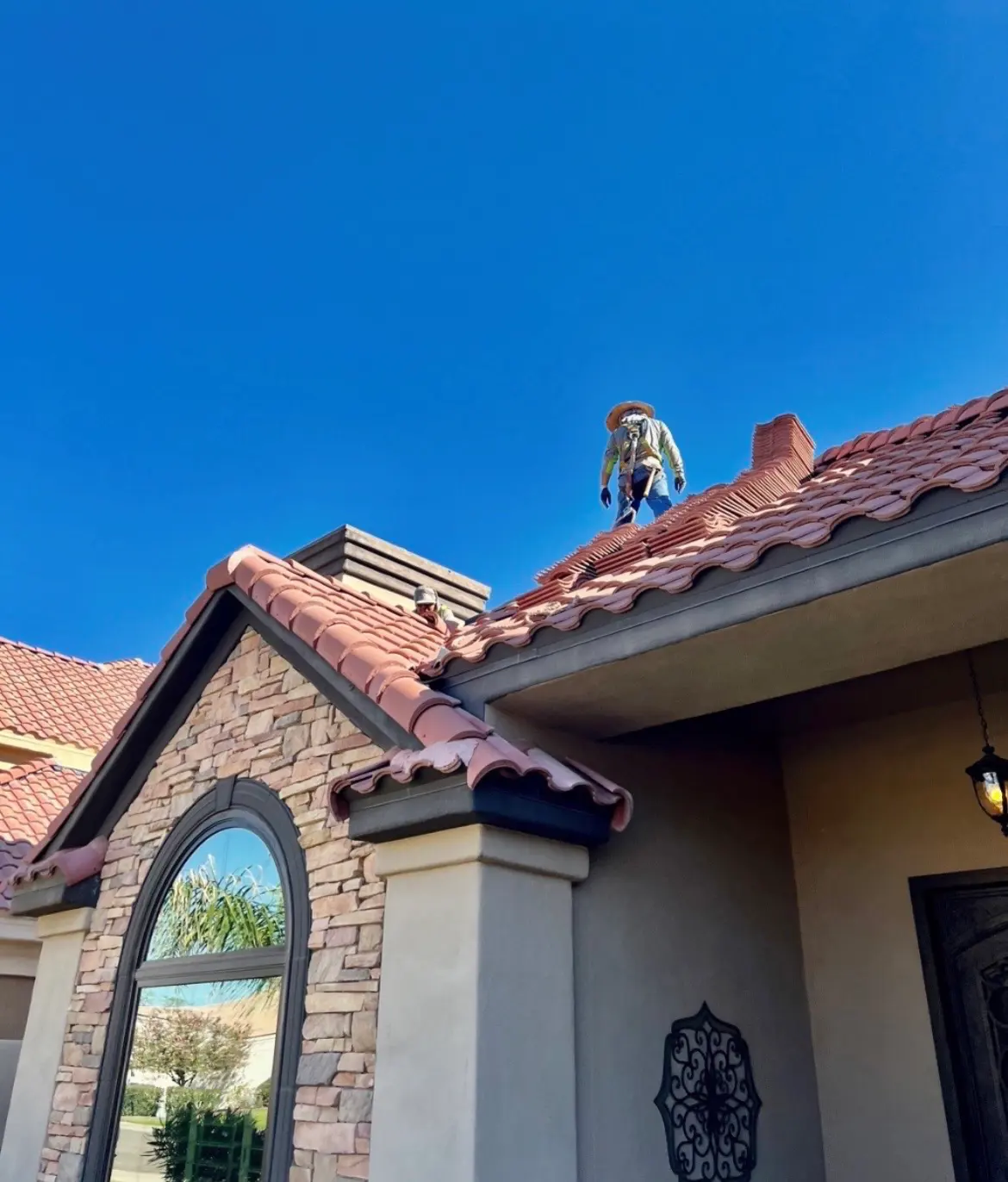
The tile is not what keeps water out. The underlayment beneath it is. Tile is a durable, UV-blocking, wind-shedding cover for a waterproofing membrane that has a shorter life than the tile above it. That is why a forty-year-old Valley tile roof can look flawless from the curb and still leak at every penetration, and why so much of our residential roof repair and maintenance work on tile homes is a lift-and-reset with new underlayment rather than new tile.
Metal vs. tile at a glance
| Factor | Metal roofing | Tile roofing (concrete or clay) |
|---|---|---|
| Typical service life | 40-70 years | 40-50+ years concrete, longer for clay |
| Weight on the structure | Light; rarely needs reinforcement | Heavy; framing must be evaluated |
| What fails first | Fasteners, sealants, coating wear | The underlayment beneath the tile |
| Heat strategy | Reflect and re-emit at the surface | Thermal mass plus a vented air channel |
| Monsoon wind | Excellent with concealed-fastener systems | Good; individual tiles can slide or lift |
| Blowing dust and debris | Very good; Class 4 impact products available | Very good against abrasion, brittle to impact |
| Individual repairs | Panel-level, more involved | Tile-by-tile, straightforward |
| Neighborhood fit | Modern, ranch, and contemporary homes | The Southwestern default; HOA-friendly |
| Recyclability | High; metal is widely recycled | Long life, inert materials |
Which one actually keeps a Phoenix house cooler?
This is the question homeowners ask most, and the honest answer is that both can perform well when the whole assembly is right.
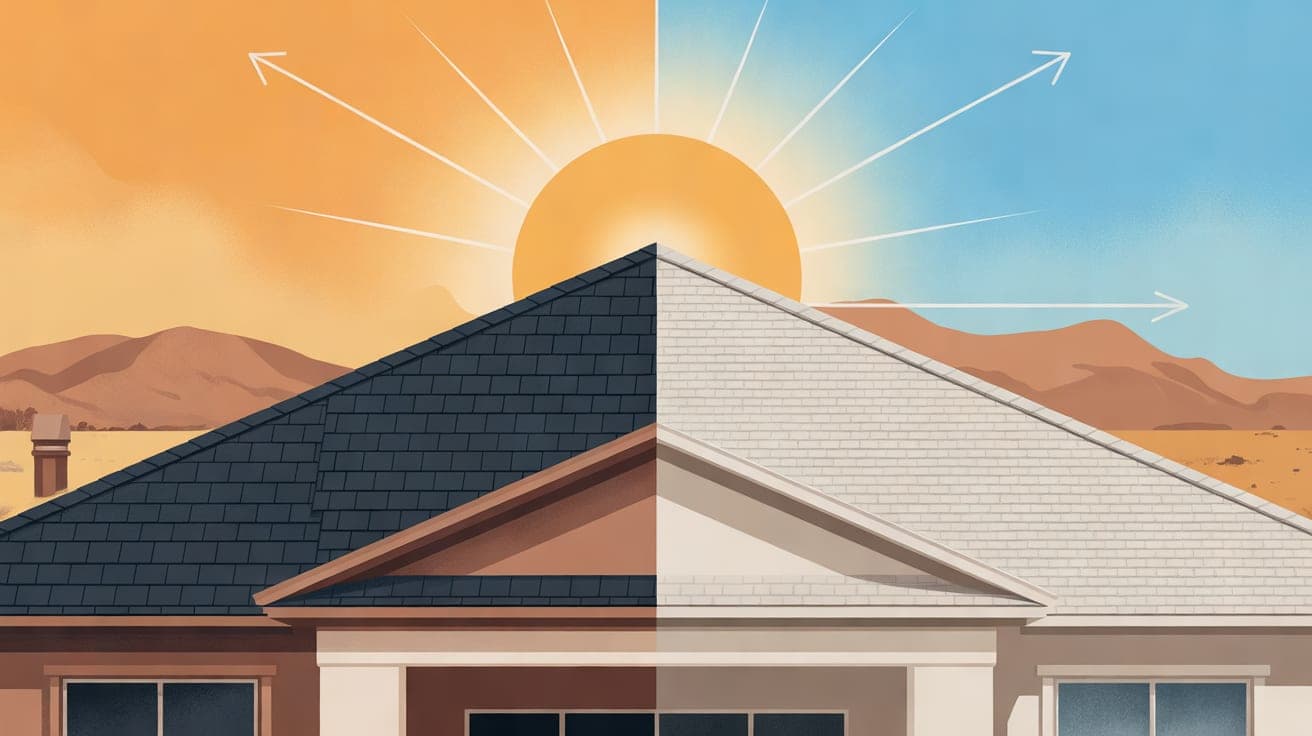
The Department of Energy notes that a conventional roof can reach 150 degrees or more on a sunny summer afternoon, and that a reflective roof surface can stay more than 50 degrees cooler under the same conditions. The Cool Roof Rating Council reports average cooling cost savings for cool roofs in the 7 to 15 percent range. Metal gets there by reflecting and re-emitting at the surface. Tile gets there partly through reflectance and partly through the vented gap and thermal mass described above.
What decides the outcome is usually everything under the roof:
- Attic ventilation. The International Residential Code sets a baseline of 1 square foot of net free ventilating area for every 150 square feet of attic space, with a 1:300 allowance when the required venting is properly divided between the upper and lower portions of the attic.
- Attic insulation. ENERGY STAR recommends roughly R-49 for an uninsulated attic in Climate Zone 2, which covers the Phoenix metro, and about R-38 when adding over 3 to 4 inches of existing insulation. Plenty of Valley attics fall short.
- Air sealing. Gaps at can lights, top plates, and duct chases move more heat than most people assume.
Choosing a premium roof and leaving an under-ventilated, under-insulated attic underneath it wastes most of the benefit either material can deliver.
How does each system handle monsoon storms?
The National Weather Service defines Arizona's monsoon season as June 15 through September 30. Microbursts produce localized downdraft winds the agency describes as commonly reaching 50, 60, and 70 miles per hour, and Phoenix typically sees one to three dust storms each summer.
Metal does well here. Concealed-fastener standing seam has no exposed penetrations across the field for wind to work on, and panels shed wind-driven rain quickly. The failure points are almost always at the edges, the ridge, and any exposed fasteners on older through-fastened panels.
Tile does well too, with a different weakness. Wind rarely destroys tile; it slides and lifts individual pieces, especially at hips, rakes, and ridges. Wind-driven rain can then push water sideways under displaced tile and straight onto an underlayment that may already be aged. After every significant storm, the tile roofs we inspect across the Valley show the same short list: displaced field tile, cracked hip and ridge, and damaged mortar.
Either way, a post-storm inspection is worth doing, whether you are protecting a house or a facility. Our commercial roofing crews run the same post-monsoon checks on flat and low-slope buildings.
What should I actually consider before choosing?
Work through these in order and the answer usually presents itself.
- Can the framing carry tile? Tile weighs several times what a shingle roof weighs. If your house was framed for shingles, tile requires a structural evaluation and possibly reinforcement. Metal does not.
- How long will you own the home? Both systems outlive a typical ownership period. If you plan to sell within a decade, weigh curb appeal and neighborhood expectations more heavily than lifespan.
- What does the neighborhood look like? In most Valley subdivisions tile is the visual default and HOAs often have opinions. Metal reads modern and suits ranch, contemporary, and custom homes well.
- What is your maintenance appetite? Tile invites periodic tile replacement and one underlayment renewal partway through its life. Metal asks for less frequent attention focused on sealants, fasteners, and flashings.
- What is the existing roof telling you? If your current tile roof is only failing at the underlayment, a lift and reset may get you decades more without changing materials at all.
Weighing the costs and environmental impact
When comparing metal roof vs tile roof costs, it is important to consider the long-term value and energy efficiency of each system rather than focusing solely on the initial installation price. Both materials are highly sustainable and provide long-lasting security against the intense weather patterns we face in the desert every year, without compromise.
The cost drivers worth asking about on any bid are roof complexity and pitch, tear-off and disposal of the existing system, underlayment specification, any required structural work for tile, and the flashing and edge metal details, which is where most premature failures start regardless of material.
Getting a recommendation for your specific house
Comparison articles only take you so far, because the right answer depends on your framing, your pitch, your attic, and what your current roof is actually doing. Eco Roofing Solutions is family-owned, holds Arizona ROC license 330901 (CR-42), active, and belongs to the Arizona Roofing Contractors Association. Owner and president Eric Perry is a third-generation roofer with over 25 years of hands-on experience.
For a straightforward look at your options, browse our residential roofing services or see what we handle across Gilbert and the surrounding Valley. When you are ready to find the perfect fit for your home and personal style, please reach out to Eco Roofing Solutions to schedule your professional roofing consultation today.
Image credit: Wongsakorn 2468