The materials that hold up best in Mesa are the ones that reflect solar energy rather than absorb it, and that tolerate a hundred-plus degree daily temperature swing without fatiguing. For steep-slope homes, that generally means concrete or clay tile over quality underlayment, or coated metal. For flat and low-slope sections, spray polyurethane foam and reflective single-ply membranes like TPO are the workhorses.
Mesa, Arizona, is known for its beautiful sunshine, but those intense summers can be brutal on your roof. Choosing the right roofing material is crucial for protecting your home and reducing your energy bills. At Eco Roofing Solutions, we understand the unique challenges of the Mesa climate, and we're here to help you make the best choice for your home.
Why Is Mesa Roofing So Challenging?
Mesa roofs face a constant barrage of intense heat, UV radiation, and occasional monsoon storms. This can lead to:
- Heat Damage: Causing cracking, warping, and premature aging of roofing materials.
- Increased Energy Bills: As your AC works harder to combat heat penetrating through the roof.
- Roof Leaks: From expansion and contraction due to temperature fluctuations and storm damage.
The storm half of that equation has a calendar. The National Weather Service defines Arizona's monsoon season as June 15 through September 30, and its Phoenix office lists strong thunderstorms and blowing dust among the season's primary hazards. Outflow winds from a collapsing storm test fasteners, edge metal, and every flashing detail on the roof at once, usually with no warning.
The National Roofing Contractors Association is direct about the underlying issue: how long a roof actually lasts is determined by local climate and environmental conditions, design, material quality, workmanship, and maintenance. In Mesa, the climate variable is doing more work than it does almost anywhere else in the country.
What Actually Makes a Roofing Material "Cool"?
Two measurable properties, and neither one is color.
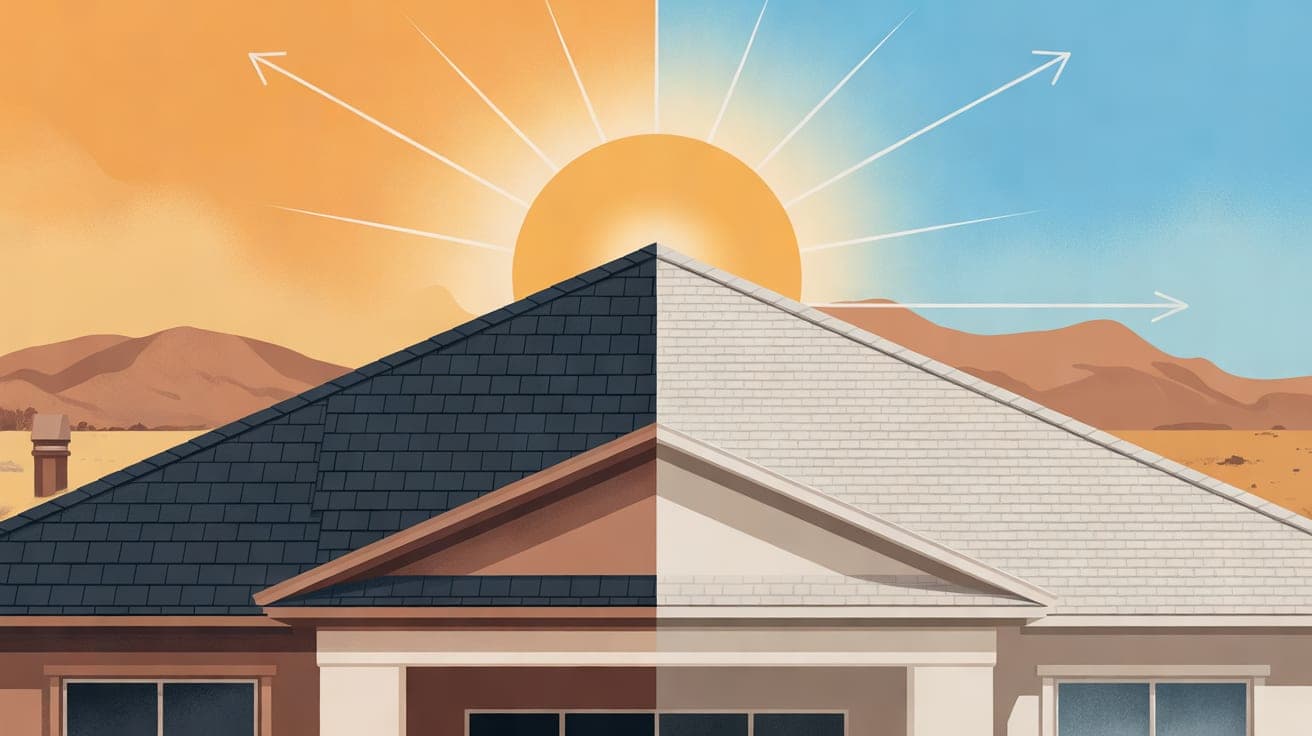
The Cool Roof Rating Council rates roofing products on solar reflectance, the fraction of solar energy the surface bounces back, and thermal emittance, how efficiently the surface sheds the heat it does absorb. Both are measured on a scale from 0 to 1, where 1 means 100 percent reflective or emissive. Together they can be used to calculate a product's Solar Reflectance Index in accordance with ASTM E1980.
The difference is not trivial. ENERGY STAR notes that on a typical summer afternoon, a clean white roof reflecting 80 percent of sunlight will stay about 50°F cooler than a gray roof reflecting only 20 percent. The EPA reports that cool roofs can reduce peak cooling demand by 11 to 27 percent in air-conditioned residential buildings.
And you do not have to live under a white roof to get the benefit. The CRRC points out that "cool color" products use darker pigments engineered to stay highly reflective in the near-infrared part of the solar spectrum, which is where a large share of the sun's energy sits. That is how a desert-tan tile or a bronze metal panel can still carry a respectable reflectance rating.
When you get a quote, ask for the CRRC-rated solar reflectance and thermal emittance of the specific product. Those numbers are published, and any contractor working in this climate should be able to hand them to you.
What Are the Top Roofing Materials for Mesa Homes?
Fortunately, several roofing materials are designed to withstand the Arizona climate. Here are some of the best options:
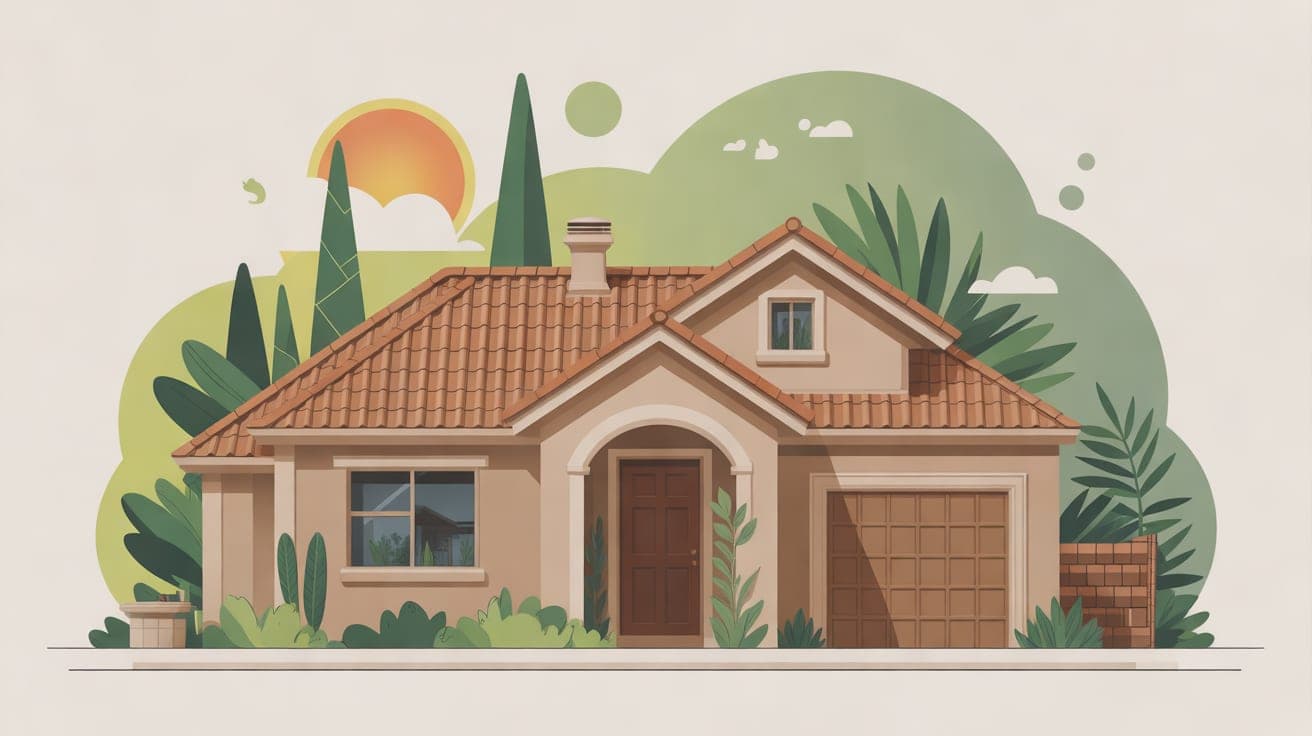
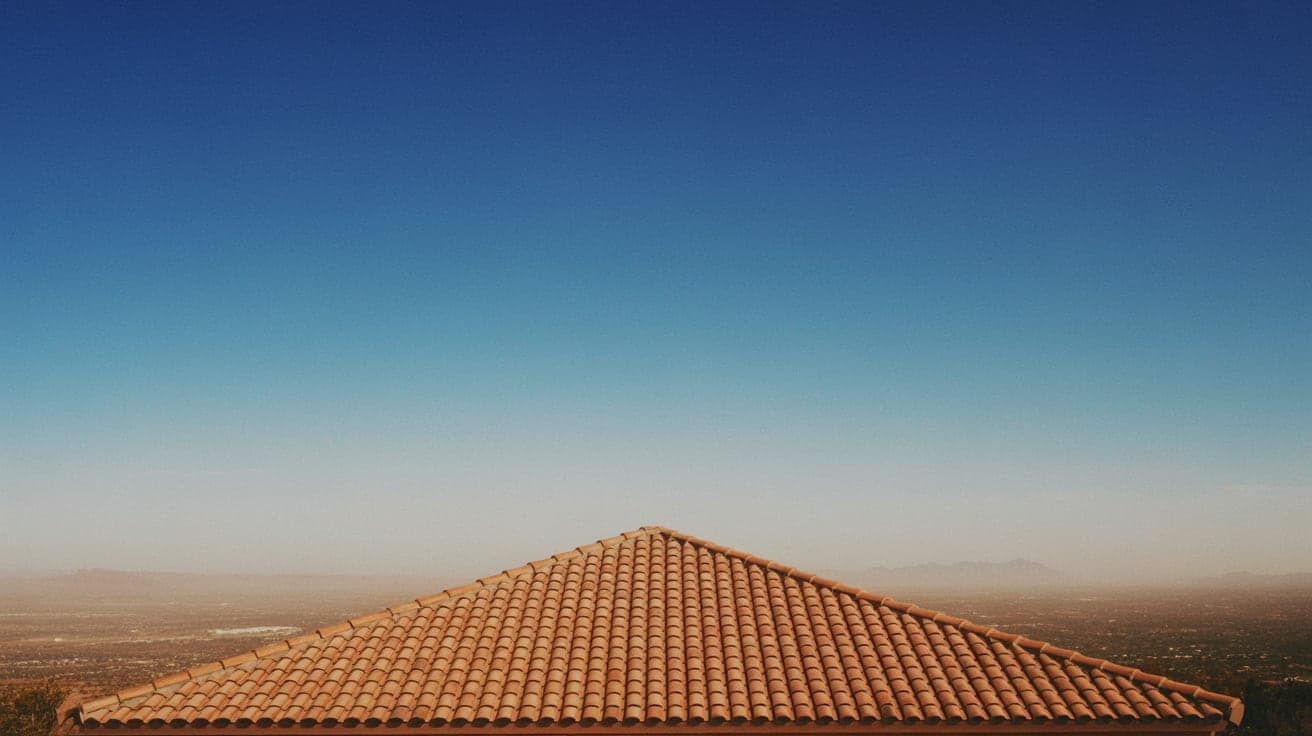
- Tile Roofing (Clay or Concrete): A classic choice in the Southwest, tile roofs are incredibly durable, fire-resistant, and offer excellent insulation. They can last for 50+ years!
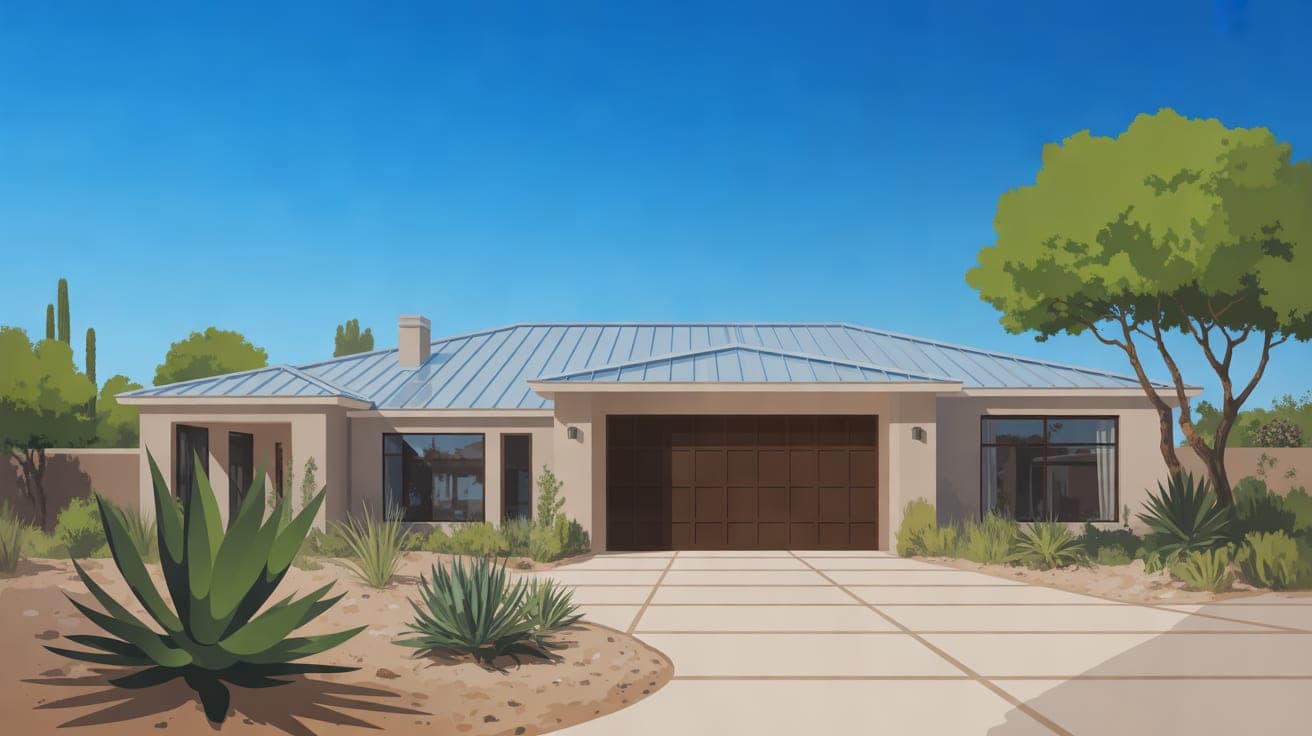
- Metal Roofing: Known for its longevity (40-70 years), metal roofing reflects solar heat, significantly reducing cooling costs. It's also resistant to fire and strong winds.
- Foam Roofing: This is a good option for flat roofs. It provides excellent insulation and reflects sunlight.
- TPO Roofing: TPO roofing is a good choice for flat roofs in Arizona. It's resistant to UV damage.
| Material | Typical service-life range | Slope | How it handles Mesa heat |
|---|---|---|---|
| Concrete or clay tile | 50+ years for the tile itself | Steep | Air gap under the tile buffers the deck; underlayment is the wear item |
| Standing-seam metal | 40–70 years | Steep and low | High reflectance and emittance available; strong wind performance |
| Architectural asphalt shingle | 25–30 years under standard conditions | Steep | Most affordable, but UV and heat push it to the low end here |
| Three-tab asphalt shingle | 15–20 years under standard conditions | Steep | Least heat tolerant of the common options |
| Spray polyurethane foam (SPF) | Extended indefinitely with periodic recoating | Low and flat | Seamless, insulating, reflective topcoat; needs recoat maintenance |
| TPO or PVC single-ply | 20–30 years under standard commercial conditions | Low and flat | Reflective membrane; seams and terminations are the watch points |
Those ranges come from published industry service-life guidance for standard conditions. Mesa is not standard conditions, and in our experience most materials land at the lower end of their range here unless the assembly is well ventilated and maintained.
Tile: the desert default, with one caveat
Tile earns its reputation in Mesa. It is non-combustible, it shrugs off UV, and the air space beneath the tiles buffers the deck from direct solar load. The caveat homeowners consistently miss is that the tile is not the waterproofing layer. The underlayment underneath it is, and that underlayment ages under sustained heat far faster than the tile above it does. Replacing underlayment while keeping and reinstalling sound tile is one of the most common jobs we do on established Mesa homes.
Metal: the reflectivity play
Coated metal panels are where the cool-roof numbers get impressive without giving up durability. Concealed-fastener standing-seam systems handle thermal movement well, which matters when the roof surface swings a hundred degrees between afternoon and dawn. Exposed-fastener panels cost less but put hundreds of gasketed screws on the roof, and those gaskets are the first thing to age out in this climate.
Foam: the flat-roof specialist
Spray polyurethane foam is applied as a seamless monolithic layer, which eliminates the seams that usually fail first on a flat roof, and it adds real insulation value at the roof plane. It is a maintenance-dependent system rather than a maintenance-free one. ASTM publishes a standard guide, D6705, specifically for the repair and recoat of SPF roofing systems, and the Spray Polyurethane Foam Alliance notes that recoating on a periodic cycle substantially extends the life of the assembly. Treat the recoat as part of the plan, not as a surprise.
Single-ply membranes: the commercial standard
TPO and PVC membranes dominate low-slope commercial work for good reason: reflective surface, mechanical or adhered attachment, and reliable heat-welded seams. On buildings around Mesa the failures we see are almost never in the field of the sheet. They are at penetrations, drains, and edge terminations, which is where inspection effort should be concentrated.
Which Material Is Right for You?
When choosing a roof, consider your budget, desired lifespan, and aesthetic preferences. Although tile and metal roofs may have a higher initial cost, their durability and energy efficiency can lead to long-term savings. There are various options available for residential roofing, while commercial buildings require careful consideration of commercial roofing solutions. We are happy to help you pick the best roof material for your Mesa home or Mesa business.
A few practical filters:
- How long do you plan to own the property? A ten-year horizon and a thirty-year horizon justify different spending.
- Where does the sun actually hit? South- and west-facing slopes take the abuse. Reflectivity matters most there.
- Is there an HOA? Many Mesa communities restrict profile and color, which narrows the field before performance does.
- Where are your ducts? If the air conditioning runs through the attic, reducing roof heat gain pays back faster.
How Do You Make Any Roof Last Longer in Mesa?
Material choice sets the ceiling. Maintenance determines whether you get there.
- Inspect twice a year, in late spring before June 15 and in early fall after September 30.
- Keep the attic ventilation path open. Heat trapped under the deck ages underlayment from below.
- Replace failed pipe boots, flashing sealants, and cracked plastic vent housings promptly. They are small parts that cause most leaks.
- Keep tile foot traffic off the roof. Cracked tiles from casual walking are one of the most avoidable problems we find.
- Deal with storm damage the week it happens, not the following season.
Our Mesa residential roofing crews handle inspections, underlayment replacement, and full re-roofs across the East Valley, and we work throughout Mesa and the wider Phoenix metro from our office in Gilbert.
Eco Roofing Solutions: Your Mesa Roofing Experts
We're dedicated to providing Mesa homeowners with top-quality roofing solutions. We are family-owned, licensed in Arizona under ROC 330901 (CR-42), and a member of the Arizona Roofing Contractors Association for both residential and commercial work. Eric Perry, our Owner and President, is a third-generation roofer with more than 25 years of hands-on experience in this climate.
Contact us today for a free consultation, and we will walk your roof and tell you what it actually needs.