The right roof for an Arizona home is the one that survives relentless UV, 20 to 40 degrees of daily thermal swing, and monsoon wind — not just the one that looks good on the sample board. In the Phoenix metro that usually narrows to concrete or clay tile, architectural asphalt shingles, or metal on steep-slope roofs, and spray polyurethane foam or a single-ply membrane on anything flat. Each has a real trade-off in cost, weight and service life, and the differences matter more here than they do almost anywhere else in the country.
Every home has unique styles and structural needs that require suitable roofing materials in Arizona. Each type of roofing material comes with varying cost levels, longevity, and weather resistance. Brush up on your knowledge with this guide.
What makes Arizona different from every other roofing market?
Most national roofing advice is written for climates that worry about snow load, ice dams and freeze-thaw. The low desert has almost none of that. What it has instead is heat and sun, day after day, plus a short violent storm season.
The National Weather Service defines the Arizona monsoon as running June 15 through September 30. Within that window, the Valley gets microbursts — small, short-lived downdrafts that drive damaging straight-line winds — and haboobs, the wall-of-dust storms formed when a collapsing thunderstorm pushes air outward. That combination punishes fasteners, edge metal and anything relying on adhesion.
The rest of the year, the enemy is ultraviolet radiation and heat, which ages roofing from underneath as fast as the sun ages it from above. It is why the Department of Energy's insulation guidance for climate zone 2, which covers Phoenix metro, calls for attic insulation in the R-30 to R-60 range, and why we treat ventilation and underlayment as part of the material decision rather than an afterthought.
How long does each roofing material actually last here?
Published lifespans assume decent installation, decent ventilation and a normal climate. Arizona roofs generally land at the shorter end of any national range because of heat and UV exposure. The National Association of Home Builders' life-expectancy work remains the most-cited baseline, and manufacturer ranges fill in the rest.
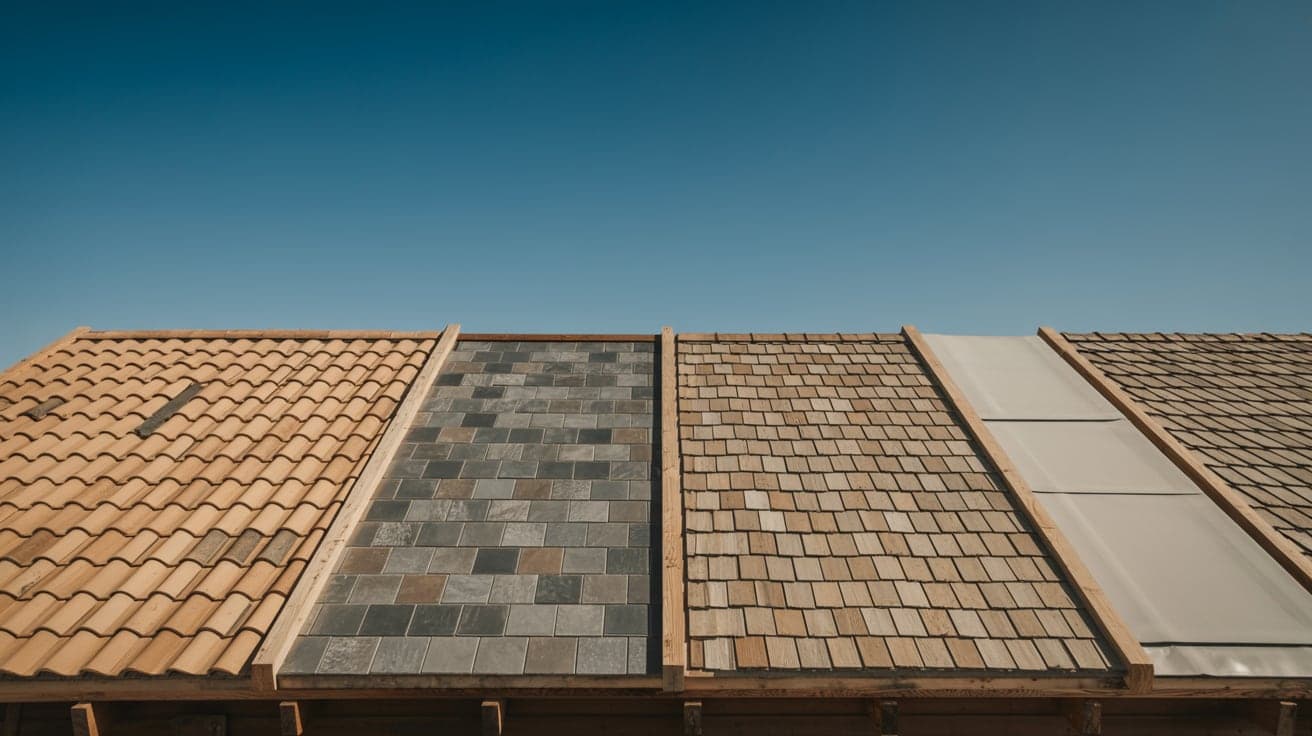
| Material | Typical service life | Weight on structure | Where it fits in the Valley |
|---|---|---|---|
| Architectural asphalt shingle | ~20–30 years | Light | Most common steep-slope choice; budget-friendly |
| Concrete or clay tile | Tile 50+ years; underlayment ~12–30 years | Heavy | Classic Southwest look; needs engineered support |
| Metal (standing seam, panel) | 40–50+ years | Light to moderate | Reflective, low maintenance, higher upfront cost |
| Wood shingle / shake | ~30 years with upkeep | Light | Rare here; fire and moisture concerns |
| Slate | 75–100+ years | Very heavy | High-end, uncommon, requires structural review |
| Spray polyurethane foam | Indefinite with recoating every ~10–15 years | Very light | Flat and low-slope residential and commercial |
| TPO / PVC / EPDM single-ply | ~15–30 years by type | Light | Commercial low-slope and flat sections |
Two things stand out on that table. First, the heavy materials are not just expensive to buy, they can be expensive to support. Second, the tile line has two numbers, and that gap is the single most misunderstood thing about roofing in Arizona.
Are asphalt shingles worth it in Phoenix heat?
Asphalt shingles are a standard roofing option because they are versatile and affordable. They are easy to install and last 20 to 30 years. They are available in various colors and styles, perfect for a budget-friendly solution without compromising aesthetics. However, they may not hold up well in extreme weather conditions.
In the desert, what shortens shingle life is heat cycling, not rain. Asphalt softens under load in extreme heat and re-hardens as it cools, and repeating that thousands of times drives granule loss, curling and cracking. Two things push a Valley shingle roof toward the long end of its range:
- Attic ventilation. The International Residential Code requires net free ventilating area of at least 1/150 of the vented attic area, with a 1/300 allowance when 40 to 50 percent of the required venting sits in the upper portion of the attic and the rest is low. Balanced intake and exhaust is what actually moves heat out.
- Shingle grade. Architectural (laminated) shingles carry more asphalt and higher wind ratings than three-tab. On a monsoon-exposed roof that difference shows up the first time a microburst hits.
Shingles remain the practical default for a lot of residential roofing work across the East Valley, especially on homes that were framed for a light roof covering.
Why does a 50-year tile roof leak at year 18?
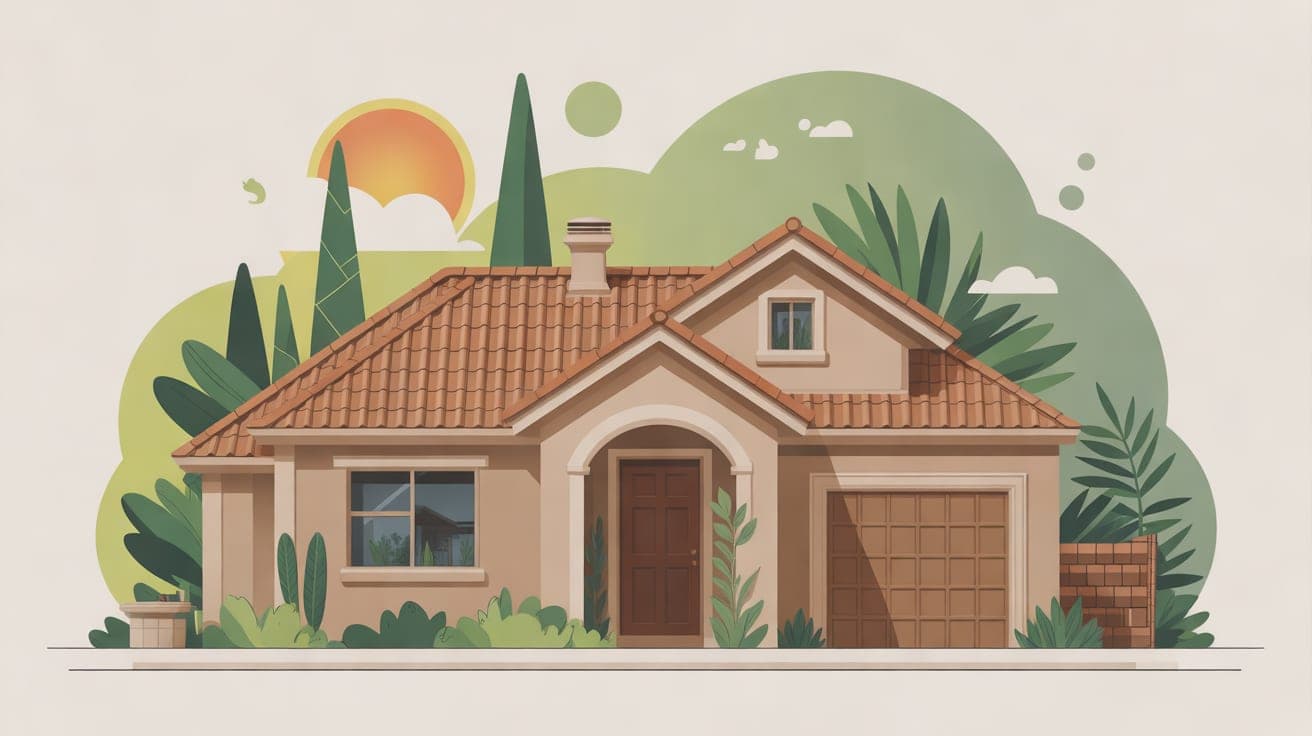
If you envision a Mediterranean aesthetic for your roof, the highly durable clay or concrete materials are for you. They can last up to 50 years, providing excellent insulation to keep homes cooler in hot climates. However, their weight means your house may require additional structural support, making installation more complex and costly.
Here is the part most homeowners never hear: on a tile roof, the tile is a rain shield and a sunshade. It is not the waterproofing. The underlayment beneath the tile is the actual water barrier, and it is the layer that fails first.
- Organic felt underlayment typically gives roughly 12 to 20 years before desert heat makes it brittle and it starts to crack at fasteners and laps.
- High-temperature synthetic and modified bitumen underlayments are engineered for sustained heat and generally carry longer manufacturer ranges.
That is why so much tile work in the Valley is a "lift and re-lay": crews carefully stack the existing tile, strip and replace the underlayment, repair any damaged deck, then reset the same tile. You keep the tile you already paid for and reset the clock on the layer that actually keeps water out. If your tile roof is past 15 years and you have never touched the underlayment, that is the conversation to have — well before a stain shows up on a bedroom ceiling.
How do metal, wood and slate compare for a desert home?
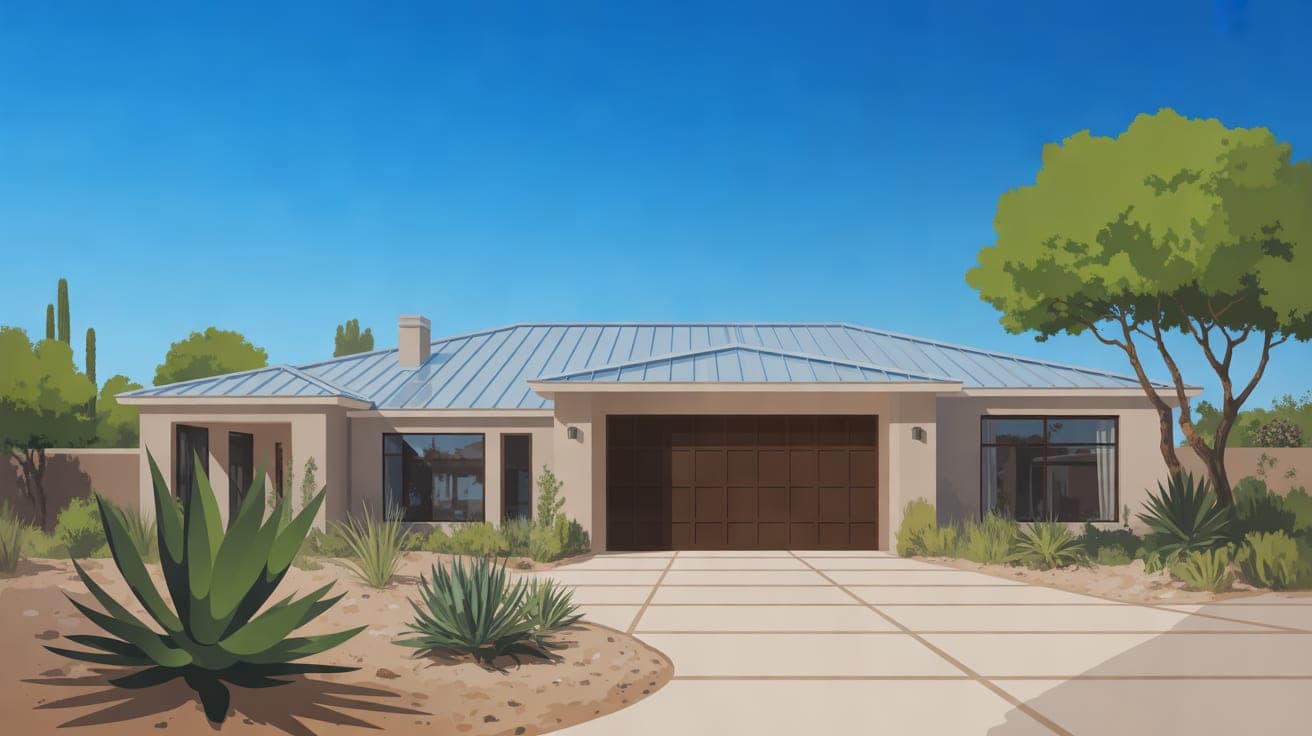
If you are looking for durability, metal roofing is an ideal option. It can last up to 50 years or more. Metal roofing offers excellent weather resistance, making it a popular choice in areas prone to heavy rainfall or snow. It also reflects sunlight, helping to reduce energy costs. The drawback is that metal roofing can be pricier upfront than asphalt shingles.
For desert use, metal has two specific advantages: factory-applied reflective finishes with published solar reflectance values, and fast drainage on low pitches where shingles would struggle. The trade-offs are upfront cost and the need for correct fastener and clip detailing so panels can expand and contract through a 40-degree daily swing.
Wood and slate are a different story.
Do you prefer a more natural and rustic look? Wood shingles might be the best option for you. They will require more maintenance but can last 30 years with the proper care. Wood shakes are thicker and more rugged than shingles, giving a unique appearance to any roof. However, they are susceptible to fire and moisture damage, so they may not be suitable in areas with high humidity or wildfire risk.
Slate is a high-end roofing material known for its luxurious appearance and incredible durability. It can last over a century and is resistant to fire, water, and harsh weather. The downside? Its weight and fragility make slate an expensive option and require professional installation.
Both are uncommon in the Phoenix metro, for good reasons. Wood dries hard and checks under desert UV and raises fire questions in wildland-adjacent areas. Slate is superb material that most Valley tract framing was never designed to carry — like heavy tile, it needs a structural review before anyone quotes it.
What goes on a flat or low-slope roof?
Plenty of Arizona homes have flat sections, and nearly every commercial building does. Steep-slope materials do not belong there.
Spray polyurethane foam
Foam is sprayed as a seamless monolithic layer that self-flashes around penetrations and adds insulation value at the same time. Its weakness is that the foam depends entirely on a protective elastomeric topcoat to shield it from UV. Manufacturers generally expect recoating on roughly a 10- to 15-year cycle; keep that schedule and a foam roof can run for decades, skip it and the system fails early.
Single-ply membranes
TPO and PVC are heat-welded thermoplastics, usually in reflective white, with industry service-life ranges around 15 to 25 years. EPDM is a rubber membrane, typically 20 to 30 years, though a black EPDM roof is a questionable choice for solar gain in this climate. Single-ply is quick to install and straightforward to patch, which matters on an occupied building. Most of our commercial roofing projects across Phoenix and the East Valley use one of these systems.
How much does material choice affect your cooling bill?
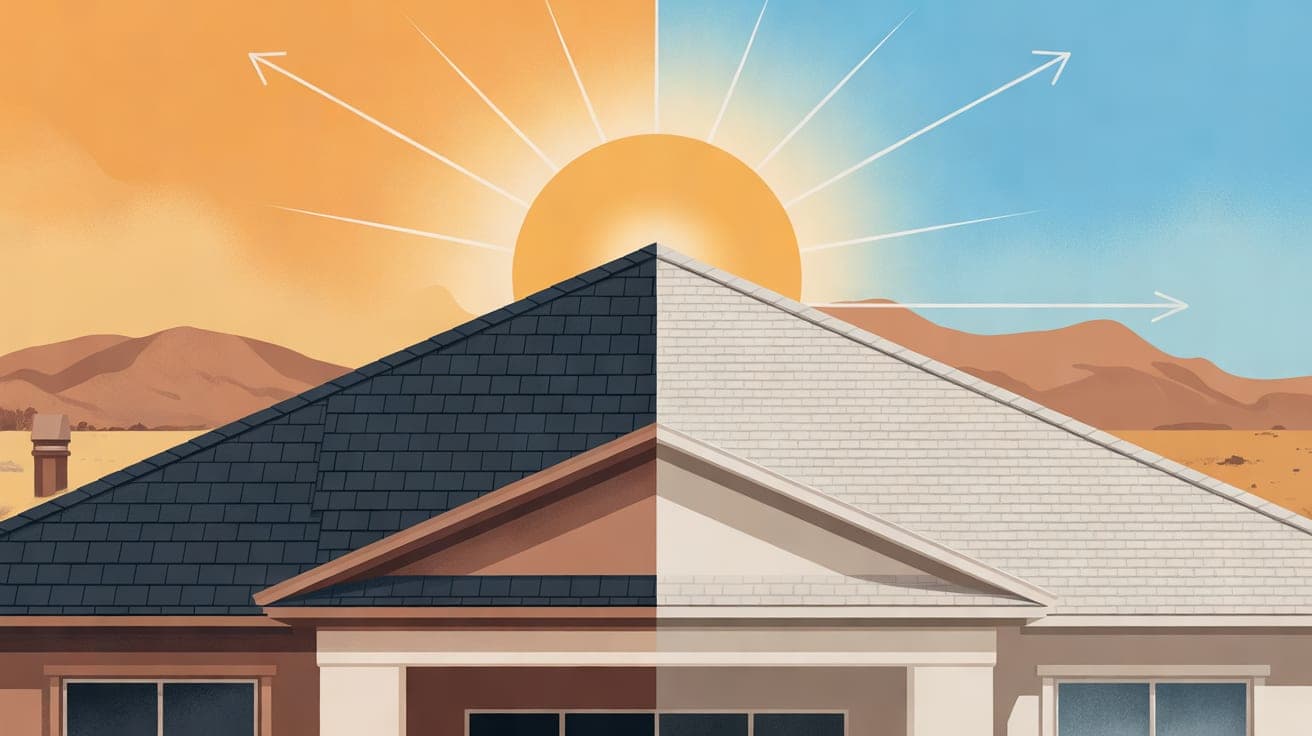
More than most people expect. The Department of Energy notes that a conventional roof can reach 150°F or more on a sunny summer afternoon, while a reflective roof under the same conditions can stay more than 50°F cooler. Less heat entering the roof deck means less heat pushed into the attic and less load on the air conditioner.
To compare products honestly, look past color and look at the numbers. The Cool Roof Rating Council rates roofing products on two measured properties, both on a 0 to 1 scale:
- Solar reflectance — how much of the sun's energy the surface bounces back.
- Thermal emittance — how efficiently the surface sheds the heat it does absorb.
The CRRC publishes both initial values and three-year aged values, because dust and weathering pull real-world reflectance down over time. In a dust-heavy climate, the aged number is the honest one. Pair a reflective surface with the attic insulation and balanced ventilation described above and you get the full benefit — a cool surface over an under-insulated attic leaves a lot on the table.
So how do you actually choose?
Different roofing materials have unique advantages and potential drawbacks. Your choice should depend on your budget, climate, and personal preferences for style and longevity. You can find the ideal roofing material for your home by weighing these factors.
In practice, four questions settle most decisions:
- What can the structure carry? Tile and slate may require engineered support. Foam, metal and shingles rarely do.
- How long do you plan to own the building? A 20-year material at a lower price can beat a 50-year material you will not be there to enjoy.
- What is the slope? Anything under a manufacturer's minimum pitch needs a low-slope system, not shingles.
- What does the HOA allow? Tile dominates much of Gilbert, Mesa and Chandler, and many HOAs restrict profiles and colors.
Have you decided on what roofing material in Arizona you will use for your home? Eco Roofing Solutions, LLC is a family-owned contractor at 75 W Baseline Rd Suite 19 in Gilbert, licensed under Arizona ROC 330901 (CR-42) and a member of the Arizona Roofing Contractors Association. Owner and President Eric Perry is a third-generation roofer with over 25 years of hands-on experience.
Take a look at our full range of services, see what we handle for homeowners in Gilbert, or contact us to walk your roof and talk through the options.